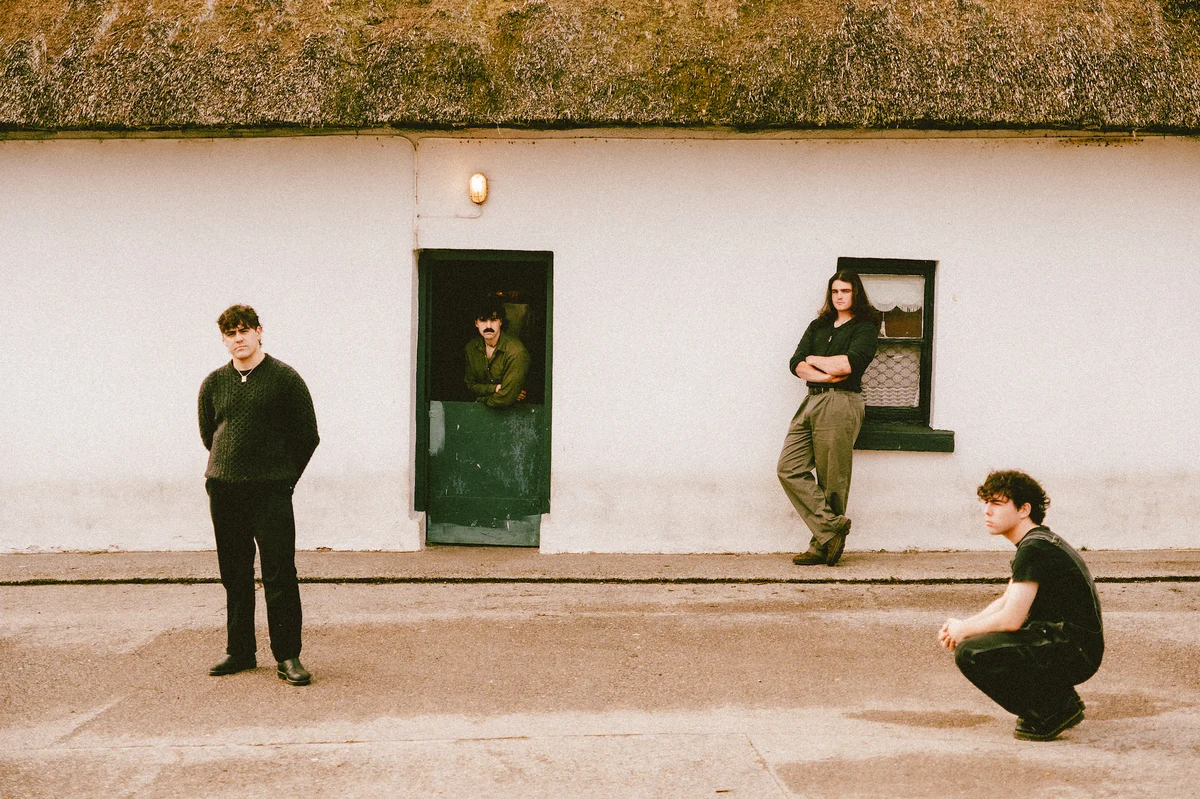
It’s hard to miss the spotlight on Ireland right now. From the rodeo pop trills of CMAT and the roars of post-punks Gurriers, to the world domination of Fontaines D.C., a wave of Irish talent is clawing its way across the planet. Part of this new wave is The Wran, a band of four twentysomething brothers emerging from County Waterford. Pushing Irish folk into new heights of punk, psychedelia and rock, The Wran are about to embark on a new UK and Ireland headline tour, fast gaining traction as one of the most powerful names in the alt-folk scene.
Tommy, Danny, Seán and Stephen Dunford were raised in the small village of Kilbrien at the foot of the Comeragh Mountains. Music was always going to be embedded into their lives. “The trad community is abundant in Waterford,” says Tommy of their upbringing in the southeast of Ireland. “Our parents would be avid music listeners.”
Coming of age to a soundtrack of Snow Patrol, The Pogues and U2, surrounded by a strong trad presence, the Dunford brothers naturally began making their own music, albeit in different worlds. Older siblings Tommy and Danny were drawn to rock, writing songs and playing in local pubs from the age of 12. Seán and Stephen migrated to the folk scene until their father suggested they played together; the rest is history.
When asked about how their family dynamics influence their practice, it’s laughed off. “It's a common thing to say, ‘Oh, you play with your brothers, you must tear the heads off each other.’ We don’t,” Tommy says. “You get one chance at living and you don't want to ruin a relationship with family just because of a career.”
“The Waterford Boys” is the focal track from the band’s debut album , out now via Déise Records. Recorded at Limerick’s Wanderland Studios with producer Ben Wanders, the record is a collection of re-imagined Irish folk songs and original compositions, paying homage to Ireland’s rich musical history as well as showcasing The Wran’s songwriting abilities. Skilled multi-instrumentalists and vocalists, the brothers play the banjo, harmonium, acoustic guitar, bass and drums (amongst others) in their rousing live sets, carefully transforming songs of the past into modern-day anthems.
The idea of making a mark within a shared identity is what’s appealing to Danny. “Those songs have been played by numerous artists throughout the years,” he says. “Folk music is for everyone and it's nice to be able to look at that song and say, ‘How can we put our stamp on it?’”
Made popular by The Dubliners in 1983, “The Waterford Boys” is sung from the perspective of an Irish immigrant leaving famine-stricken Ireland in search of a better life, but told with typical Irish light-heartedness. “It's looking at immigration in a very humourous way, which is unusual,” says Danny. “We thought we’d try and shed light on the undertone,” Tommy explains. Consisting of 11 verses plus a chorus, and noticeably slower and more dreamlike compared to The Dubliners’, The Wran’s version sees the brothers alternating vocals. “We went through many different renditions… We all wanted to sing part of it.”
An invigorating, disarming instrumental finale takes over the end section, inspired by fellow folk singer John Francis Flynn’s “Within a Mile of Dublin”. A signifier of the chaos and discordance experienced when leaving a homeland, The overall effect is a tender tribute to a beloved song whilst stamping it unmistakably as The Wran’s.
That stamp is a rich kaleidoscope of musical backgrounds. Danny’s guitar-playing is influenced by The National, Bon Iver, Ben Howard, and Big Thief. “I like to use a lot of effects,” he explains. “I use a lot of reverb and delays.” Bands like Tool and Blink-182 influenced Tommy’s percussion, but he aims to emulate traditional Irish instruments, like the bodhrán, in his playing. Stephen and Seán’s strong roots in folk and classical music add another layer to the party. Combine all this with a steady rotation of instruments being handed around onstage and the result is: “Pogues. On. Acid,” Stephen says, summing-up The Wran’s sound in three words. He’s right.
It’s revitalising to hear their creative process. It’s family-based and a clear equal playing field. “The songs don't get finished until we're all in the room together and we all are happy,” says Tommy. They are also big advocates for the shift towards more old-school music consumption being seen at shows, even burning CDs themselves to sell on tour when they ran out. “I think the ‘physical world’ is on a comeback. It's CDs, vinyls and magazines, and everyone wants to actually feel like they’re part of things again.”
Folk provides just that: a tangible and shared experience, reclaiming listeners in an increasingly digital world. It offers comfort in turbulent times when the future seems precarious. In looking backwards, we see ourselves; and in The Wran’s case, “The Waterford Boys” is more than a nod to their origins. With a universal, cross-cultural message, “It's a story that so many people can relate to, this idea of immigration and having to move and leave home. And shit landlords.” Danny says.
Tommy agrees. Folk is for everyone, and it’s unsurprising it’s on the rise. “Folk music, ‘song of the folk’... [It’s] bringing people together, you know?” he says brightly. “I think that's definitely what it's doing at the moment. Trad music is dance music. People are dancing.”