uring the finale of Jay-Z's Jay-Z in 8, the recent eight-part HBO documentary series on his life and career, the billionaire rap mogul talked with record producer Rick Rubin about the song Family Feud from his 4:44 album. He clarified one of its lyrics, "Al Sharpton in the mirror takin' selfies / How is him or Pill Cosby 'posed to help me?", in which he chided Sharpton, the civil rights leader, and Cosby, the disgraced actor-comedian, for constantly criticizing rap music. He called Sharpton an "extortionist" who goes "from place to place" demanding: "You want our support … give us the money." Listening to him chastise Sharpton, I pondered how he doesn't see himself as a similar figure.
Starting in 2019, Jay-Z partnered with the NFL in 2019 as entertainment director, deciding the Super Bowl half-time performers and working with the league on other community endeavors. Colin Kaepernick, the former NFL quarterback, has recently alleged that the deal came after NFL owners decided they needed a "Black face" to help them quell outrage from Black people after Kaepernick was blackballed by the league for kneeling during the national anthems as a form of protest against police brutality. Jay-Z was lambasted for undercutting Kaepernick's cause for personal gain, marring his reputation with many fans who came to view him as the same counterinsurgent figure he criticized in the documentary.
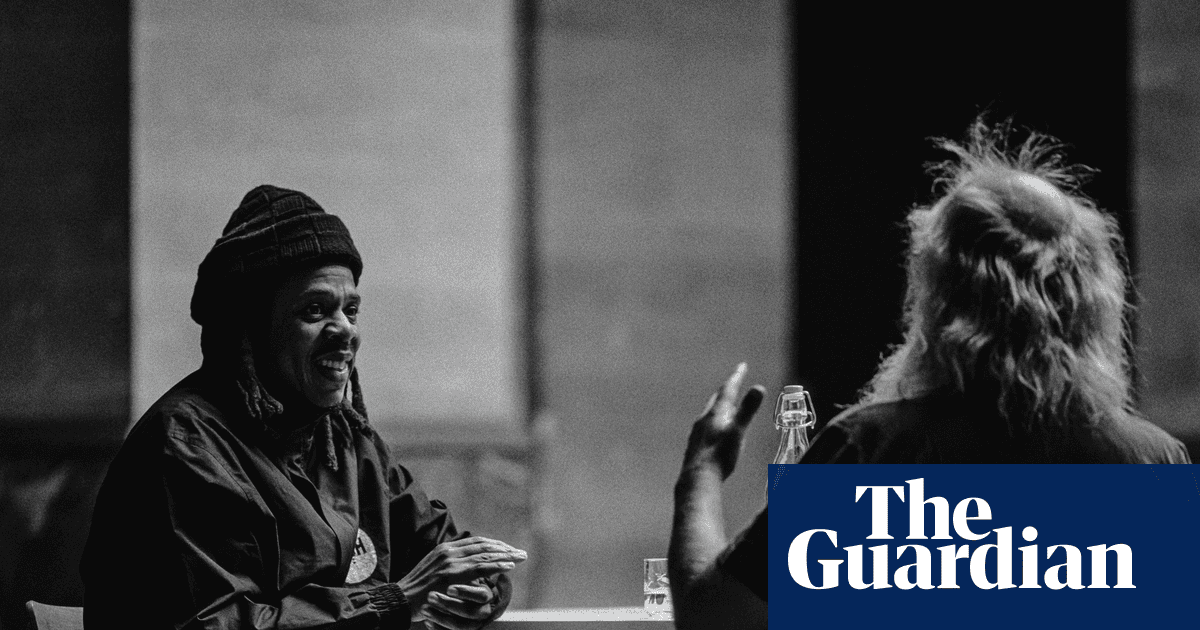
Jay-Z in 8 is an effort that seeks to mend his public image; the series culls his 30-year oeuvre along with his life and times. In the sleek, black-and-white episodes, which were filmed at some point in 2024, Jay explicates his music history in interviews with Rubin, the 63-year-old Def Jam co-founder and producer. It's a polished, low-frills watch. The two sit at a table in an empty room in the events center Palais Brongniart, France's former stock exchange, while Rubin chooses songs from Jay-Z's catalog and uses them as a springboard into broader topics such as his relationship with his parents, his creative process and wider cultural observations. The final instalment, which aired on 9 October, features Jay-Z pontificating on racism and suggesting generational wealth as its remedy. Hearing him dismiss social justice movements by claiming "we never get together" to push for change, and discussing inequality through banal observations, indicates how little thought he has actually put into uprooting systemic oppression.
Rubin offers no pushback. Throughout the series, his lack of deeper questioning fails to give the conversations the depth they require. Rubin comes across as an in-awe spectator tasked with polishing the Jay-Z mythos. It's the opposite of what a conversation series needs. (A more incisive interviewer, for instance, would've asked Jay-Z, who, in referencing his marriage to Beyoncé, rapped, "What's better than one billionaire? Two," if redistributing $2bn would be even better for the community at large.) At one point in that episode, Jay-Z, the richest musician in the world, refers to the Black bourgeoisie as "they". A poignant follow-up from Rubin could have been to ask what exactly Jay felt separated him from that group. Instead, as with most of the series, Rubin nodded approvingly. His sycophantic presence turns what could have been a quintessential music documentary into hagiography. And Jay-Z likely wanted it that way.
Over the years, the 56-year-old Brooklyn native has rapped about several ugly truths in his life: shooting his brother, selling drugs to loved ones, cheating on his wife, feeding others' substance abuse for profit. He touched on some of those topics in Jay-Z in 8, giving the documentary its best substance. There's some cool trivia, too. He reveals that the second verse of 99 Problems is based on a true story, reflects on how his Uncle Butchie inspired him to grow locs, and says he is too self-conscious to be as vocally experimental as Beyoncé. But he also has limits.
In 2005, he halted his The Black Book memoir with the writer dream hampton because the process, he said, was getting too personal. Later that year, he told Rolling Stone: "I know that people really want to know about me and I thought it was OK, but as I got closer and closer I said, 'What am I doing?'" Since then, he's become more discerning about his access, rarely giving interviews. He doesn't want to be prodded against his will, but he also won't let public narratives go unchecked, offering public retorts to critics in feature verses and stadium performances. He compulsively seeks to control the story, almost always in forums that don't allow for discussion or pushback.
An eight-hour conversation series with Jay-Z needed someone with deep hip-hop knowledge an instinct for pointed questions (I wonder if there's a profession from which they could've sought that person?) In episode three, Rubin plays the title track from 2017's 4:44, a highly vulnerable song where he vents about being an immature, emotionally unavailable cheater. And while Jay-Z apologizes in the song for his conduct, he doesn't necessarily promise to be a better husband. Seven years later, Rubin doesn't push for advanced thoughts on life as a husband or father, instead offering a vague: "Do you feel like there's been progress?"
When Rubin asks him if the stakes of life are higher for him now or during his drug-dealing days, Jay chooses the latter. He says his mindset toward powerful industry figures threatening to punish him for not doing what they want is, "I don't care what you do. It doesn't matter to me." But if he's really "already home", as he rapped on the 2009 track that boasted of career contentment, why is he so fixated on the court of public opinion? And more importantly, why isn't he putting something on the line by joining artists including Macklemore to speak out against multiple genocides abroad and Donald Trump's fascism? Someone who isn't prone to just agreeing enthusiastically would've pulled at those threads.
The crack era and the Black excellence ruse (in which Black capitalists claim the revolution will come by simply buying from Black-owned companies) have denied multiple generations of Black people liberation in disparate ways. Jay-Z is at the figurative scene of both crimes. He earned his legacy with brilliant music that chronicles the drug game with cinematic vigor and contextualizes his actions in a way that a socioeconomics professor could explain to his cohort. But he rarely broaches the tension of his third act as a billionaire music mogul in an "eat the rich" world. Here, Rubin never asked him to.