All sorts of secret, shocking things happen behind closed doors, but they probably pale in comparison to what's happening behind the saloon-style screens in Mexican artist Pia Camil's debut UK exhibition. Swing them open and you're greeted with eye-popping paintings of lust and sexual freedom. A demonic, fanged creature humps away at a blindfolded woman in one, a blue-skinned being with a curly little pig's tail performs cunnilingus on another. Everywhere you look there are bodies writhing in ecstasy, hair being pulled, stilettos being pressed into bare skin. Most of the time when you see sexual art these days it carries a big political message about exploitation and abuse, but this is the opposite: this is about the joy of sex, about liberation through desire, about a feminist reclamation of eroticism. In the middle of the room, a huge inflatable sculpture of Lady Godiva inflates and deflates, rises and falls, over and over.
The whole show is like all your favourite erotic surrealists put through a Mexican art filter. It's shocking art, not because of the strap-ons and genitalia, but because it's so rare to see a painter this fun, an artist so obviously and totally devoted to pleasure, hedonism and joy.
Mark Leckey: The Last Leg of the Final Eschaton
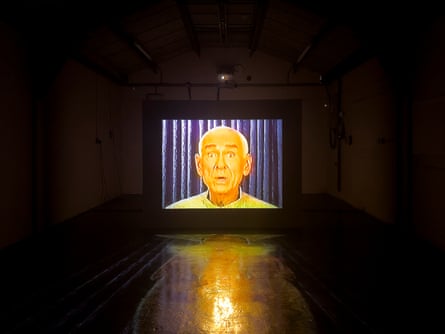
The end is nigh in Mark Leckey's latest video work. The influential English conceptualist has gone all apocalyptic, with a wild found-footage video that draws parallels between medieval cultists, 60s hippy freak-out gigs and millennial raves. It all starts with a renaissance painting by Uccello, which sends Leckey's brain tripping across doom-mongering conspiracy theories, biblical prophecies and stock market crashes. It's freeform and weird, almost unfollowable, but also pretty mesmerising. The film is unfinished, and it's housed in a barren gallery in an abandoned former hospital, but this is exactly what you want from this kind of project space: challenging, strange, totally uncompromising and blatantly uncommercial art. These kinds of places give room for art and ideas to bloom and evolve, and are becoming rarer and rarer. The shows here are by appointment only – you message them through their Instagram – but you have to take advantage of experimental art spaces while they're still around. Doom and gloom never felt so hypnotic.
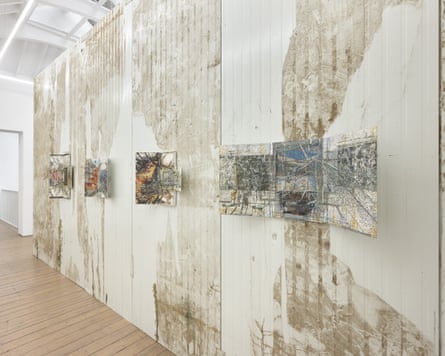
Marcin Dudek has become an archaeologist of the self, digging through his past, his memories, trying to figure out how it all came to this.
His work has always been largely based on the Polish housing estate he grew up in: the basement gyms and football violence that marked his childhood and youth. But this show takes us into something a little more mundane: the local supermarket. He has recreated its metal walls here, rusted and filthy, a dead mouse petrified against the corrugated steel. Inside, he has laid out bottle caps, stones and torn cigarette packets excavated from outside the shop itself. Proper archaeological stuff, but useless, worthless, and meaningless except to him.
The metal collages on the wall are covered in burn marks and images of crowds and police vans. In the communist 1980s, the supermarket was a hub, a sanctuary. But by 1989, capitalism had arrived, bringing with it abundance – and crime.
Dudek's whole look is dystopian abstraction, taking all the wreckage of his past and reassembling it into fractured grey images and threatening installations. All the rusted and twisted metal here is full of anger and incomprehension, but you get the sense that if he keeps digging, keeps uncovering and excavating the past, it might eventually start making sense.

Cindy Sherman has always been way ahead of the curve. Her photographic playacting has seen her dealing with ideas of identity, fiction and reality for decades, way before every young artist with an internet connection started doing the same thing. She's brilliant, influential and important.
And this new exhibition is more of what you've come to expect from her. This time, her characters are lounging, they are draped over sofas, reclining in bed. These are wealthy, elderly, powerful women in moments of repose. They all wear extravagant undulating fabrics, their wrists and necks weighed down with the thickest gold chains, the plumpest pearls.
How do the rich construct their identities? How do once-young, once-beautiful women continue to project their importance and vivacity into old age?
It feels like a bit of an in-joke, as if she's taking aim at the kind of people who can afford to buy her work. I don't mind that: it's neatly ironic watching ladies with expensive facelifts staring right into these works as they walk around the gallery, unaware that Sherman is holding up a mirror.
They are neurotic, vulnerable ruminations on ageing. But they're not Sherman's best work, not by a long shot. What makes it uncomfortable though is that it was all made at Chanel's invitation, and a lot of the jewels and clothing the characters are wearing come from the fashion house's archive. It makes the whole thing feel like an ad instead of an artwork. Selling out comes at a price, and this time it might be too high.
Nicola Turner: I Tear Secrets from Your Yielding Flesh
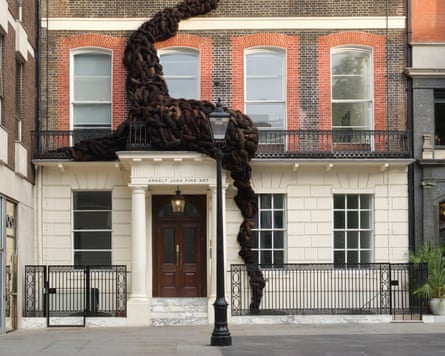
For people like me who are cursed to forever ask the universe where our hair has gone, the answer might be Nicola Turner's exhibition. There are massive, curling, dreaded coils of the stuff tumbling out the front of the building, and things just get hairier inside. Big mounds of twisted wool and horse hair have grown out of the floor, reaching up the walls. Hair has coalesced into strange beings with tripods and shears for legs, stomping through the gallery.
The whole thing is half repulsive, half attractive, part kink weirdness, part psychological horror. Turner is talking about medical procedures and grief, about fashion and the body, about how we cover ourselves and expose ourselves at the same time. It's good: unsettling, theatrical, but you get a bit too lost in gawping at the giant hair installations to feel much warmth from any of it.