t was just a couple of weeks ago that Stephen Kovacevich and I were last in contact. He was in hospital, recovering from a hip operation, and we were talking about Hiromi, and where the latest generation of pianists were coming from. The players who had the brilliance, fire and commitment to the moment that his favourite players had: Vladimir Horowitz, Sergei Rachmaninov – his greatest of the greats – and his friend and occasional mentee, Yuja Wang.
Among other things, he told me about a Charles Munch performance of Berlioz's Symphonie Fantastique he had discovered on YouTube that made him exclaim: "How the hell did he get an orchestra to play like that?" Conversation with Stephen was always like that: utterly intense, totally opinionated, with the feeling that the spirits he was talking about, whether performers or composers from Chopin to Beethoven to Brahms to Mozart to Bach, were in the room with you, conjured into being as real, passionate people and presences.
Which was, of course, what you felt and heard in his playing. His long career devolved into name changes (Bishop, Bishop-Kovacevich, then Kovacevich) and relationship changes, as partnerships with conductors he loved to work with were intensely productive and then suddenly disappeared. Listen to any of the concerto recordings with Colin Davis to hear the adventure of what they made together, from Bartók to Mozart.
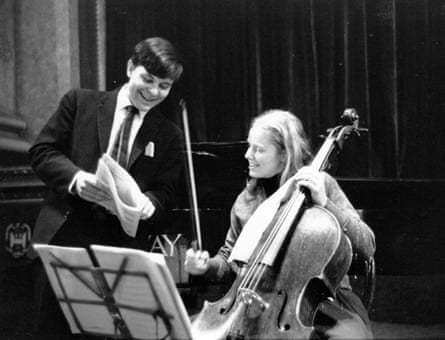
What was constant was a spirit of going to the edge of a performance to find the place where the music is most powerful and most vulnerable; risking oblivion to know what it's like there, out on the edge. Stephen talked openly about how often his performances failed him, but he rejoiced in his successes, particularly the technical ones of the last decade or so of his life, when he recovered from a severe stroke in his late 60s, and combatted nerves, to play Schubert and Rachmaninov with an intimacy and intensity that was breathtaking.
He was driven by capturing the sensual spirit at the core of all the music he loved to play. This was a dangerous occupation, as it should be. Getting that close to the white-heat of Beethoven's sonatas or Brahms's concertos is all about being burnt and scarred, and plunging back in again to those cauldrons of extremity, the psychic and emotional places where music like that is made, and where performances like Stephen's are born.
One of his complaints about classical music right now was that performers often don't take enough risks, that their music-making isn't dangerous enough. I agree with him. His own playing was the perfectly imperfect response: that's why his Beethoven sonatas are my favourite on record, because you're with him in the moment of the attempt to reach the mountaintop, with everything on the line, throwing it all at the impossibility of the moment. In that struggle and that realisation, there's more truth and more transcendence than most pianists will find in a lifetime. I'm going to miss him.
More on Stephen Kovacevich
"I don't live in a subversive way. But I certainly believe in it" – a 2001 interview