his new film from revered documentary-maker Ross McElwee is an extraordinary work, arguably his most audacious use yet of autobiographical material while at the same time being a coruscating self-criticism of that same technique. Think of it as an artistic ouroboros (a snake eating its own tail). Remake is all at once about creativity, shame, love and loss, revelling in the way film can capture a moment of truth and honesty, but tempered by the knowledge that once a subject knows they're being filmed everything becomes a kind of performance. It's a film that works on so many levels and at the same time is so simple and direct.
On that very simplest level, Remake starts out as a documentation of how Hollywood got in touch with McElwee and told him they wanted to make a fictionalised remake of his best-known film, Sherman's March. Made in 1985 with a one-man crew (McElwee himself), Sherman's March recorded the McElwee's trip back to South Carolina where he grew up; there he films his family, old friends, and himself as he continually fails to establish romantic relationships with various women, all of it lavishly slathered with his own warm, softly southern-accented voiceover.
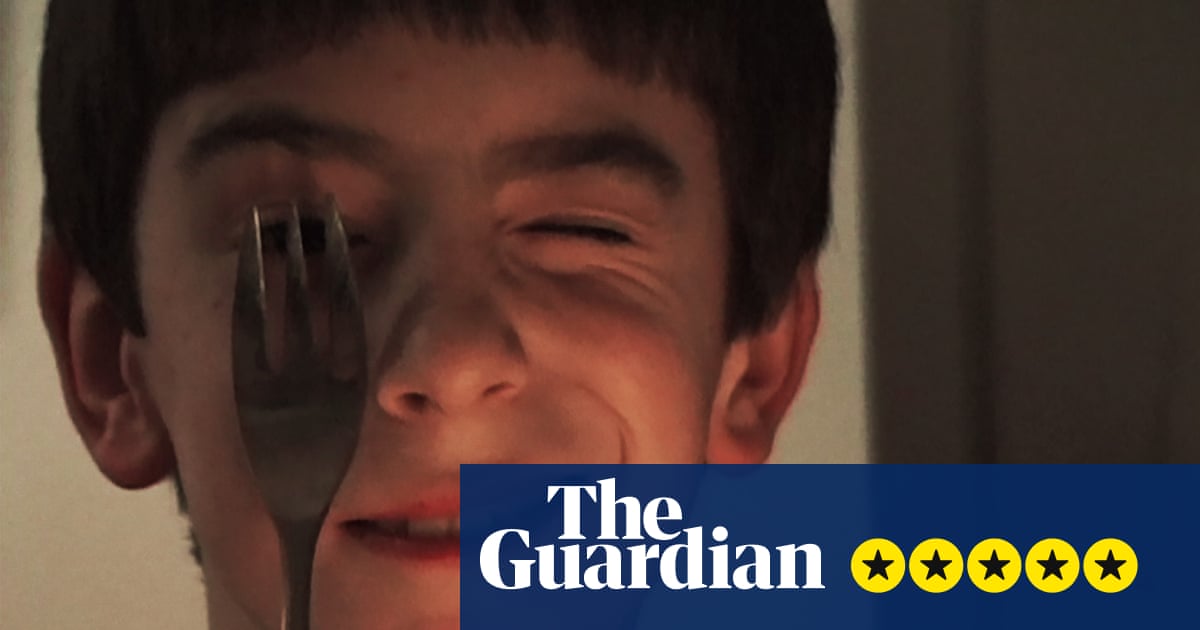
But a lot happened after McElwee made that film. He did eventually get into a lasting relationship and had a son, Adrian; later the couple adopted a baby girl in Paraguay. All that becomes grist for the feature at hand, as we learn quite early on that Adrian died relatively recently as an adult and so every shot of him – a cute chatty little kid, fishing off a pier, pretending to run a restaurant, and slowly getting older and bigger – becomes painfully charged. It's not just that the little kid is gone; Adrian himself is entirely gone and all that's left is the material his father shot of him, as well as the film clips Adrian made himself when at one point he wanted to become a film-maker too – and the sequences where he played his dad as a young man in Sherman's March. Adrian's craving to be seen and his willingness to let his father film him starts to feel troublesome to McElwee – especially when you consider that others started to push the camera away.
Remake slowly reveals what it was that led to Adrian's death – not in order to create any kind of salacious mystery, but because it only makes sense, as much as something so senseless ever will, after we've got to know Adrian better: his aspirations and his troubles, a bipolar diagnosis, the deep wells of self-doubt that are not unlike his father's. The end result is a profoundly moving work, one that will resonate with anyone who is a parent or close to a troubled kid, but one that has so much more about the making of art, its joys and its dishonesties. It lingers in the mind long after the tears have dried.