In 2013, when Martin Scorsese compiled a brief list of his favourite horror films, he placed the eerie and overlooked 1980 ghost story The Changeling in the company of classics such as The Shining, The Exorcist and Psycho. Scorsese called it a "haunted house movie filled with sadness and dread"; Guillermo del Toro called it "a masterpiece". Its director was the versatile British-Hungarian film-maker Peter Medak, who has died aged 88.
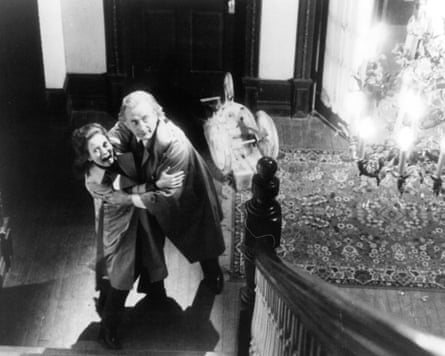
The Changeling concerns a composer (George C Scott) who is grieving the deaths of his wife and daughter in a road accident. After moving into a long-vacant Seattle mansion where things start going bump in the night, he becomes convinced that a spectral presence is trying to communicate with him.
A generation raised on slasher films might now be underwhelmed by the low-key frights, which include a bath that runs itself, a cobwebbed wheelchair and visions of a child's face warped underwater. But with its subtlety and patience, and the prioritising of atmosphere over revelation, the movie remains chilling today.
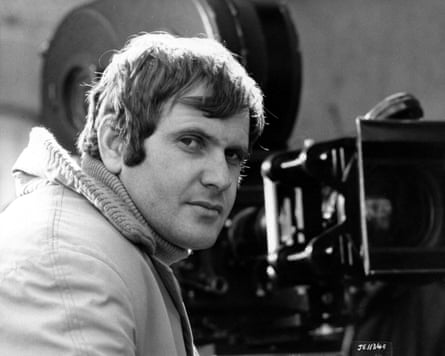
It represented a rare foray into horror for Medak, who was already admired for The Ruling Class (1972), a madcap satire starring an Oscar-nominated Peter O'Toole as an aristocrat who believes himself to be Jesus Christ. The critic Janet Maslin identified in the director a "droll affinity for eccentric behaviour".
Medak later crafted two stylised visions of British postwar criminality. In The Krays (1990), the brothers Gary and Martin Kemp, of the pop group Spandau Ballet, were impressive as the Kray twins, Ronnie and Reggie. Support came from some of the best in the business: Billie Whitelaw as the twins' formidable mother, Kate Hardie as Reggie's tortured wife, and Tom Bell and Steven Berkoff as fellow hoods who meet a grisly end. Philip Ridley's script, hauntingly dream-like at times, was directed by Medak with flair and lucidity.
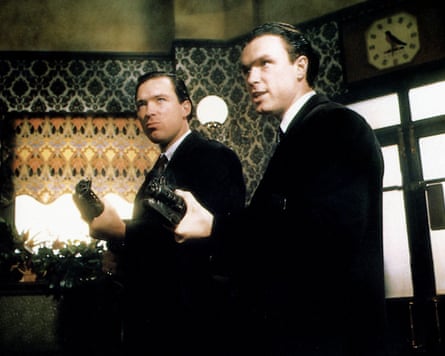
In an unusual move, the Krays (including their brother Charlie, who was credited as a "technical assistant") were paid handsomely. That did not stop Ronnie from loathing the film. "You had my mum swearing in it and she never swore," he complained.
The Krays was followed by Let Him Have It (1991), which dramatised the case of Derek Bentley (Christopher Eccleston), who was hanged in 1953 for the fatal shooting of a police officer even though he did not pull the trigger. (The conviction was quashed in 1998.)
Medak's childhood was as dramatic as anything in his films. He was born in Budapest, to Elisabeth (nee Diamounstein), who worked as a seamstress, and Gyula Medák, who ran a textile company and was eventually imprisoned as a capitalist in the late-1940s communist takeover of Hungary.
One Saturday lunchtime in June 1944, when Peter was six, he and his parents and brother were being served soup by their maid, who told them what she had just witnessed from the kitchen window: soldiers from the Arrow Cross party, described by Medak as "a hundred times worse than the SS", rounding up Jewish citizens at gunpoint. "My father said: 'We've got to leave right now.'"
Managing to evade soldiers who were checking documents, the family passed dead bodies in the street, as well as trucks of Jewish prisoners, and escaped to the country. They lived for eight months under false identities in a basement next to a building that had been commandeered by the SS. They also attended church each Sunday to maintain the pretence of Christianity.
When the family returned to their apartment building in Budapest the following year, they found it had been partially destroyed. Still on the table, garnished with brick dust and surrounded by rubble, was lunch. "The whole world was turned upside down, the war had ended, and there were these soup bowls," Medak recalled.
His interest in film-making was sparked at the end of that year when his London-based aunt, the soprano Lotte Medák, gave him a hand-cranked 35mm film camera.
It was to her that he turned at the age of 18 when he fled to the UK from Hungary during the 1956 revolution. His aunt used her contacts to get Medak a job as a trainee with Associated British-Pathé. He worked his way up to assistant director or second unit director on films including the Hammer version of The Phantom of the Opera (1962) and the thriller Funeral in Berlin (1966), with Michael Caine as Harry Palmer.
Medak made his directing debut with Negatives (1968), starring Glenda Jackson and Peter McEnery as lovers consumed by fantasy and role-playing. Next came a film version of Peter Nichols's play A Day in the Death of Joe Egg (1972), with Alan Bates and Janet Suzman as the frazzled parents of a teenager with physical and intellectual disabilities. The made-for-TV love-triangle drama The Third Girl from the Left (1973) paired Tony Curtis with Kim Novak.
The director came to regard his next project, Ghost in the Noonday Sun (1974), as "the biggest disaster of my life". Stuck in the Mediterranean shooting a 17th-century pirate comedy with a lovesick, seasick, workshy and mercurial Peter Sellers (who was recovering from his breakup with Liza Minnelli), Medak also had to battle bad weather and behind-the-scenes espionage, with Sellers trying to organise a mutiny against him. "My career was nearly completely destroyed," he said.
That film was shelved and never officially released, though Medak later made a documentary, The Ghost of Peter Sellers (2018), which revisited the catastrophic production in detail. Unexpectedly touching, it was suffused with affection for the troubled star.
Medak stuck with comedy for The Odd Job (1978), with Graham Chapman of Monty Python as a lovelorn figure who hires a stranger (David Jason) to end his life when he cannot go through with the deed himself, and Zorro – The Gay Blade (1981), starring George Hamilton in the dual roles of the masked swashbuckler and his previously unknown brother Bunny.
Subsequent films included The Men's Club (1986), starring Harvey Keitel, Frank Langella and Roy Scheider as members of an all-male discussion group whose night together gets out of hand, and the thriller Romeo Is Bleeding (1993), with Gary Oldman as a corrupt cop.
It was as a hired hand in TV, however, that Medak found his most reliable employment. His work had range as well as skill: he directed four 1982 episodes of the glossy his-and-hers caper Hart to Hart, as well as adding Remington Steele, Magnum PI, St Elsewhere and The Twilight Zone to his CV in the same decade. Six episodes of Homicide: Life on the Streets followed between 1994 and 1998, as well as one episode each in the first season of The Wire (2002) and House MD (2007), and one in season two of Breaking Bad (2009).
Medak's first wife, Katherine La Kermance, whom he married in 1963, died in 1972. He is survived by their children, Karen and Christopher, and by two children, Joshua and Cornelia, from his second marriage, to Carolyn Seymour, which ended in divorce, as well as five grandchildren, and his partner, Christine Wagner.