Steve Reich turned 90 on Saturday, and I've been thinking about his early tape pieces from the mid-1960s, It's Gonna Rain and Come Out. They're such vital works not only because they opened his imagination to what could happen if you made a micro-canon – playing the same material slightly faster or slower – which is what happened when one of his tape machines slipped out of sync with the other: it's that these are human voices that Reich is setting. It's Gonna Rain is made from the voice of Brother Walter, a Pentecostal street preacher in San Francisco, whose warning of apocalypse in 1965 Reich recorded and looped against itself, over and over, so that Brother Walter's voice becomes a wall and wail of sound, a sonic realisation of the sublime inundation he's announcing. Come Out was made in 1966 with the voice of Daniel Hamm, one of the Harlem Six, six black men wrongly convicted of first-degree murder in New York. Reich's piece was commissioned for a benefit event for their legal costs as "background music for passing the hat".
These pieces don't just set words, Reich says they "set human beings", using the vocal recordings not only as musical material but political inspiration and emotional expression. Techniques that are seemingly all about narrowly musical processes – looping, canon-ing, fugue-ing – are embedded in the facts of where they were made and how, and whose voices are being represented by whom.
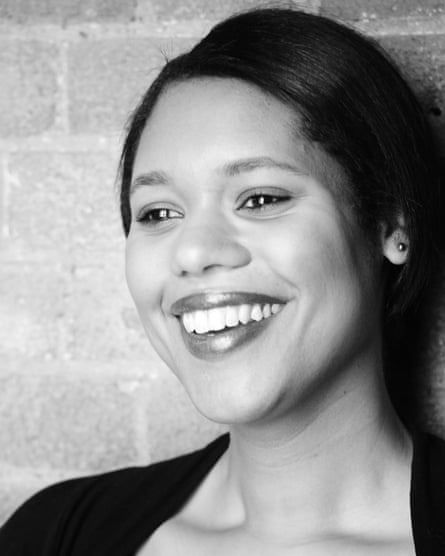
That terrain of historical consciousness is essential to Hannah Kendall's music. She is inspired by the idea of the "plantation machine", Cuban writer Antonio Benítez-Rojo's phrase, which sums up the industrial processes and global networks of dehumanising capital that powered the slave trade, which are still echoed, for Kendall, by all of today's machinery of capitalism, from environmental destruction to technological control.
These are fascinating and provocative ideas, but it's how Kendall turns them into visceral musical experience in the way she reworks the sound of ensembles and orchestras that counts. As Kendall puts it, she "creolises" the orchestra, putting dreadlock cuffs on the string instruments to change, mute and distort the sounds they make; her compositions include sound sources and instruments such as walkie-talkies, music boxes, harmonicas and kettles. These reference historical and musical contexts, from the blues to Kendall's imagination of the music made by enslaved people, including prayers and songs spoken and sung into kettles, to be out of earshot of the plantation owners.
Listen to Shouting Forever Into the Receiver or her recent Building a Burning House, which will be part of the Barbican's Always, Already There festival later this month, followed a few days later by the world premiere of her I Have Discovered the Secret of Death with the London Symphony Orchestra, also at the Barbican.
Kendall's music remakes the orchestra to interrogate the histories of trade, slavery, and globalisation that were the machines that made civilisations such as ours function, and to which the instruments, halls, and institutional fabric of the western orchestra are indebted. Her compositions tangibly connect musical culture with the reality of these complex and impure histories.
Sergiu Celibidache, meanwhile, is at the forefront of musical minds this week as a biopic of the conductor, The Yellow Tie opens in UK cinemas. The movie – the most watched Romanian film of 2025 – tells of his pursuit of music in the face of his father's fierce opposition, his appointment to the Berlin Philharmonic age 33 and how his single-minded and – supposedly – purist approach to music was born: his belief that any audio recording of a piece of music was a soul-stealing lie that could not represent the reality of live performance. (Although, hundreds of recordings of his work, especially in his later years, were released after his death in 1996.)
But here's another film worth watching, that tells a story about the conductor not told. Abbie Conant: A Solo Among Men.
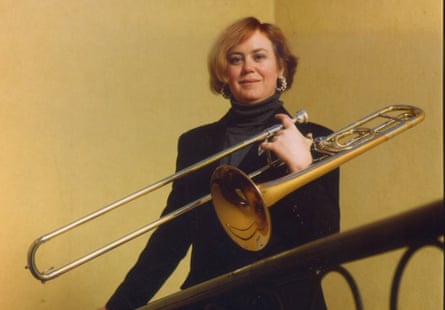
At 25, Conant was appointed Munich Philharmonic's principal trombone in 1980 after a blind audition, but wasn't allowed ever meaningfully to take up her job. As Celibidache, the orchestra's principal conductor, told her: "We need a man for the solo trombone". He couldn't really tell her why, Conant relates, but she was demoted to second trombone and her life was made a misery. She was paid less than her male colleagues, she was openly bullied by Celibidache, and when she initiated legal proceedings against the City of Munich (the Philharmonic's owner) alleging discrimination,she was forced to undergo humiliating medical and physical tests to prove her stamina, lung capacity and ability to play under pressure. It's a story of multidimensional misogyny. Conant won her case even though it took her over 12 years, and left the orchestra of her own accord in 1993.
Much of Celibidache's reputation hangs on the revelations and transcendence of his performances with the Munich Philharmonic, above all, of Bruckner's symphonies. But his excessively slow performances, sonically beautiful, but expressively one-dimensional, often feel to me like a Brucknerian bad joke. Calcifying these symphonies with a one-dimensional monumentalism does the expressive power and contradictions of Bruckner's music no favours. (Even more of a nadir is Celibidache's so-slow-it's-barely-alive performance of Bach's Mass in B Minor: the opening fugue is a masochistic trial of patience – try it, if you dare.)
But whatever you think Celibidache did or didn't do with the music he conducted: as Conant's experience shows, if you lose yourself to the revelations of his performances, you have to ignore the human cost they clearly came at. "Purity", as always, is no such thing, and comes at an inevitably impure price. Reich, like Kendall, understands this and composed and made music with empathy and understanding, rather than following an ideology that would rather pretend that the goal of transcendence is worth subjugating the human.
This week, Tom has been listening to: Kristian Bezuidenhout's latest, thrilling, volume of Mozart's piano concertos, playing fortepiano with the Freiburg Baroque Orchestra. I can't get enough of these records, and the way that Bezuidenhout plunges you right into the cauldron of the drama he and the players make in the D minor Concerto, or the joy of the D major concerto K175.