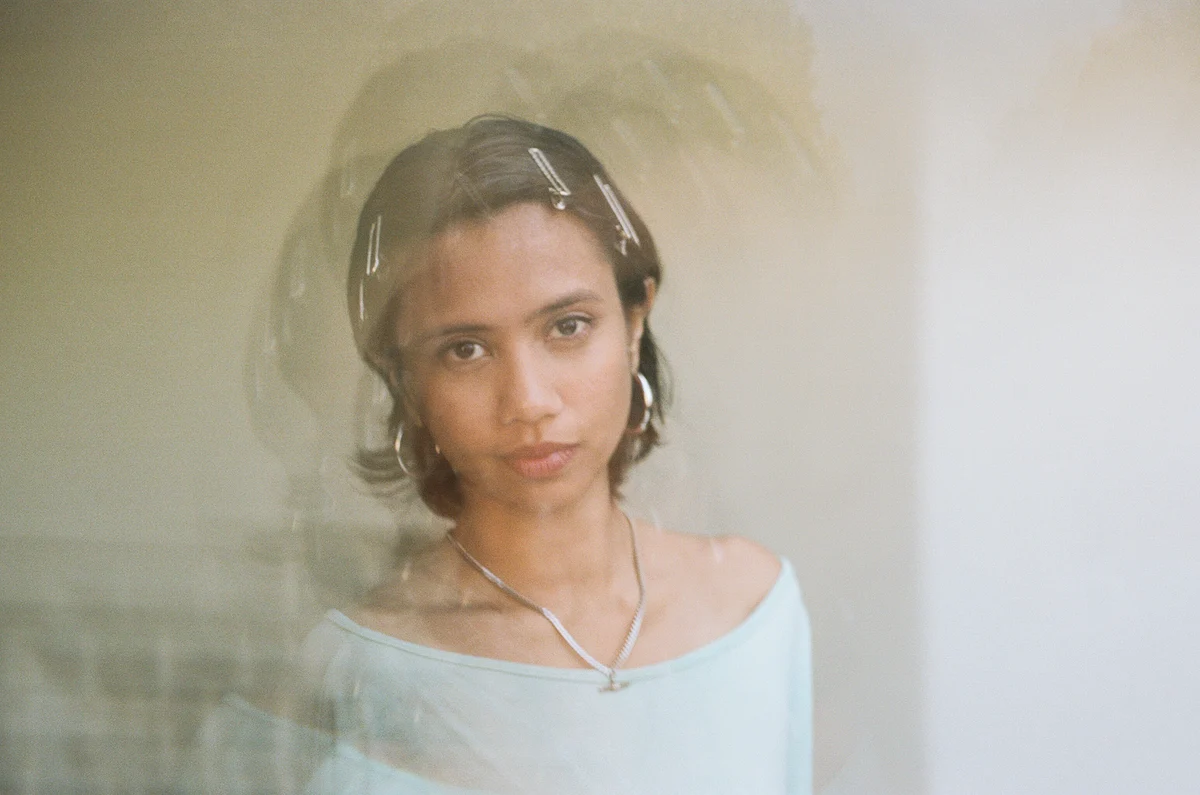
I ask her if she feels it's a necessity as an emerging artist to put so much into social media, visuals and video creation, or if she simply enjoys it.
”A bit of both. When you’re independent, you’re faced with constraints and you learn to do things yourself. I really do enjoy making my own visuals and giving a world to the sonics,” she muses. “I was so hyperfocused on music, I got kind of burnt out. By doing other things, I became more passionate about writing.”
To hone her visual mastery, she threw herself into learning programmes like Blender3D, touch design and coding. The y2k, rough-and-ready aesthetic of her visuals add to the grassroots allure of the work - once again, a far cry from the polished music video of ‘Afterglow’, but in all the right ways. For 2025 track ‘wicked games’, she filmed herself in front of £20 green screen, before layering her takes onto a pixelated 3D city map, where the camera pans and zooms across the buildings as if we’re navigating a rudimentary GoogleEarth. Meanwhile, the visualiser for ‘twenty9’ opens up a digital portal, presenting a multi-dimensional escape from heartbreak.
A self-described ‘digital daughter’ of surrealism, Yeira finds hope in the digitised reality and enjoys probing the creative realms found there. But she’s at a constant tug against the AI doomsphere, purposefully labelling her work ‘Not AI’ in her captions. In one post, she implores viewers to stop watching AI slop and spend time with her own work - “I still believe in human-made digital art” she stresses. At a time when more creatives are going offline and analogue, does she believe we can still rescue digital art from AI?
“Yes. The girls are taking [tech] back,” she says with a smile. “Have you seen that cyberdeck trend? I’m building one. We’re trying to take control of it again because it is such a big part of our lives, it’s not going to go away. So what we can do is make it cute - there’s no big corporation behind it trying to take away your data and soul.”