Born in London in 1981, Natasha Bedingfield is a singer and songwriter. Her 2004 debut album, Unwritten, sold more than 2.3m copies and featured the No 1 single These Words. She has released three further albums, scoring UK Top 10 hits and success in the US with Pocketful of Sunshine. Nearly two decades after it was released, her single Unwritten became a viral TikTok hit in 2021. Her new single, Dot Dot Dot, is out now.
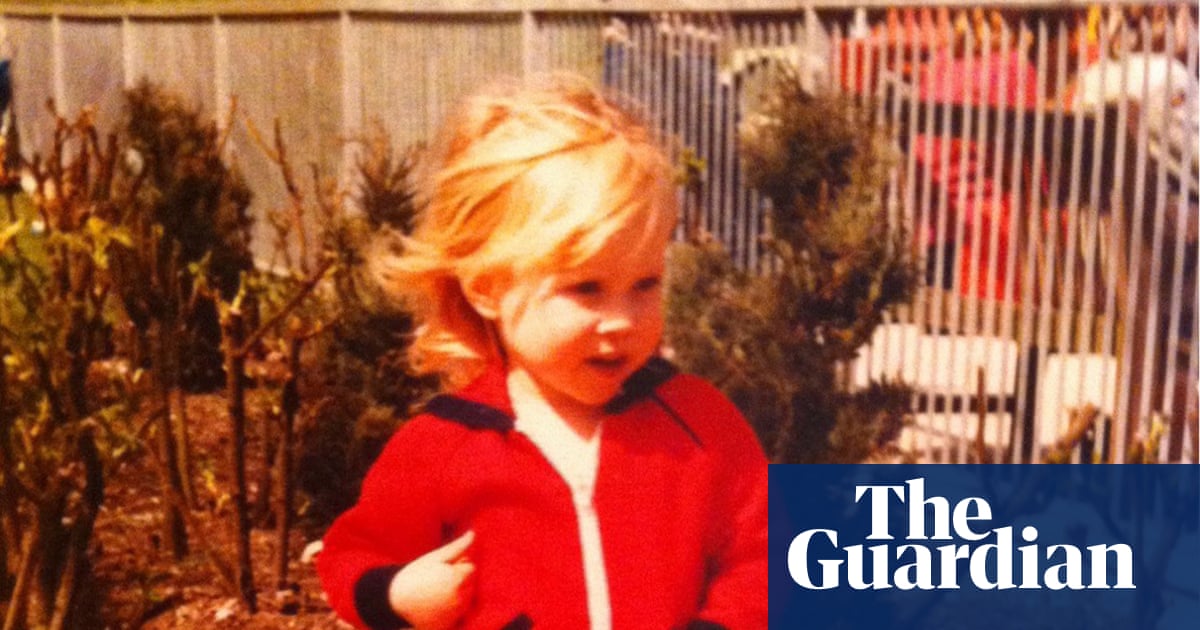
This was taken at Hilly Fields park in south-east London. I'm dressed in a sweet little tracksuit. I was a cute kid: I sucked my thumb until I was 11 and I had a sheepskin that I sniffed. But if anyone actually said I was cute, I'd reply: "No, I'm not!" I wanted to be taken seriously. That word made me think that nobody was listening to what I had to say.
My parents come from New Zealand, and when they had my brother Daniel they emigrated to England where they then had me and my two younger siblings. We lived in the inner city, so our backyard was a saviour. Together we were a pack and would spend all day making forts and watching frogs in the pond. We didn't have much money, but I was rich in love.
I come from a family of big thinkers. My parents are social workers and raised us to believe that everyone is equal. We were taught that you should talk to everyone, as you never know when you could be standing in front of an angel. Mum and Dad wanted each of us to learn in our own way, outside of a system, so I was home-schooled from 11 until 16. Back then it was a rebellious thing to do, but I loved self-study. I am overwhelmed by loudness, so the fact I didn't have to learn in a full class of students worked for me. It's ironic, really, considering my profession, but too much noise makes me shut down. Is that a neurodiversity thing? Probably.
As well as my parent, another big influence on my childhood was church. Every week we would go to a Jamaican church, one that really encouraged kids to get into music. I loved the culture there – as well as singing, we had a strong community of people of all ages.
When I was 18, I started travelling on the tube and doing late-night writing sessions with producers. My brother was the more obvious musician in the family. Daniel would be at home, saying things like, "Everyone be quiet – I'm recording!" Whereas I was more private – writing but keeping it to myself. Why? Some friendly acquaintances – family, friends – warned me that it might be hard to have two Bedingfields in the industry. "It's very rare that it would happen for both of you," they'd say. So I decided to get on with it quietly. In the end I said to my brother: "I know this is your thing, but it's actually my thing, too. And I'm not trying to take over from you." He, of course, supported me entirely.
Around the same time, I started studying psychology at university. I found the whole process stressful – I often felt dizzy, and struggled to learn all of the names and dates. My dad ended up saying: "We all know that you're a singer-songwriter – that is what you should be doing." He was the one who encouraged me to leave university and I will be for ever grateful.
When I started out, my label told me that I was a pop artist. But I wasn't Britney. I didn't even know what pop meant at the time, because I wasn't keeping an eye on the charts, I didn't listen to the radio. Even as a teenager I never had boybands on my wall. I was a fan of Coldplay, Björk, India Arie and Stevie Wonder. I didn't want to mime, or pole dance. I was just trying to be authentic. The only time I did learn a dance routine was for the video for Single. I did a few moves, then felt weird. They wanted to make me sexy, but the whole thing looked forced. It was frustrating. Female artists often get boiled down to how we look and it takes away from the substance of what we're actually saying.
I wrote Unwritten for my younger brother. It started as a poem, and then I tried to make it into a song with other writers, but they wanted to take a different approach, to do the whole blond bombshell pop type of thing. Then I met Danielle Brisebois [from New Radicals] and together we clicked and made Unwritten. The whole process felt simple. I wasn't showing off vocally. I was just singing to my brother. I didn't think about whether it would be a hit.
After the success of my first album, I started taking myself less seriously in my lyrics. I'd grown into my humour, which is where a song like I Wanna Have Your Babies comes from. The track was restricted by BBC Radio 2 as they thought it was encouraging young people to have kids. But, really, it was meant to make people laugh as it was about the thoughts you never say out loud when you are dating someone new. In the end, my label sent me to the US – a way to test out my career without other parts of the world watching. They essentially geo-blocked me. I had hits in the US, but they were not released in England. I even sang at the White House for Obama, and my mum couldn't watch it. It was a bit like being banished. The only bonus was that being a Briton in the US meant I could get away with certain things. Because I taught myself to read, there were some words I knew how to write but not say out loud. In my song These Words, I use the word hyperbole. A word I had never said out loud before. I sang it wrong for a long time, but told the Americans that was how you pronounced it in England.
After that I left my label and had a 10-year period where I was doing a lot of corporate shows and touring. I got married, had a baby and kept on songwriting. I wrote with some Swedish songwriters, but the songs didn't show much growth. Then around the pandemic, people started making up dances to Unwritten. It went viral and I started having a resurgence. Some friends called and said: "Natasha, you have to become part of the conversation." I didn't get it at first. I thought TikTok was just a dance app and I didn't want to dance. But once I saw the videos I realised it was a creative place to be. I've embraced the song's new life ever since.
My goal now is to write my Purple Rain. I haven't written my best songs yet and I want a timeless classic. Getting older doesn't threaten me – artists like Tina Turner had careers that took off when they were my age. I find that so inspiring, as so often it's, like, women are written off when they reach a certain age.
I still feel so alive when I am making songs. It's that buzz of expressing an emotion that everyone feels, but is hard to articulate without music. I don't get excited about the things other people do – I don't like going to Disneyland or holiday resorts. Even on my birthday I would rather be in a recording studio, making songs and geeking out about a triple entendre, than at a party. I don't think that will ever change.