The singer and songwriter Mighty Sparrow, who has died aged 91, was quite simply the greatest calypsonian there has ever been. For at least five decades he was a monumental figure on the Caribbean music scene, while also capturing the hearts and minds of millions of fans around the world with self-penned songs that were the quintessential calypso mix of political commentary, humour, sexual innuendo and melody.
Loved and feted by Trinidadians more than any other public figure in the island's history, he was to calypso what Bob Marley was to reggae – an inspirational living legend. In Britain, no less than elsewhere, the sheer wit and quality of classic songs such as Jean and Dinah, Congo Man and Mae Mae brought calypso to many who would never otherwise have encountered the music form, particularly in the 1950s, 60s and 70s, when he was in his prime.
In 1956, aged 20, Sparrow made a breathtaking appearance in Trinidad's annual calypso monarch competition, where he was mistakenly introduced on stage as Lord Melody, who was his idol. Showing the presence of mind, sense of fun and self-confidence that characterised his stage appearances, he jokingly began to sing a Melody tune before launching into his own new composition – Jean and Dinah.
A tongue-in-cheek celebration of the recent withdrawal of American military personnel from Trinidad – and the fact that local women would now have to turn their attentions to people such as Sparrow rather than their gum-chewing, nylon-toting guests – the song became an instant classic and gave its composer the title of Calypso Monarch, the ultimate achievement for a calypsonian.
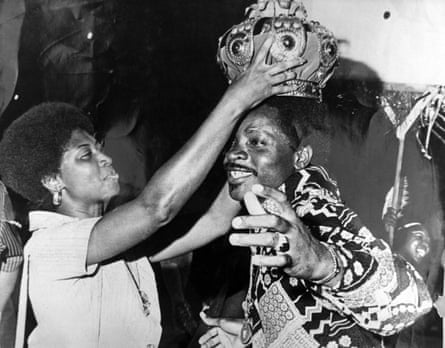
For good measure, its infectious melody also won Sparrow the 1956 Road March crown, awarded to the singer of the tune played most often on the streets at carnival each year. It was a hitherto unprecedented double and set him off on a period of dominance that would never seriously abate.
He went on to win both titles seven more times in all, a feat that was all the more notable because he essentially retired from the calypso monarch competition in the mid-70s. His only real rival throughout his career was his friend Lord Kitchener, who often beat him to the Road March title but failed to match his consistency.
Although he was known throughout the world as a Trinidadian, Sparrow was born on the nearby island of Grenada, in Grand Roy, a fishing community. When he was 18 months old his carpenter father, Rupert, who had moved to Trinidad seeking work, paid for his family to take the boat to join him in Port of Spain, where new oil wealth had tempted thousands of other "small islanders" to gather.
Then known as Slinger Francisco, Sparrow spent his early life in the impoverished sectors of Port of Spain, which helped to shape the left-leaning political beliefs that later came out in songs such as Capitalism Gone Mad and Neurosis of the Rich. He often liked to call himself the "mouthpiece of the underprivileged".
His mother, Clarissa, claimed her son's musical bent derived from the fact that she was strutting her stuff at a dancehall at 4am when her labour pains began. His talent soon manifested itself at Port of Spain's Newtown Catholic boys' school, where he relished singing Gregorian chants and plainsong in Latin as head choir boy, as well as performing at the weekly Friday school concerts.
At home he would reproduce some of the less risque local calypsos in front of his mother while playing on a comb and paper, and was influenced by the songs of Nat King Cole, Sarah Vaughan and Frank Sinatra on the radio.
Although straitened circumstances meant he did not finish his schooling, he was a bright boy who was well-behaved. He did, however, have a cheeky streak, and although his intelligence landed him a government job as a teenager, he was drawn to the exciting world of calypso. His mother was dismayed, for at the time calypso was viewed as beyond the pale by members of "respectable" society. As it turned out, her son did more than anyone to bring such music into global acceptance.
In his early days at the calypso venues, older singers ribbed Francisco for his unusually hyperactive movements around the stage, which they said made him look "like a little sparrow". The name stuck, with the epithet "mighty" later added by popular acclamation once his greatness could no longer be disputed. He was also affectionately known as "Birdie".
The key to Sparrow's long-term success, aside from his versatile and honeyed voice, was his rare ability to deliver songs that were irresistible as good-time dance tunes but also worked on other levels, making political and social points with a subtlety that often elevated them to works of art.
While this was evident in many of his more overtly political tunes, it was perhaps best epitomised by one of his most enduring hits, Congo Man (1965), about two white women who are captured and eaten by a cannibal in the Congo.
Laced with sexual innuendo and underscored with unspoken racial hang-ups, the song draws in the listener with a cliched tale of the two unfortunates being boiled in a pot, accompanied by the memorable lines: "I envy the Congo man / I wish it was me, I would 'a shake he hand / He eat 'til he stomach upset / and I never eat a white meat yet'. Though superficially a frivolous party tune, there can scarcely have been a more succinct commentary on the sensitivities and myths surrounding inter-racial relationships.
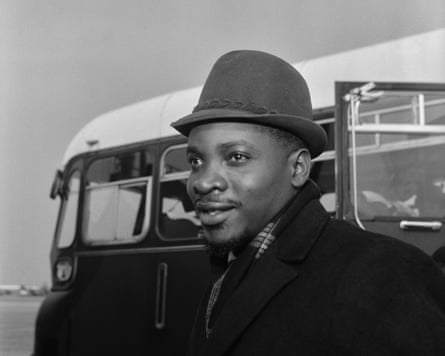
Sparrow's ability to wrap a serious message in a humorous, tuneful coating made him an important figure in the Caribbean, and it is no exaggeration to say that he was a significant educator and champion of the region's masses. He put forward the cause of West Indian self-determination during the late 50s and 60s, and was a vocal supporter, in song, of Trinidad's long-serving left-of-centre nationalist prime minister Eric Williams, although he admitted to becoming more centrist in later life.
During his early career he wrote compositions that encouraged nation-building, Caribbean unity and self-improvement, including songs such as Our Model Nation (1962), celebrating Trinidadian independence, Pay As You Earn (1958), supporting Williams's new tax system, Federation (1959), bemoaning the impending break-up of the short-lived West Indies Federation, and Dan Is the Man in the Van (1963), an attack on the legacy of culturally insensitive British colonial education.
Later on he branched out into commentary on myriad aspects of international affairs, addressing issues such as the Crown Heights racial riots in New York, the divorce of Princess Anne, the Kerry Packer affair, Idi Amin's brutal rule in Uganda, and the fall of the Shah.
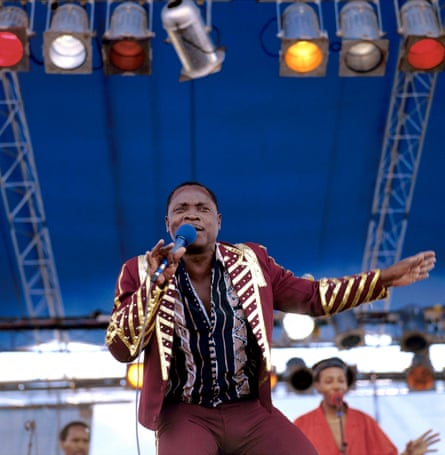
Although his output was prodigious – he was responsible for more than 500 calypsos and released more than 70 albums during an immensely hard-working career – Sparrow maintained high standards throughout. He rode changes in musical taste with ease, not least when calypso transmogrified into the more funky, electrified form of soca in the 70s.
While much of his later material fared less well in sales terms, he was in huge demand as a live performer throughout his life and made a handsome living out of his trade – a rarity in the hand-to-mouth world of calypso. From the mid-80s he began to spend increasingly long periods in New York, where he bought a second home.
He was presented with honours all around the world from various governments and cities, took Trinidad's highest accolade, the Order of the Republic of Trinidad & Tobago, was given many degrees, and in Nigeria was made honorary chief of the Yorubas as Chief Omowale of Ikoyi. In 2015 he was appointed OBE. For good measure he also proclaimed himself "calypso king of the world".
Supremely self-assured yet down-to-earth and rarely egotistical, Sparrow was confident of his legacy in his later years. If ever asked whether anyone was likely to surpass his feats, he was often fond of replying, with some justification, that "he ain't born yet and he mudder dead".
A father of nine, he is survived by his Barbadian wife, Margaret Skinner.