t's fair to say that Meshell Ndegeocello has made a career out of declining to stay in one place too long. Since helping spark the neo soul genre with her 1993 debut album, Plantation Lullabies, she has variously worked in the fields of jazz, R&B, alternative rock, reggae, fusion and gospel. Her last album, No More Water: The Gospel of James Baldwin, seemed intent on defying any kind of classification, leaping from Afrobeat funk to electronic abstraction to a closing track that sounded not unlike the xx: it won a Grammy for best alternative jazz album, which slightly smacked of the awards' organisers throwing up their hands in defeat after a lengthy and fruitless attempt to decide in which category it might belong.
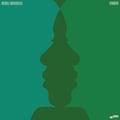
Even if you knew absolutely nothing about Ndegeocello's eclectic musical history, you could get a sense of her restlessness just from looking at the back cover of Synonym, a collection of cover versions rendered as duets. The source material picks from the oeuvres of Bob Dylan, Jennifer Lopez, the Human League, Barbra Streisand and Chris Cornell's short-lived grunge supergroup Temple of the Dog, among others. Her collaborators range from Bill Callahan and Cat Power to Chaka Khan and Cynthia Erivo, by way of jazz pianist Robert Glasper.
There is a certain unifying thread in Ndegeocello's desire to make Synonym "an expression of queer liberation as a synonym for liberation of all kinds". A lot of the tracks were formerly male-female duets, but are sung here by two women, occasionally altering their meaning in the process: the chorus of Streisand's Guilty is transformed into an anthem of defiance when performed by Ndegeocello and Ink (a singer-songwriter best known as co-author of Beyonce's Texas Hold 'Em). Even that unifying thread, though, occasionally snaps, as if Ndegeocello were too restive to stick with an overarching concept.
It doesn't fit her and Callahan's closing version of Dylan's With God on Our Side, which sets the old Bob Dylan broadside against a backing that initially carries a trace of the song's acoustic roots – accompanied by mandolin and piano, Callaghan and Ndegeocello's harmonies are slightly out of step, as if they're belting it out live in a folk club – but gradually becomes consumed by hissing electronic noise and distorted guitar. Ndegeocello has suggested the idea was to match the sound to the aggression of the lyrics; the end result feels more like a protest song struggling to be heard amid the noise of modern life. It's potent either way.
Certainly, Ndegeocello is far too restive an artist to leave a song much as you remember it. Her selections are the work of someone with great taste: Be Real Black for Me is far from the best-known of Flack and Hathaway's duets, but its blend of politics and sexual charge is extraordinary. Yet Synonym deals not so much in cover versions as reinventions, and frequently stunning ones at that.
Her version of Don't You Want Me with Cat Power recasts the song as reggae, an idea that sounds a lot better coming out of the speakers than it looks on paper, and there's a mood-shifting alteration in the vocal delivery that goes far beyond the obvious gender-swap. Ndegeocello sings Phil Oakey's lines with a slightly halting phrasing; they suddenly sound fragile and vulnerable rather than how-dare-you? huffy. And Cat Power delivers Susan Ann Sulley's as if she couldn't, and indeed never did, care less: she sounds as if she's singing "the five years we have had have been such good times, I still love you" over her shoulder while bolting for the door.
Ndegeocello takes such liberties with the melody, tempo and even lyrics of Dylan's It Ain't Me Babe that it's almost unrecognisable (you could argue that has pretty much been Dylan's approach to his back catalogue for the last thirtysomething years). The result here is not just startling but beautiful, a strange, dream-like mass of electric guitar arpeggios, musical box tones and mandolin.
You could read Ndegeocello's version of Yarborough and Peoples' old soul weekender classic Don't Stop the Music as a comment on the devaluing of music in the streaming era: the electronic voice now feels ominous and menacing, less as though you're being invited to dance the night away than cajoled into consuming more and more, regardless of its quality. It's a marked contrast to Ndegeocello's plaintive vocal and acoustic guitar.
Sometimes, Synonym's approach falters. The restructuring of Sonny and Cher's I Got You Babe is impressively radical: Anohni takes Cher's role, while Ndegeocello deploys her lowest register to render Sonny's part, and the music is restructured as sparse jazz, with deeply un-pop chords performed on brass and woodwind. The end result doesn't quite hold together emotionally, though: the tumbling, folk-rock fatalism of the original has vanished, but it's unclear what has replaced it.
Equally, the odd experiment not entirely coming off feels a very small price to pay for an album as fascinating as this: proof both of Ndegeocello's unique, personal approach to what she does, and of pop's infinite malleability in the right hands. It might celebrate collaboration, but Synonym feels like an entirely singular achievement.
This week Alexis listened to
The Hermanos brothers' latest Dan Auerbach-produced album is intended to evoke the landscape of the Andes, and whether you're familiar with South America or not, the guitar shimmer of Canto Andino will certainly transport you somewhere.