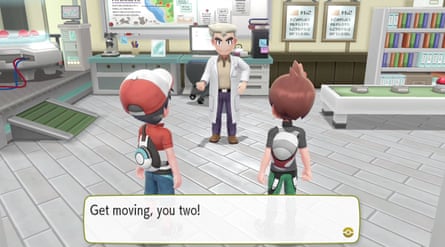
rofessors may be the most revered characters in the fictional world of Pokémon (apart from perhaps the Gym Leaders). In Pokémon Red and Blue, Professor Oak greets the player in a pixelated lab coat, and later provides trainers with their first battle partner; since then, each successive generation of games has introduced another professor to aid and guide trainers through their journeys. If you've ever played a Pokémon game, they are often the first people that you meet, apart from your in-game mom.
But you may not know that there are also real-world Pokémon professors – volunteers who help organise the game's competitive communities around the world. Instead of lab coats, they can be seen at events wearing red Pikachu-mascot shirts labelled "staff", paired with black trousers and shoes.
I spoke with several of these profs at the 2026 Pokémon world championships in San Francisco, California. Not only do they happily distribute their knowledge about Pokémon, but they also serve as vital staff at the tournament, working as referees and teachers, as well as event managers.
The official Pokémon website describes the Pokémon Professor Program as a "global network of passionate and knowledgable fans" who volunteer their time to help run official Pokémon events. There were roughly 300 Pokémon professors present at the 2026 Pokémon world championships, according to a representative of the Pokémon Company International. A professor's responsibilities depend on the game they work with and their assigned role at the event. A Pokémon professor officiating a game such as Pokémon Unite might be hyper-focused on wrangling players and providing technical support, whereas a judge for a trading card game tournament might provide competitors with hands-on guidance as they navigate their first live competitive event.
Gemma Byard, a head judge in charge of making the final call on any decisions or questions that arise, became a Pokémon professor after her son started competing in the trading card game. She says that she and the other professors help ensure the integrity of the tournament, describing what goes into the day-to-day work at worlds – such as ensuring that event officials record the results of competitions correctly.
"We've got to make sure that all of the match slips have the correct results on them and are signed by the players to ensure, you know, that we get the right results," Byard said. "We have to make sure that the venue is safe for everybody that's around. We're constantly looking out for anything that may be unsafe, or anybody that shouldn't be in the venue. There's a lot to think about on top of the rulings."
Professors often juggle multiple responsibilities on the competition floor and will travel across the world to staff an event such as the world championships. When asked about how the Pokémon Company International compensates its professors, however, most people I spoke to declined to disclose details. One Pokémon professor said that the European professors are compensated with goodies, such as a special staff kit with merchandise, whereas the professors at regional tournaments in the US are paid wages; the same professor said that the Pokémon Company International helped with travel, room and board for the event. (When asked for an official statement explaining how Pokémon professors are paid, a representative from the Pokémon Company International declined to comment.)
Evelyne de Groot travelled from the Netherlands to staff this year's championships. Like the other Pokémon professors I spoke to, de Groot worked her way up to staffing worlds after organising local competitions in her home region. Before we spoke, she was helping usher players out of the Moscone Center after the main convention hall closed for the evening. This year, she worked at a trading card game side event called Pokémon Sisterhood League, dedicated to giving women and non-binary people a chance to compete and connect.
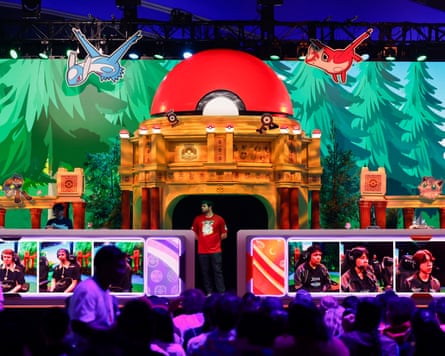
For her, a good Pokémon professor must balance enforcing the rules with giving competitors the tools they need to enjoy the game itself. She compared the position to working in "customer service".
"[Players] make friendships. You see them smile. You see them have a good time, but you're part of that," de Groot said. "If you're not organising it properly, if you don't give them clear instructions, then you see some failure […] You will sometimes get questions. You need to make sure you're knowledgable regarding that. If you don't know what you're doing, if you don't know how the card game works, then you can't help them."
De Groot's experience as a professor has been relatively relaxed. However, some professors must serve as referees and make contentious calls throughout the competition. For Byard, that means she sometimes needs to deal with upset players. At one point during the tournament, she had to manage a player who was upset with a ruling that didn't go his way.
"I got called over to the table, and I said to him: 'Look, I need you just to keep your voice down and be respectful, and we'll talk through what's happened.' And he was like: 'I don't need to talk to you. I need to talk to the head judge,'" Byard said, chuckling. "Well, buddy, you are talking to the head judge. That's the kind of sass that we deal with a lot."
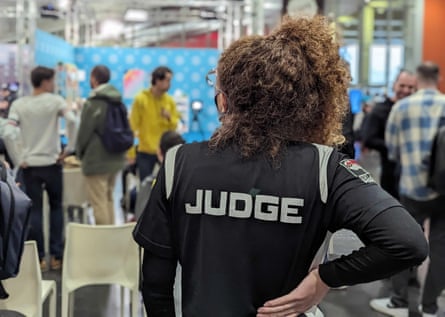
A difficult call can lead to controversy. Earlier this year, a ruling from a different judge at another tournament made headlines when a competitive Pokémon Go player who goes by the name Firestar73 was disqualified after winning the final at the Pokémon Orlando regional championships. Many, including the competitor himself in a statement, conceded that the decision was a "good-faith mistake".
I asked Byard about what it's like to make tough calls at the tournament. She said that the professors are often seen as "the bad guys". What does she wish competitors and viewers understood about the role?
"What they don't understand is that they're seeing a picture, but we're getting the entire story, and we're making the decisions based upon that story," she said. "That can make a real difference. And we're the ones putting ourselves out there to right a situation that's been broken by players. We haven't caused any distress. We're there just to try and put it back together again."
-
Interviews for this feature took place at the Pokémon world championships in San Francisco. The writer's travel and accommodation expenses were met by the Pokémon Company.