What would you do if you were a straight man in a gay club and found yourself on the receiving end of unwanted physical attention?
Out in Soho, London, for a friend’s birthday, faced exactly that situation. It was a moment that, while uncomfortable, is not entirely alien within queer culture. Rather than feeling defensive or threatened, the Rizzle Kicks rapper took from that encounter a fresh perspective on the kind of behaviour women might experience from straight men on a night out. He also learned that touch doesn’t always have to be sexual in queer spaces.
“It actually profoundly upset me, because I left ironically with a deeper understanding of what women might experience at a club,” Stephens says. What warms me is that he didn’t lash out; instead, he walked away with a clearer insight into the complex layers of intimacy between gay men in queer spaces. It makes me think about my own interactions on a night out, and how my friends and I can take for granted the freedom to peck each other on the lips or hold each other’s waists, assuming a shared understanding.
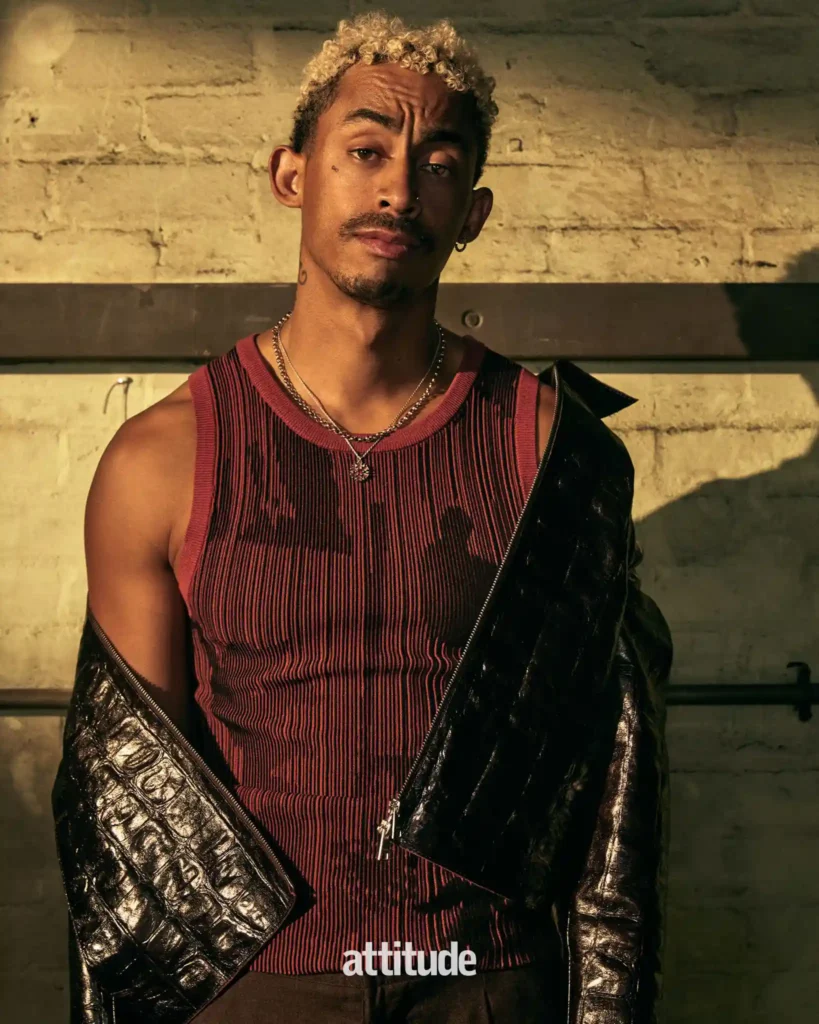
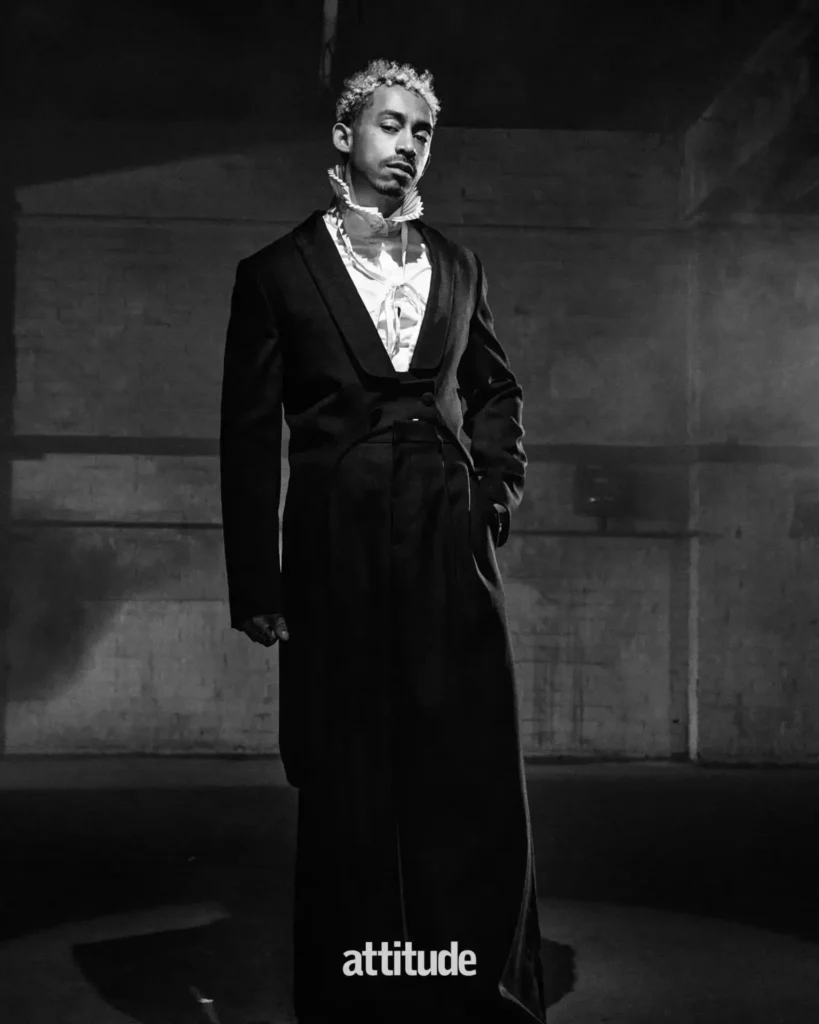
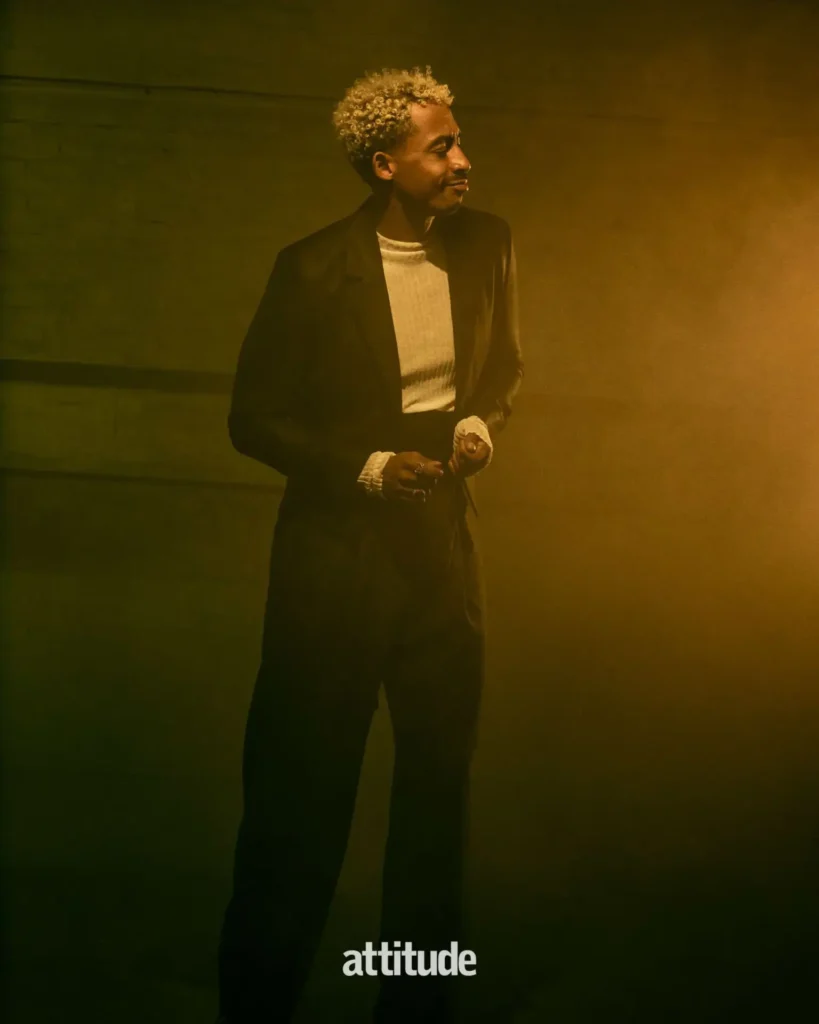
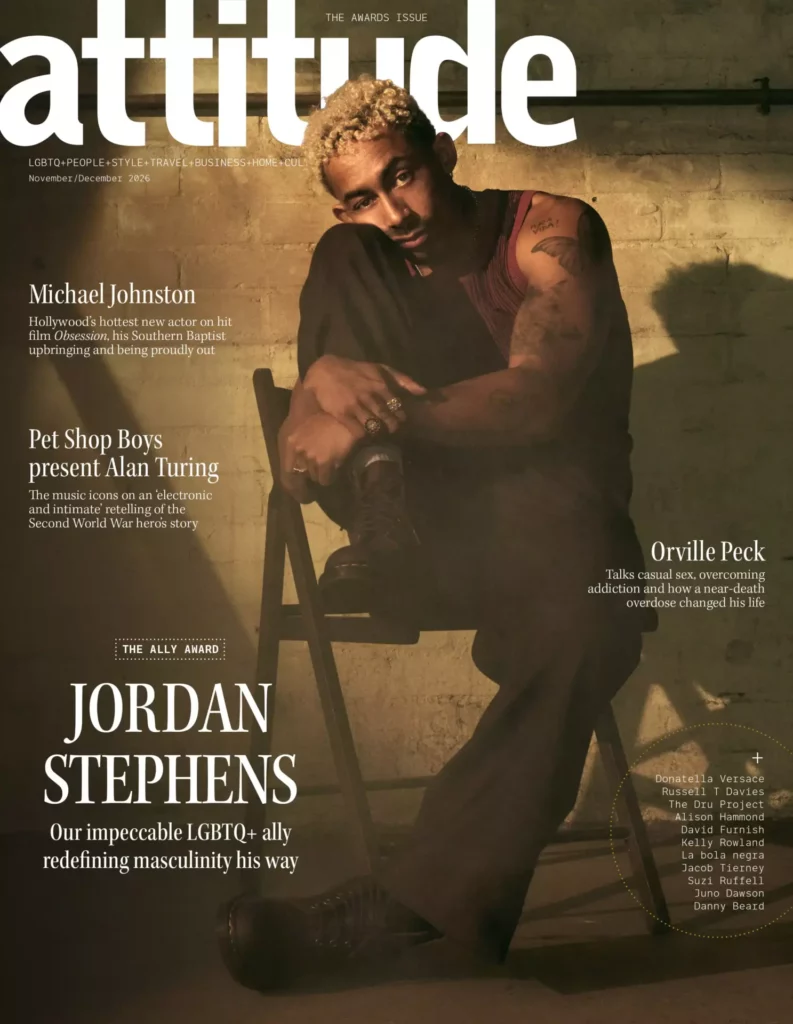
“I’m very tactile,” says Stephens, explaining his reasoned reaction, “because I feel like in the gay community, the queer community, it’s much more common for men to be touchy with each other and not always in a sexual sense.” He feels at ease around gay men and in queer spaces, and this, he explains, can sometimes lead people in the community to assume he is one of their own. And it’s clear that Stephens is entirely content with that, even when he has to explain that he is straight. It’s an outlook that has earned him The Ally Award at the 2026, in partnership with and electrified by .
Jordan Stephens on queer role models
We meet for his cover shoot in MetalCraft Studios, an industrial, artfully dishevelled photo studio in north London. Attitude first spoke to Stephens at the Trans Mission Live fundraiser concert at Wembley Arena in March this year, where he discussed his long connection with the LGBTQ+ community.
“My compassion and curiosity and admiration for the queer community definitely stems from the people that my mum had around me as a child,” says Stephens, already off to a poetic start. Stephens was born on 25 January 1992 into a working-class family in Neasden, London. From the age of 10, he lived in Brighton, and some of his brightest memories are rooted in the diversity of the people his mother Emma Boulting gathered around him – the “gifts”, as he calls them.
One of those treasures was his godfather, acclaimed musician , whom Stephens previously described to Attitude as “an incredible gay Black man with a beautiful voice”. He recalls visiting McAlmont’s home, which he shared with his so-called “friend” Bill, who has since passed away. “He had this crazy collection of Barbie dolls. And again, as a boy, I didn’t think that was weird,” he explains.
There were people around him of “all shapes, sizes, races, genders, proclivities” says Stephens, but he wasn’t focused on labels. “That aspect of their identity wasn’t at the forefront of their personality,” he says. He remembers the people around him for the impact they had on him as a boy, and the lasting influence they have had on the 34-year-old man he has become. As he recalls his colourful, Barbie-filled childhood, what’s striking is how little that mature philosophy seems to have changed.
Remembering a time when McAlmont “had an issue with his music career because he was being encouraged to sing about being in a heterosexual relationship”, Stephens adds, “I remember even as a child being, like, ‘That doesn’t seem fair.’ You know, I remember feeling, like, a sense of injustice on his behalf.”
Learning from past mistakes
Despite this, Stephens fell into the secondary school habit of using the word “gay” as an insult during his time at Blatchington Mill School in Hove. “It was definitely just, like, a desire to fit in,” says Stephens, now clearly disgusted by the idea. “I’m hoping that my stances as an adult are kind of somewhat restorative in that way. But the irony is I wasn’t,” Stephens reflects on his choice of terminology, even when it came to race. “It’s just assimilation. Sad to think about,” he says.
This is an excerpt of a feature appearing in Attitude’s November/December 2026 issue.