he summer Diana Reid spent writing her film adaptation of Sense and Sensibility, she found herself having some oddly formal conversations down at the pub. The Australian author used only about 25 lines from Jane Austen's first published novel for her screenplay, inventing most of the dialogue herself. To be able to mimic that very distinctive voice, Reid had to dive headfirst into studying Austen's rhythm and sentence structure.
"I got so immersed in the language it infected my own speech. I would be describing someone I just met, and I'd be like, 'Oh, he was most amiable!'" Reid says, laughing. "It was a kind of insanity."
Until now, Reid has been best known as the novelist behind bestsellers like 2021's Love and Virtue and 2025's Signs of Damage, which are set among the university campuses and Euro holiday destinations of the modern world. Adapting a book published in 1811, then, was a very different job – but one that became oddly freeing.
"So much of writing contemporary dialogue is trying to make it sound believable, which often involves making people inarticulate," Reid says. "Writing this, I got to sit at my computer and be like, 'What is the most elegant way this sentiment could possibly be expressed?' … It was actually a joy."
Reid is speaking to me via Zoom from a chandelier-clad hotel room in Santa Fe, New Mexico, where she's been flown to promote the film (one of the perks of screenwriting is that the film industry has much "deeper pockets" than publishing, she says).
Her adaptation, directed by Georgia Oakley and released in Australia and the US this month, retells the story of Elinor and Marianne Dashwood, who are forced out of the landed gentry and into more precarious financial circumstances after the death of their father. Elinor falls for Edward Ferrars, a man who can't seem to articulate his obvious reciprocal feelings for her, and Marianne is soon swept off her feet by the roguishly charming John Willoughby – but neither romance is what it first seems.
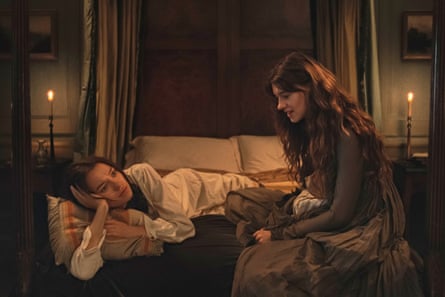
Reid and producer India Flint pitched the idea of a new adaptation because they wanted to tackle something by Austen, who Reid loves and considers a "genius". Pride and Prejudice had been very successfully remade in 2015 and Emma more recently in 2020 – but the Dashwood sisters hadn't been revisited on film in 30 years, when Ang Lee delivered his beloved 1995 take on the tale.
The Oscar-winning screenplay for that adaptation was penned by Emma Thompson, who also played Elinor. Unlike that thoroughly British star, Reid's Australian accent has been tripping up some British fans and media.
"In recent weeks it's almost felt like in Britain, perhaps [Austen] is viewed as a piece of cultural inheritance and that there are worthy and unworthy successors – and it seems striking or hubristic that an Australian would think themselves worthy," Reid says. "But I never thought of Jane Austen as a possession. I just thought that she was something for anyone who was interested … if you don't think of her as a possession, then it doesn't occur to you to worry about whether it's your right to receive it."
What give Reid pause, though, was how high a bar Ang Lee's adaptation set.
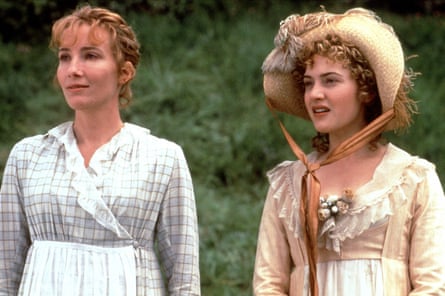
"I love the 1995 film, and my initial instinct was that there was a reason it hadn't been [adapted] for 30 years, and that was because the 1995 film was perfect," Reid says. "But then I read the book and I rewatched the movie, and I felt that I did find something to say that I didn't think had been said on screen before."
Reid believes the main love story of Sense and Sensibility isn't between Elinor and Edward or Marianne and Willoughby (or Colonel Brandon), but between the two sisters themselves – one logical and level-headed, the other utterly free-spirited.
"The spine of the story was about how these two women depend on each other, challenge each other and ultimately change each other," Reid says. "And while there are romances in it, it's almost as if the men are the rewards that the two women get for having gone on this journey of growth together."
So in structuring the script, Reid tried to approach it almost as a romantic comedy but with the story arc plotted along tension between the sisters, not two love interests: the film's climax comes when Elinor and Marianne are at odds, and their happy ending requires each to adapt qualities from the other. "Which is a very typical romcom structure," Reid says.

Purists will be pleased to hear that Reid's adaptation is a fairly faithful one – Emerald Fennell's Wuthering Heights this is not. But she did make some tweaks to the romantic fate of the younger Dashwood sister, feeling that Austen's original ending wouldn't sit well with modern audiences, who "respect what Marianne represents" – a bold, headstrong woman who goes for what she wants in life and accepts no substitutes.
Instead of "scene after scene of women sitting down in the parlour drinking tea, as Austen can sometimes feel", she and Oakley opted to depict the Dashwood sisters cooking, chopping firewood and tending the veggie patch. Aesthetically, the film feels far drearier than the 1995 film, too, as the typical aestheticisation of Austen's work – "very floral and bonnets; cosy, comfy escapism" – didn't sit right with Reid, who considers her work very dark and imbued with an often cruel sense of humour.
What hasn't changed is the heart of Sense and Sensibility. As Reid sees it, Austen's work possesses "a generosity about the possibility of love" that is both romantic and timeless – and why it's perennially reinvented.
"I don't feel like Austen is, like, my cultural property now as a result of having written it," Reid says. "I just feel like it is this thing that's endlessly adaptable – there's probably someone else doing their Sense and Sensibility adaptation right now. It is for everyone, and it's still for everyone."
-
Sense and Sensibility is in cinemas now in the UK, Australia and the US