’s 2024 rebrand, and the subsequent unveil of the Type 00 concept car, began as a low-key announcement and ended in a media masterclass. Marketing 101 became a cultural moment, and it seemed everyone had something to say, the ’bot army especially, whose masters’ intent was appearing increasingly transparent.
Attitude made its thoughts clear on sight of long-term partner Jaguar’s buffeting at the hands of those who’d added 2+2 to make 104, as everything from an avant garde teaser film without a car to eclectic paint shades and electric power being used as a stick to beat the Coventry carmaker. It was nonsense, and we said so.
Fast-forward to late September 2026 and, a week ahead of the unveiling of the production-ready to the world, Jaguar invited a select list of members – Attitude’s new business network, if you know you know – through the doors of Jaguar at Knightsbridge to become the first (and only) LGBTQ+ media brand to preview its creation.
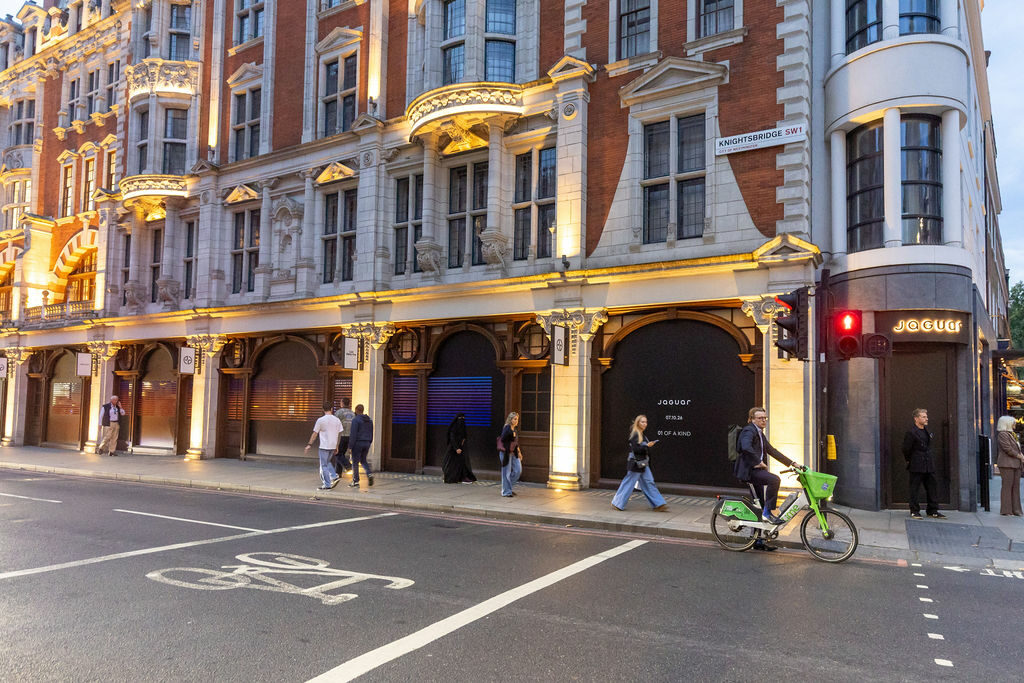
After a decade-long partnership between Attitude and Jaguar, this felt like the beginning of a new chapter. We were welcomed into the not-yet-open London venue: less a showroom than a physical manifestation of the world Jaguar has spent the past several years constructing around itself.
Phones were surrendered, NDAs were signed, and we gathered in the venue’s ‘Intrigue’ space with the wired energy of people who have been told they are about to see something they promised not to tell anyone else about. Christmas morning, but for gays who love cars.
This curated piece of Knightsbridge real estate operates on a different frequency from any high-end rival display area. The arrival space gives way to the tableau of a high-end restaurant, tables beautifully set, air purified and perfumed. Front of house Waiters move through the room with balletic precision, replenishing flutes of Gusbourne 51 Degrees North, Vintage 2016. Michelin-worthy Exmouth caviar and Devon crab tartlets, and venison tartare canapés, are elegantly served.
The room is punctuated by deconstructed elements of Jaguar Type 01 and its materials, laid out with museum-grade precision. The interior palette draws inspiration from travertine stone, capturing its layered tones and the play of light and shadow. Our minds can’t yet assemble it all into a cohesive whole.
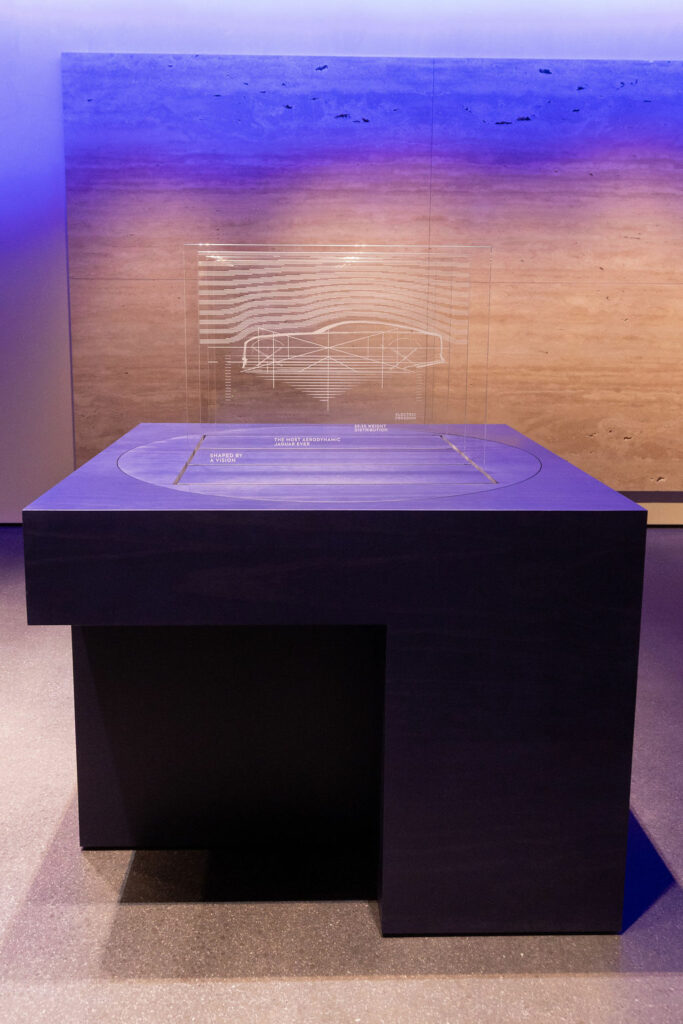
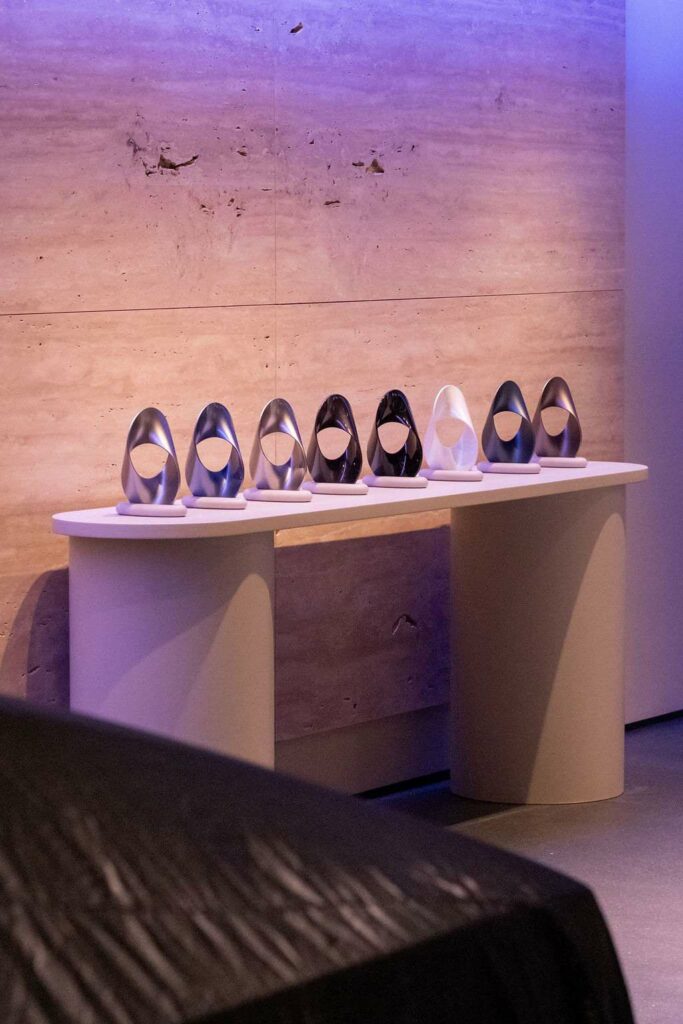
Meanwhile, somewhere beneath the conversation sits a carefully engineered soundtrack – each area of the venue has its own curated sound and vibe created to complement the environment and experience. Nevertheless, the thrum of adrenaline is palpable, at odds with the serenity of a perfectly and thoughtfully manicured environment. Just beyond us, Type 01 awaits. A new, ultra-luxury point of view.
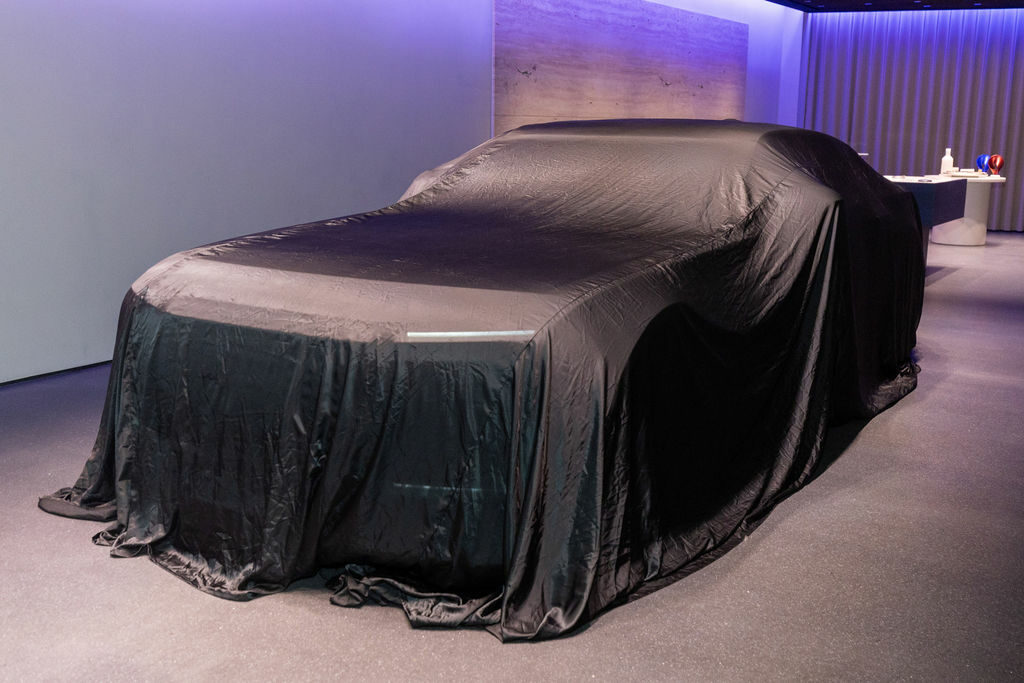
Positioned in the ‘Dwell’ section, even beneath an enormous sweep of black silk, its presence is undeniable and (it has to be said) colossal. Not simply in physical dimensions – although the proportions underneath the fabric are enough to give away that this is not going to be a wallflower – but in stature. A bonnet stretches towards one end of the room; haunches rise beneath the silk at the other. The great cat is asleep, but very obviously present; through the silk, narrow slits of white light suggest its eyes are already open.
Directly behind her, away from guests, Attitude sits down with the two men best placed to romanticise what lay beneath the cover. Santino Pietrosanti is director, Jaguar UK; Axel Goulée is Jaguar’s lead materiality designer, one of the creatives responsible for translating the new Jaguar philosophy into colour, surfaces and physical matter.
For Pietrosanti, the night represents the culmination of something much more enduring.
“We’ve been on such a long journey with Jaguar,” he tells me. “The reimagination has been an intensive process spanning six years: a labour of love that required the team to rewrite the rule book, challenge convention and (a particularly lovely turn of phrase), take “the cat back to its natural habitat”.
What does he want the people waiting a few metres away to feel when the wrap comes off?
That Jaguar is “back in the space it always deserved to be”, he says. Awe. Wonder. The sensations the greatest Jaguars have historically provoked.
Goulée is approaching the same moment from somewhere much more personal.
When Attitude last spoke to him, earlier this year for the Creators video series, Type 01 was still largely an act of imagination: sketches, concepts, colours, philosophy. Tonight the “asset” sits just behind us. He is emotional, and it is infectious.
Five years of people’s lives, he explains, have gone into what is underneath that sheet. Looking around the venue, he can see individual hands everywhere: a person responsible for this surface, another for that colour, another for a detail most of us may never consciously notice. For a designer who has spent years looking at individual elements, tonight is one of the first opportunities to see them come back together as a whole. “It all belongs together,” he says.
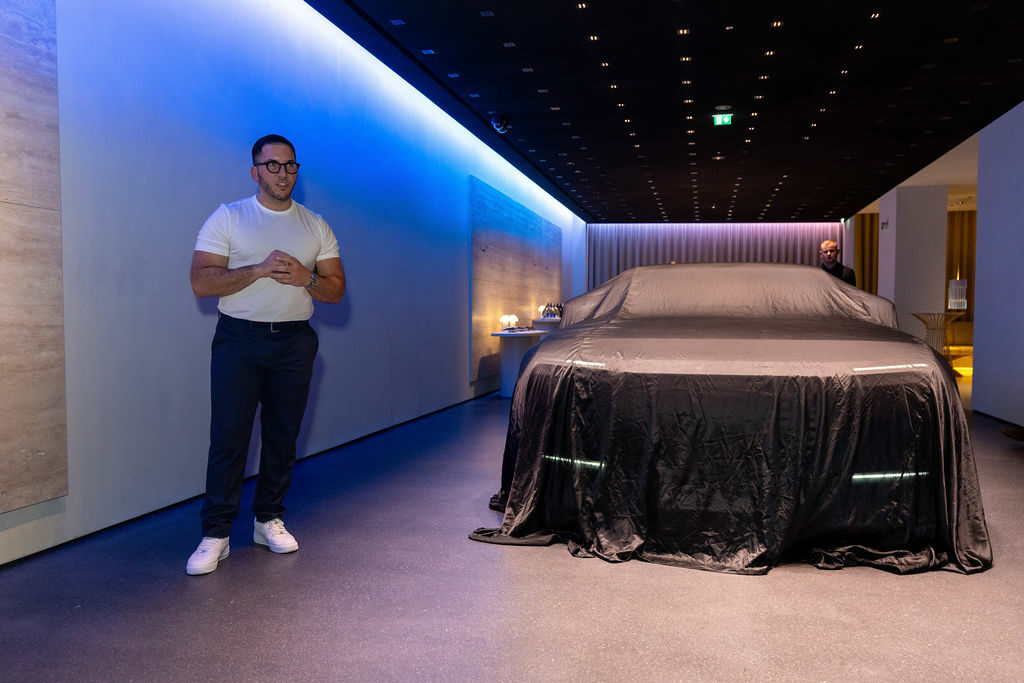
There is an enormous difference between looking at an image and standing beside an object. Even under silk, Type 01 has a peculiar gravity. It reorganises the space around it. Pietrosanti smiles. “Jaguars were never vanilla,” he tells me.
The E-type wasn’t. The XJ-S wasn’t. The XJ220 certainly wasn’t. Each arrived, in its own era, with enough audacity to challenge what people thought a Jaguar – or indeed a car – ought to look like. Type 01, he says, needed to do the same
It needed drama. The sort of car, he says, you want to arrive in at a restaurant with your friends; a status object that communicates something about your relationship with originality.
Goulée uses a different word. Soul. “Presence” is the thing he believes photography cannot communicate. You can photograph the surfaces. You can capture the proportions. You can obsess over details. But there is, he argues, something about encountering the car physically that refuses translation.
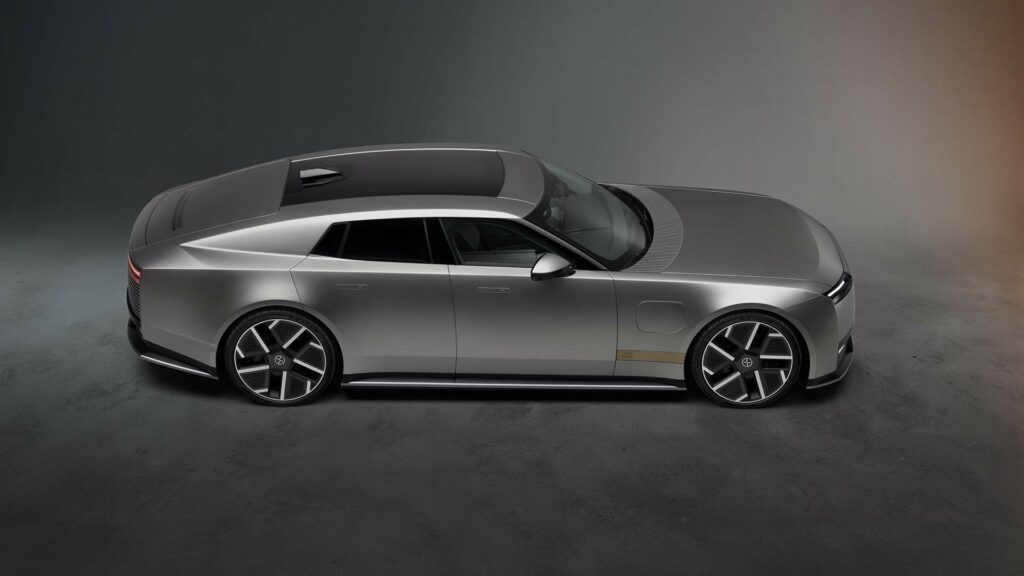
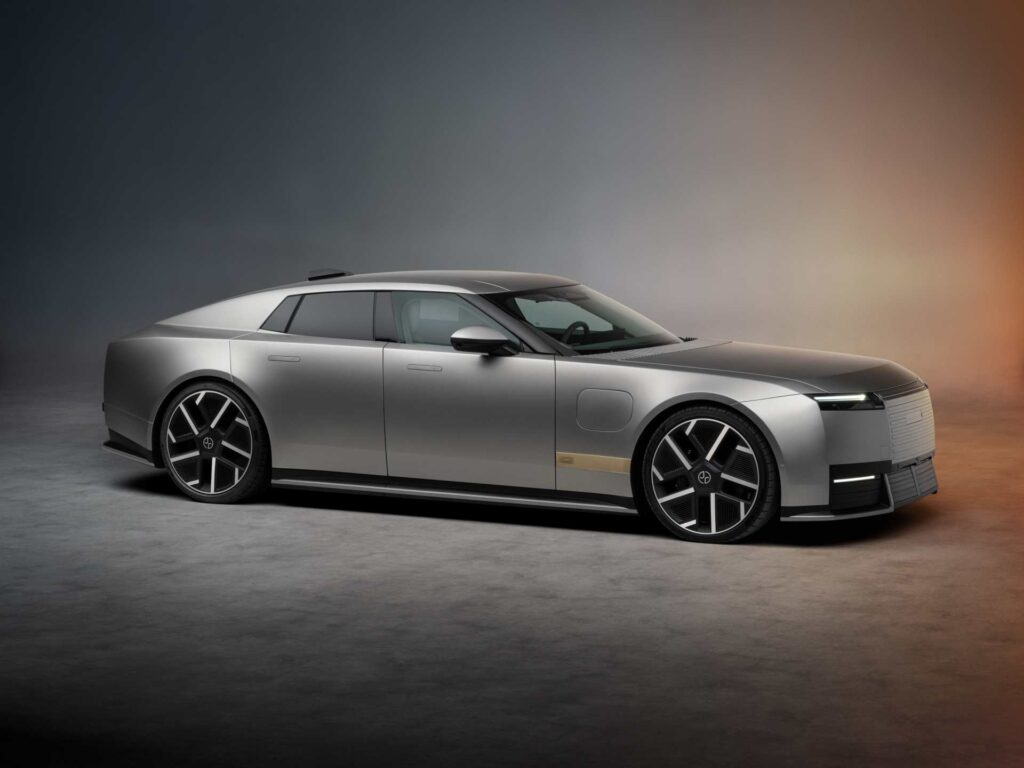
For him, creating an electric vehicle with a soul might be one of the hardest tricks in modern automotive design. And colour has been central to that. The car we are about to see is finished in Visionary Silver Satin, which Goulée describes as Type 01’s hero colour and the first paint developed for the model back in 2021. The satin finish eliminates many of the unwanted reflections of a conventional gloss paint and allows the form itself to read almost like sculpture.
More importantly, the colour represents continuity. The ambition, he explains, existed at the beginning of the project; the same colour now coats the finished object five years later. It is a chromatic thread connecting intention with reality.
And then it’s time.
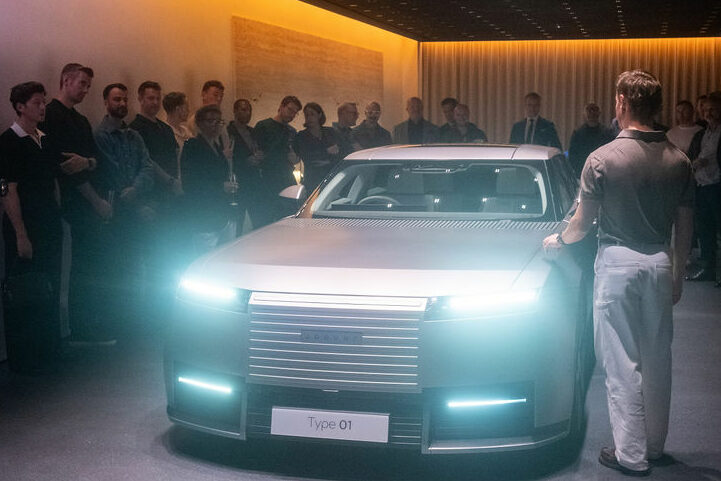
Conversations abandoned mid-sentence. Glasses lowered. That peculiar British instinct to pretend one isn’t too keen briefly collapses as the rush of bodies conjures up an airstream. Attitude Publisher Darren Styles OBE welcomes the room side by side with Pietrosanti, and the silk vanishes before our eyes.
For a fraction of a second there is silence. All eyes fix. An explosion of applause. Thirty-something people edge ever closer as they try to process it. Pack leaders circle it. Goulée had told me he would be watching precisely this.

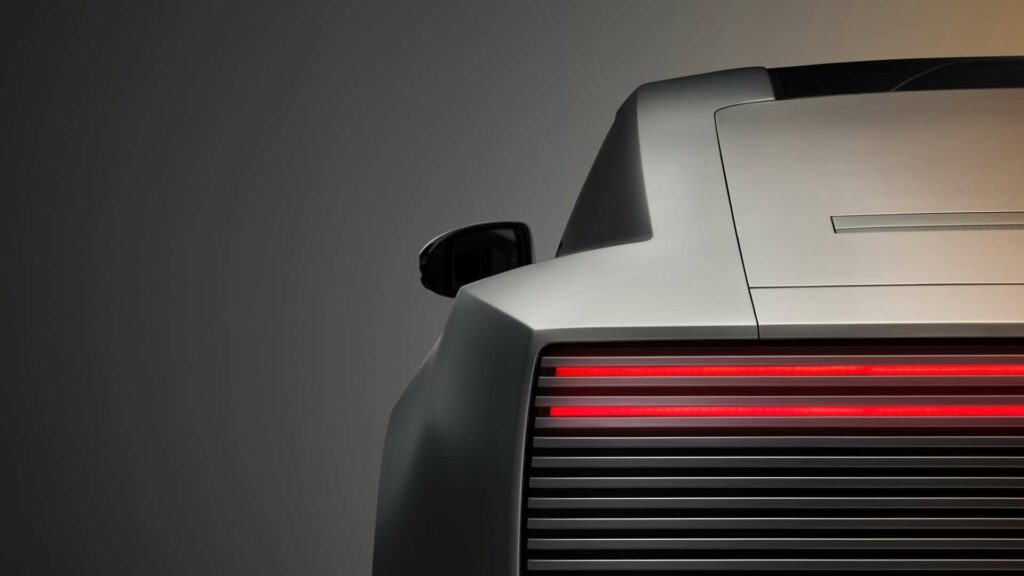
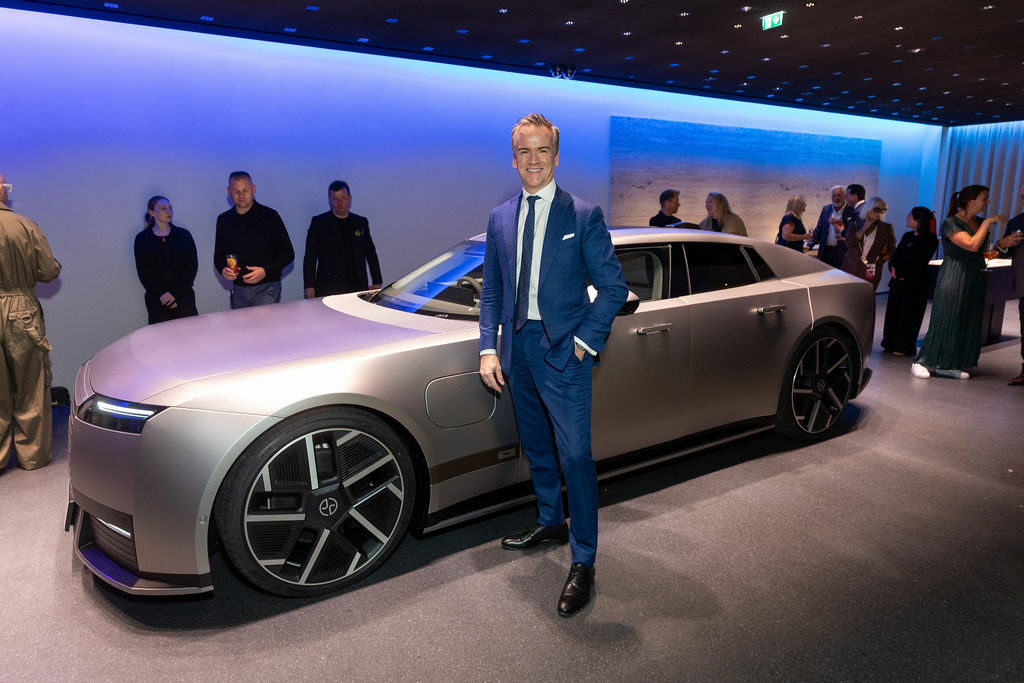
It’s difficult to process the scale of the car. Luxuriously long, low and preposterously broad, not so much a collection of lines as a single piece of mass: an extravagant bonnet stretching improbably ahead of a set-back cabin, vast uninterrupted planes of bodywork absorbing the showroom light at their edges. Minimalist. Faceted.

The space becomes an excellent study in human silhouettes.
Designers, says Goulée, learn to watch the non-verbal as much as the verbal. He wanted the raised eyebrows and involuntary smiles; the movement towards the car rather than away from it. Most of all, he wanted surprise – the reaction that says, in his words, “Oh, they weren’t lying.” And oh my, does he get his wish.
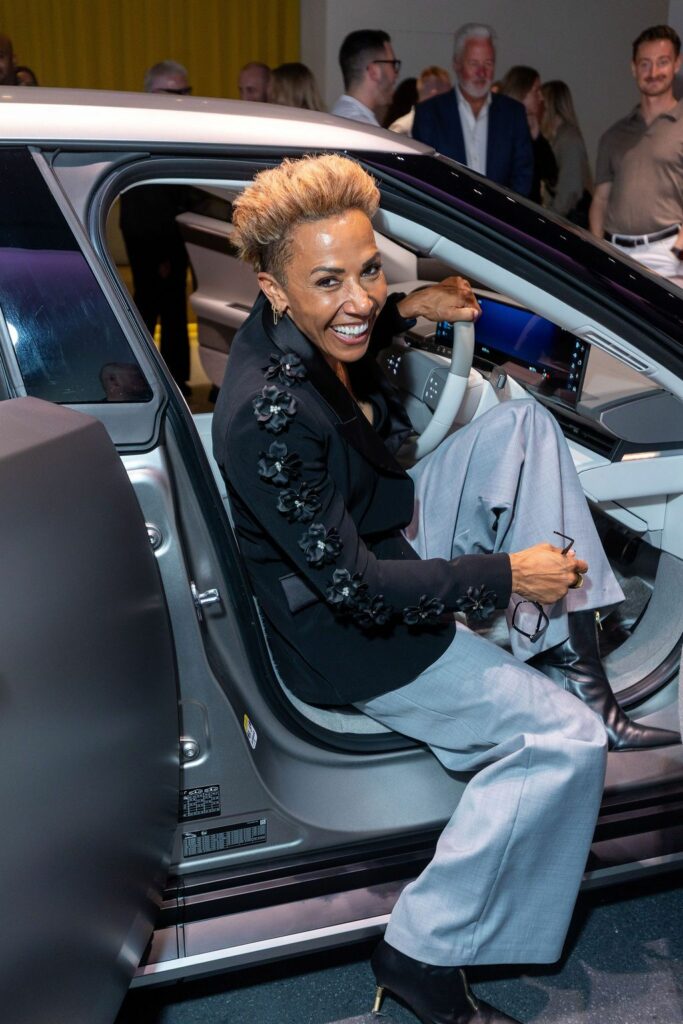
Dame Kelly Holmes wants inside first. She settles into position and takes in the extraordinary sweep of the cabin. Inside, the discussion about physicality starts to make much more sense. Type 01 photographs beautifully – of course it does – but a photograph makes it finite. Standing beside it, and particularly sitting within it, reveals what photographs flatten: scale, tactility, weight, the odd emotional charge of an object occupying the same space as you.
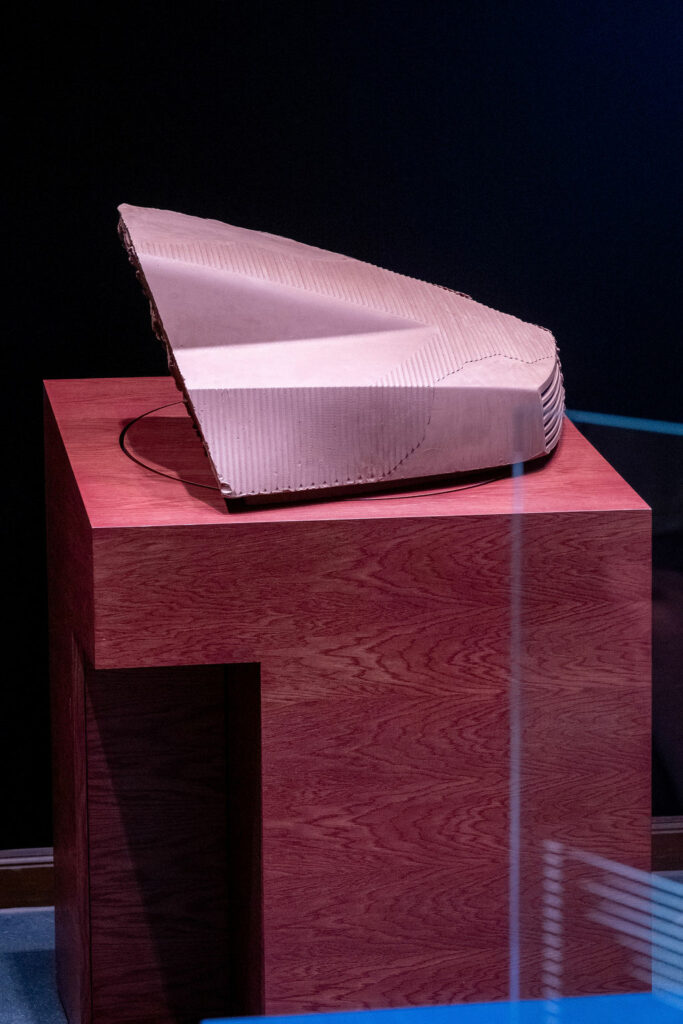
Among the deconstructed fragments of the vehicle is a scaled clay study of Type 01’s three-quarter rear. I ask Pietrosanti which object in the gallery feels most like him. He chooses the clay. Not the technology. Not the finished metal. Clay. Because somebody has touched it.
“Someone’s hands mould it,” he says. “The fingerprints of somebody is in that clay.”
It is a wonderfully analogue thought for a car born into an age obsessed with artificial intelligence. Pietrosanti argues that this is precisely the point: in a world where AI can copy almost anything, “copying nothing” has become an increasingly difficult creative instruction.
Jaguar still uses clay because human beings can do something machines struggle to replicate: make judgement through touch.
Type 01 is not merely the answer to the question: what will the new Jaguar look like? For the people who made it, it is supposed to answer the much harder question of whether the extraordinary amount of noise generated by Jaguar’s rebirth would eventually resolve itself into something coherent.
Pietrosanti calls the vehicle “the final piece of the puzzle”.
First came the reimagined brand. Then the philosophy. Then Type 00 – the concept that signalled the design language and intent. Type 01 is the moment, he hopes, when people finally see those pieces together and “the light bulbs really go off”.
The responsibility, as he frames it, was not simply to design the next Jaguar. It was to create a Jaguar capable of carrying the marque through its next 90 years. Which brings us back to the slightly provocative question hanging over this evening. Why us? Why Attitude? Why invite a group of LGBTQ+ business leaders, broadcasters, creatives, lawyers, actors, entrepreneurs and cultural figures into the room before everybody else?
There is, of course, a tried-and-tested commercial answer. LGBTQ+ audiences have long been understood as influential consumers of luxury, culture, design, fashion and travel. But that answer alone would make this evening considerably less interesting.
Pietrosanti rejects the idea that Jaguar should be doing anything conventionally.
Jaguar, he says, has always lived inside culture: in film, in music, within the fabric of Britain and far beyond it. The Attitude Collective gives the brand a room full of people with “their finger on the pulse of culture”, able to hear its story directly and, crucially, “undiluted, untouched” from the people who created the thingGoulée goes somewhere even more interesting. I ask him who needs to own this car.
People who want to feel special, he says. People who celebrate individuality. People prepared to “completely disregard convention”. Someone who can look at an object and say: this is me.
Which begs an obvious follow-up. “Would you say this is a love letter to our community?” He pauses. “Yeah.”
And then something shifts. He stops answering like a designer describing a product. Our community, he says, needs objects that are simply able to exist in the world and own the space they occupy. “We don’t need to apologise anymore.”
Type 01, to him, is unapologetic. It’s here. It takes up space. It possesses an aura. And, he says, there is something familiar in that. “We’re here, not moving, staying – and we radiate culturally.”
For all the engineering, branding, paint chemistry and enormously expensive automotive hardware surrounding us, this might be the simplest explanation all evening for why Jaguar and Attitude keep finding their way into the same room. Long may it continue.