“I remember being in the car with my mother and we were having some deep and meaningful conversation. I nearly did it then, but I just couldn’t pluck up the courage.”
came out as gay to friends when he was 28, but it took until he was 40, in 2002, to tell his parents. “It was put in a convenient cupboard that was never to be opened, and it didn’t particularly bother me,” he now tells Attitude.
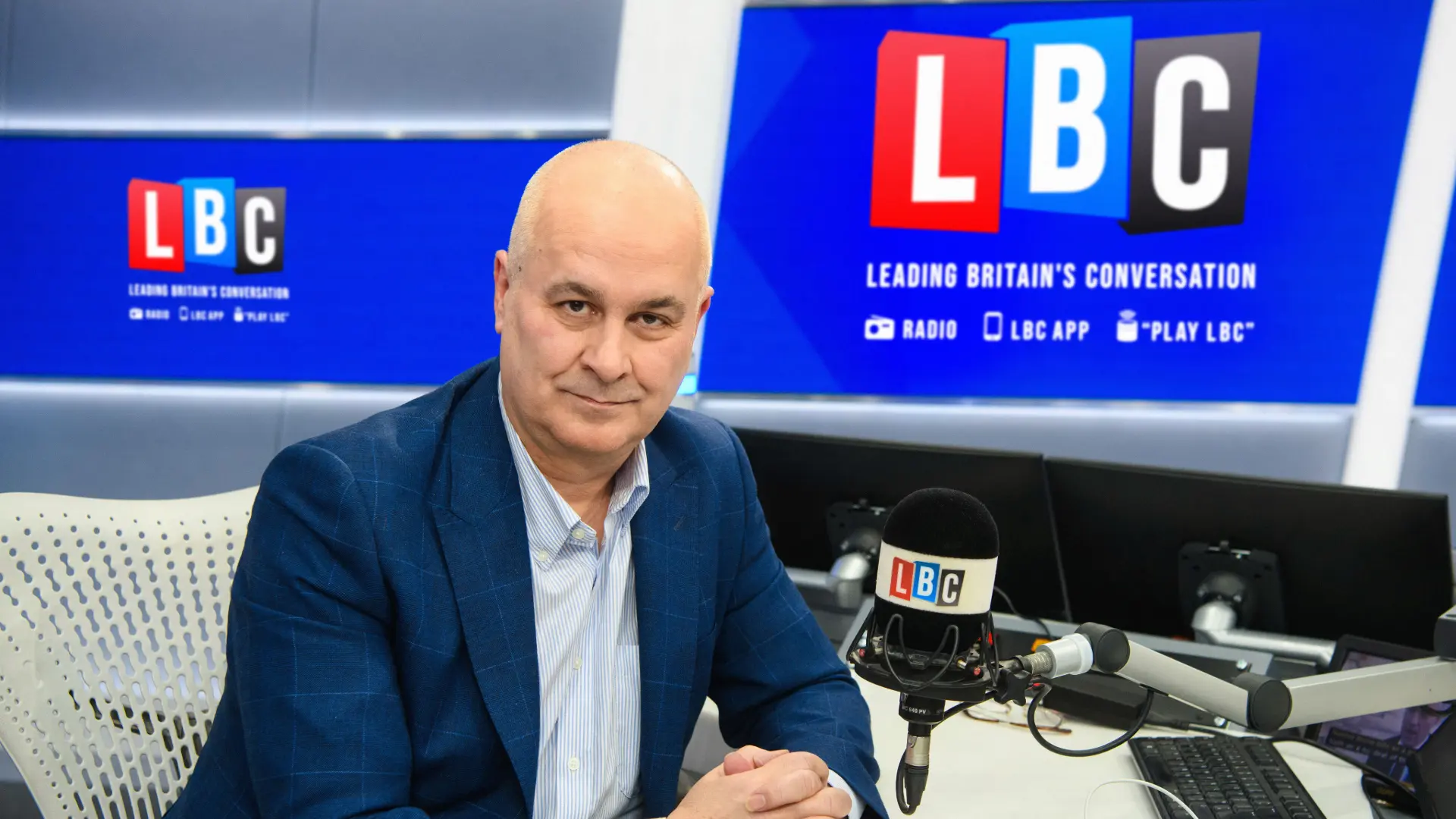
We meet in the airy atrium of a building in London’s Millbank, Iain sits louchely on the sofa across from me, speaking in the soft, warm timbre I recognise so well from . At 64, the Tory campaigner turned PR, turned political journalist and blogger, turned bookseller, turned radio host, is working as hard as ever, presenting four weekly talkshows: “I don’t want to stop doing it at all. I love it, and the longer I can do it, the better,” he says.
“The Daily Mail then wrote some diary column that called me ‘overtly gay’. I took them to the Press Complaints Commission and lost”
Weeks after we speak, he’ll be on TV, too, to memorialise the Reform Justice Spokesperson and former Tory MP , who was “still so full of life”. (A man was charged in July with her murder). But right now, Dale tells me that she refused to write her own memoirs: “She said she didn’t want ‘a friendless old age’. She said, ‘If you write an autobiography, it has to be warts and all.’”
And so Dale’s book, Have I Said Too Much? is here in much detail. It is as much about his ascent from growing up on a farm in Essex to becoming one of the UK’s best recognised presenters, as it is about the political era he has lived through.
Dale, who has never been to any Pride, anywhere, has “always regarded myself as a man that happens to be gay, as opposed to a gay person who happens to be a man” and yet homophobia has marred much of his political ambition. In the lead up to his 2005 bid to be MP of North Norfolk, his attendance at a meeting of the Tory Campaign for Homosexual Equality sparked gossip. The book explains that he told a local hustings: “Yes, I am gay, but I’m also a supporter of West Ham United – far more damaging in Norfolk, I would have thought.”
And remarkably, when he ran for selection in Bracknell, he explains: “The Daily Mail then wrote some diary column that called me ‘overtly gay’. I took them to the Press Complaints Commission and lost.
“The Conservative Party wouldn’t exist without the gays”
“If I hadn’t been gay, I would have been an MP… but I’m not sitting here thinking, ‘Oh, if only’… in my non-political working life. I can’t think of any way that [being gay has] negatively impacted me.”
In fact, he now half-jokes, “The Conservative Party wouldn’t exist without the gays.”
As for Section 28, the party’s policy that, from 1988 until 2003, gagged public authorities from “promoting” homosexuality, Dale has mixed feelings: “I just took a very simplistic view that, well, I don’t really think anything to do with sort of sex should be in schools.”
But he now recognises the “chilling effect” of the law, telling Attitude: “If that had been 10 years earlier, and I, as a 15-year-old, had wanted to talk to a teacher, maybe they would just think they couldn’t even broach it.” Dale also can’t see the then-prime minister’s motivations for turning Lord Halsbury’s bill into law. “I still can’t understand Margaret Thatcher’s logic in it. She was never very censorious, a lot of her advisers were gay.”
All that said, he finds it “a bit weird that even now people still hark back to that as a reason to not support the Conservative Party…I think, well, look at what’s happened since then”.
“I wouldn’t say I’ve ever been addicted to sex per se, but I was addicted to the whole sort of sauna experience”
Indeed, in the late 80s, Dale, who does not identify as bi, dated women: “I didn’t have a girlfriend to hide the fact that I was gay, and I genuinely had feelings for them. But once it got to a certain point, I just didn’t go any further.”
Soon enough, though, when it came to men: “I was a sauna whore.”
“I wouldn’t say I’ve ever been addicted to sex per se, but I was addicted to the whole sort of sauna experience.”
He wasn’t the only one. In the 1990s, Dale says, “They were all over the place… I kind of regret their disappearance, they’ve been overtaken by the apps and they’re just so much more anonymous than [being] with real people. And okay, you might find someone hideous, and they might find you hideous, but you can still have a conversation with them.”
As the book details, Dale met two long-term boyfriends and several friends through saunas, and he now says “it was like a bar where you could just strike up a conversation, which didn’t necessarily lead to anything else”.
Now, though, he is concerned at how few gay spaces there are: “If you’re not in a relationship and you’re my sort of age now, apart from Grindr, how else would you meet someone?”
“I don’t remember being concerned about [HIV/AIDS] because I thought ‘I don’t do that’”
When he was having anonymous sex in London’s ‘90s sauna scene, did the prospect of HIV/Aids ever worry him? “Too much information,” he smiles, furtively. “But I don’t really do anal, never really have done, I could probably count on my fingers on two hands the times I’ve done it.
“I don’t remember being concerned about [HIV/AIDS] because I thought ‘I don’t do that.’”
When I suggest that this may be why he’s not an ardent member of the gay community, he laughs: “I think that’s overthinking it.”
Safe sex is multifaceted, though. And in one disturbing passage of the book, Dale details an encounter where, in his youth, a drunk man repeatedly tried to rape him: “He made clear he intended to have anal sex with me and wasn’t going to take no for an answer.”
Dale then describes an almighty struggle to break free, before eventually, thankfully, making his escape. And yet, “I wasn’t traumatised by it,” he says, adding, “I could have been if he’d actually gone through with it… but I did exactly what a lot of women do in those circumstances and thought it was my own fault.”
Now in his seventh decade, he is both a product of his generation and background, yet has witnessed a time of serious social progress.
“I could never have predicted that gay people would be allowed to adopt, get married, have exactly the same rights as anyone else”
“I don’t think people realise that in only a quarter of a century, all of this legislation has been brought in… I could never have predicted that gay people would be allowed to adopt, get married, have exactly the same rights as anyone else. It is a phenomenal thing to happen in such a short time.”
When Dale was born, homosexuality was still a crime punishable by imprisonment. By 2008, he and his partner John got a civil partnership, and in 2015, upgraded it to a wedding.
Widdecombe, a devout Catholic, refused to attend even his civil partnership but told Dale in 2019 that despite disagreeing with equal marriage, “You can’t reverse something like that. Once you’ve done it, you can’t take it away from people.” Dale is confident that even believes this, and there is little risk of a rollback of LGBTQ+ rights should Reform get into power. “I do have Nigel Farage’s phone number and believe me, the first sign of anything [to roll back equal marriage], I will use it.”
As for trans rights, which many would argue have already been set back, Dale seems tired: “There’s no sense of nuance about it… I’ve tried over the years to not be ideological.” He details his frustrations with two gender critical feminists who’ve been on his show. One is “vicious”, the other “couldn’t come up with the proof that [trans women in women’s prisons] is an issue”. At the same time, he now refuses to debate one particular trans campaigner. “I got on with her very, very well. But if I slightly deviated from being on her side of the argument, I then became the devil incarnate.”
“If I’d been born in 1952 rather than 1962, I would have got married, probably had kids, and then probably dabbled”
“I’ve got to the point where I try to stay out of it.”
He’s similarly dismissive of what he calls the “puritanical” attitudes of Gen Z people, showing perhaps far more sympathy to those of previous generations than the current cohort.
His own mum “was typical of her generation, and particularly her generation in rural villages”.
“She didn’t really engage with the wider world particularly: she said to my sister once, “What’s a wanker?’ We would often laugh about how sweet and innocent she was.”
After Dale did come out to her, “we never had another discussion about it”. That said, “She got on like a house on fire with John. Even after she knew the terrible truth, she always treated him brilliantly and would confide things in him that she wouldn’t even tell my sisters.”
Although he was a late bloomer, Dale counts himself lucky to have been able to come out when he did: “If I’d been born in 1952 rather than 1962, I would have got married, probably had kids, and then probably dabbled.”
In a characteristically wry nod to the sheer levels of trade Attitude readers will know only too well, he adds: “And I mean, there’s a lot of it about even now.”