hen Wynonna Judd appears on my laptop screen – hair a deep shade of crimson, makeup perfect and sporting a huge black baseball cap with Kentucky Queen spelt out across its brim – she looks both fabulous and confident. Which is a good thing, as the Nashville star has been off the radar for a decade. On the occasions her name has made the news, it's more often been linked to family tragedy than music.
"I'm in a good place," says the woman Rolling Stone described as "the greatest female country singer since Patsy Cline". "My life has been chaotic. I've had a lot of success and a lot of failure, and it's music that keeps me going. Always."
In the US, Wynonna has been famous since first reaching No 1 on the country charts aged 20 in 1984. That was as half of the Judds, the mother-and-daughter duo who scored 14 country No 1s and sold 20m albums. The photogenic pair's angelic harmonies, catchy songs and rags-to-riches story captivated the US public. Yet in 1990, Wynonna's mother Naomi announced her immediate retirement following a hepatitis C diagnosis.
Wynonna set off on a solo career that, initially, looked to transcend the duo's success. Employing only her first name – like Madonna and Kylie – Wynonna's first three singles all topped the US country charts, while her eponymous 1992 debut album sold 5m copies. But away from the music, her life began to fall apart – she was arrested for drink driving, endured two failed marriages, was struggling with an eating disorder and had a troubled adult daughter at home – and as the headlines got harsher, her chart positions dipped over the following 30 years.
"I went into a deep, deep hole and what I do when I'm in that hole is to sing," Wynonna says of her public absence. "So making this record was my approach to healing. This is a labour of love."
The Hard Truth is her first album for a decade. Released on Anti-, the Los Angeles indie label that's home to Tom Waits, Mavis Staples and other American mavericks, The Hard Truth is a deeply personal album without artifice. Gone is the slick Nashville production, replaced by a flinty blend of country, blues and soul. Also gone are songs written by Nashville's pro writers to fit country radio. Instead, Wynonna co-writes nearly every track, with the lyrics dealing directly with life's challenges.
"I feel very vulnerable and also very free," she says of embracing her independence. "I feel it's time to give my testimony. There's a lot of love and pain on this record. It's very raw and very real – I'm telling my truth."
In 1963, aged 17, Naomi Judd found herself pregnant. Her boyfriend fled their home town of Ashland, Kentucky, and her parents threw her out. In desperation, Naomi married another suitor, Michael Ciminella, whom Wynonna grew up believing was her father. The marriage produced another daughter, Ashley – later a famous actor – but ended in 1972. After a boyfriend beat and raped Naomi, she focused on raising her daughters solo, the family often living in poverty.
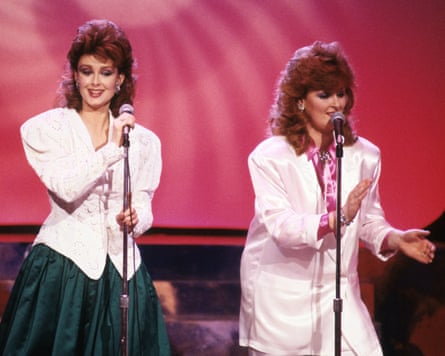
"When you grow up on welfare, you go hungry," Wynonna remembers. "We had no TV, no phone. We literally grew up playing outside in the dirt, eating soup beans and cornbread – an Appalachian staple."
Wynonna had sung from an early age and Naomi found harmonising with her daughter easier than speaking to her. Wynonna was eight when she got her first guitar and began teaching herself Joni Mitchell songs: "Even then I knew that was what I wanted to do with my life."
In 1979, Naomi moved the family to Nashville, determined to break into the music industry. Initially, the trio shared one bed in a cheap motel and lived on baloney sandwiches while Naomi tried unsuccessfully to stir up industry interest. Fortune smiled when, working as a nurse, she mentioned the family duo to a patient who happened to be the daughter of an RCA executive.
"I was just out of high school when we got a record deal," recalls Wynonna. "Suddenly we were doing concerts, recording, promo, sometimes visiting three to five radio stations a day. I felt like I was thrown in the water and told: 'Swim!' I had no idea how to do an interview, file my taxes … I just hid behind Mom and let her do everything."
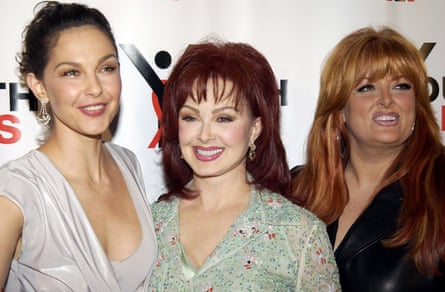
While Naomi and Wynonna's harmonies were heavenly, their personal relationship had never been easy, not least because Naomi suffered from severe depression. "It was always tough," reflects Wynonna, "because Mom would get really ill and no one spoke about depression back then."
Then came Naomi's hepatitis C diagnosis – caused by being accidentally stuck with an infected needle while working as a nurse – which was so serious she was initially given only a year to live. Intensive treatments saved her life and the Judds would reunite several times for tours but, on 30 April 2022, the day before the duo were to be inducted into the Country Music Hall of Fame, Naomi took her own life. She was 76.
The following day, Wynonna and Ashley paid tribute to their mother at the awards ceremony, and both women would publicly discuss Naomi's long struggle with depression. The Hard Truth's opening song, All Downhill from Ashland, finds Wynonna singing directly to her mother: "The whole world heard but they couldn't see / the price it cost you and me / for those Kentucky blood harmonies."
Among the "costs" was Naomi waiting until Wynonna turned 30 to inform her that her biological father wasn't Michael Ciminella. "I don't know why Mom held out for so long before telling me," she says, then adds: "She was shamed by the whole incident – her mother threw her out of the house. Back in 1963, a woman who got pregnant outside of marriage was considered a tragedy." Wynonna pauses, then says: "It turned out the whole town knew. Just not me."
Wynonna went looking for her biological father only to find he had died. Among his possessions was a drawer full of newspaper cuttings on the famous daughter he never knew. She addresses this unknown man on the Hard Truth track Girl Who Could Sing, while The Hopeful Lie concerns her incarcerated adult daughter, Grace.
"I have a daughter who is a drug addict," says Wynonna without flinching. "It's so hard to see your child get lost in addiction and keep making the wrong decisions, but this is where we are at. Right now, I'm raising her daughter. Having a four-year-old girl living with us is a blessing. It's a reason for me to get up every morning and look forward to the new day."
If Joni Mitchell was Wynonna's favourite artist – "I learned every note of every song she ever wrote" – her musical mentor was "Aunt" Dolly Parton; she says that she is "still in denial" over the country legend's death in August: "It's the end of an era. She showed up for me at my mom's funeral and memorial and sang a little of I Will Always Love You. She looked into my eyes and told me that she loved me and I told her I loved her – and that was the last time I saw her."
Dolly was as engaging in private, says Wynonna, as she appeared in public: "She was always the brightest light in the room. She had such a joy about her and it was infectious – being with her was like being at Disney World, she was just so much fun." Wynonna's background is similar to Dolly's – growing up in a poor, rural community with music as your only way out – and she continues to marvel at the journey her voice has taken her on. "I grew up in the dirt, real poor, and I got to sing the national anthem at the Kentucky Derby!" she exclaims. "I was standing there thinking: 'How did this poor girl end up here?'"
The Hard Truth is out now on Anti-.