hen I was asked to write the first full-length Miss Marple novel since Sleeping Murder was published posthumously, 50 years ago in October, I immediately thought of my granny. My first encounter with the world of Agatha Christie was through her. Now I come to think of it, she was a rather Marple-ish figure in many ways: a keen knitter and gardener with a brilliant mind (she could complete the "big" crossword in seemingly about 15 minutes), highly perceptive about people and human nature and with a powerful moral compass. While kind and generous beyond measure, at times, like Miss Marple, she showed a steelier side.
Christie created Jane Marple in a Christmas magazine story called The Tuesday Night Club in 1927, and this "white-haired old lady" made her book debut in 1930 with The Murder at the Vicarage. Rivalling Hercule Poirot in her readers' affections, Miss Marple eventually appeared in 12 of the author's 66 detective novels, plus 20 of her 160 short stories. With more than 1bn Agatha Christie books sold in English, and another 1bn sold in translation, they are some of the most perpetually loved works ever written. But though Sophie Hannah was commissioned by Christie's family to publish an authorised continuation of her Poirot novels in 2013, no one had ever been asked to write a new Miss Marple. Until now …
As well as feeling honour, and terror, at the invitation to take up Christie's beloved character, I had a funny sense of homecoming. Christie has always been so important to me as a reader and writer. Hers was the first adult fiction I read, at around 12 or 13, beginning with Murder on the Orient Express – what a place to start! I'm not sure I was even really aware of the death and darkness there, I was just taken up by the game of it all: trying to spot the clues and dodge the red herrings, to guess the solution before the big reveal. I remember distinctly the experience, that any mystery reader will recognise, of wanting to race through the pages to get to the solution and yet also to eke it all out. I worried: what if this brilliant writer, this plotting magician, hadn't written anything else?
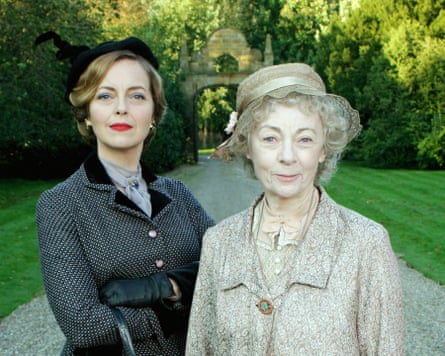
Thankfully, that wasn't a problem. Like many readers, I was drawn to the Poirot books first. Perhaps because I'd started with Orient Express, a glamorous setting was a foundational part of the Christie experience for me, especially after I'd watched the 70s film with Lauren Bacall, Ingrid Bergman and Sean Connery sweeping down the platform trailing smoke and old-school Hollywood style. Poirot gets most of the fun, far-flung locations: the French Riviera, Egypt, the Greek islands and the Dolomites, to name a few.
To a younger reader, Miss Marple's world initially felt quite small in comparison. It was only when I reread the books as an adult that I understood the genius of the character, and came to appreciate how clever and radical Christie had been in making an elderly spinster her master sleuth – occupying a space somewhere between that of a detective and a bystander. She had taken one of the "left behind" women – a figure typically both pitied and scorned by society for not having been able to find a partner after the first world war – and shown her running rings around the other characters, using her invisibility as a kind of superpower. And in creating Miss Marple, she had broken one of the oaths made by the Detection Club (of which Christie was a member) not to use "Feminine Intuition" as a means of solving the crime. So much in the Miss Marple books relies on her intuition: there are physical clues, yes, but it is her understanding of human nature, an understanding that is coded as specifically and peculiarly "female", that really wins the day.
I came to appreciate Miss Marple's lack of ego, her sense of humour: she is always in on the joke, always understands and plays up to the image others have of her. I enjoyed her sudden and surprising touches of darkness. I also loved that, while the Poirot books can feel quite timeless, the Marple books form a fascinating portrait of social change in Britain across the decades: the evolving landscape of the English village as documented between the 1930s setting of The Murder at the Vicarage and the 1950s period of The Mirror Crack'd from Side to Side (in which a new housing estate has been built), the postwar unease about not knowing one's neighbours in A Murder Is Announced and the swinging 60s raciness of At Bertram's Hotel.
All of which I came to appreciate anew when planning my own novel. I knew that Miss Marple herself was the key to it all, the element I had to get absolutely right. She had to be Christie's Miss Marple in all her complexity and brilliance. The other vital factor was the perfection of Christie's plotting: the element that had kept me up into the small hours as a preteen, trying to use all the tools provided to guess whodunnit.
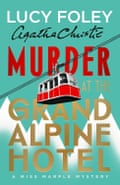
But in other areas I knew that I had to break new ground. I didn't want this book to be an exercise in ventriloquism – there was only one Agatha Christie, and to try to ape her exactly would be an exercise doomed to failure. It also wouldn't be any fun, creatively. From the outset I realised that this would be a book in with the original books, and indeed with other Agatha Christie books, but one that delivers new elements, and in doing so has its own raison d'être.
When I learned in my research that Death on the Nile was originally meant to be a Miss Marple novel, I found my jumping-off point: here was my way into the project. A way of including my own love of cinematic locations, and indeed what I had loved about those glamorous Poirot novels, in a new Miss Marple adventure. I would take her on holiday – high in the Swiss Alps, to the Grand Alpine Hotel, with its glorious mountain views and exclusive access to powdery slopes. I realised, too, that using multiple first-person point-of-view narrators would be a fun way of replicating something Christie does so beautifully: telling us a great deal about her characters by showing how they react to Marple, how they by turns underestimate, admire or fear her.
Finally, I wanted my book to be in conversation with our own times. This wasn't about shoe-horning in themes, but drawing out parallels between then and now. In doing so I wanted to interrogate modern society's fear of ageing and the invisibility of old age that has hardly changed since Christie's time. I wanted to highlight the prevalence of certain toxic male egos at the heart of culture and politics: figures who have attempted, at times, to rewrite history to further their own ends or disappear past misdeeds. All, apparently, with a total lack of consequence.
Which brings me to another thing I love about Christie's writing: the grim satisfaction of seeing the past catching up with the wicked. The meting out of just deserts. It may not be happening out there in the real world at the moment, but rest assured, it happens here.