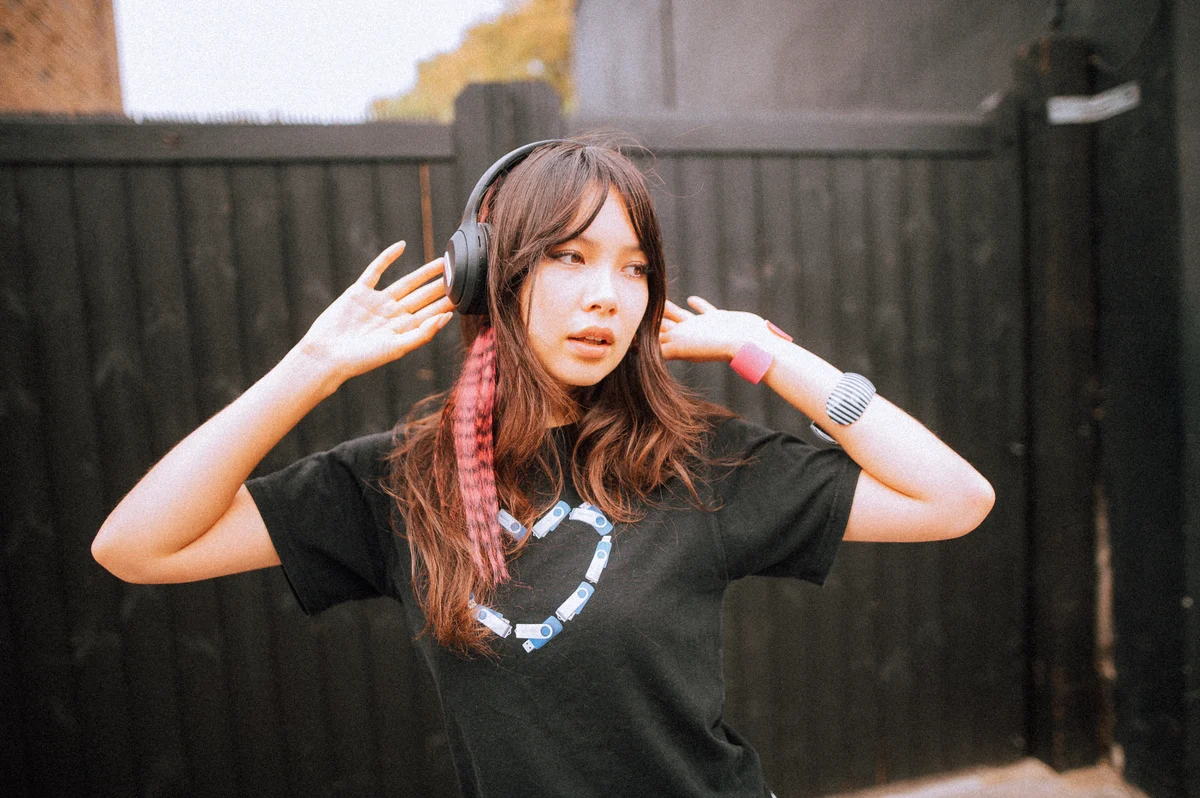
“There’s so much music now," Gao continues. "More creators are coming in because it’s more approachable to become a creator, and it’s not as expensive to have all this fucking hardware, so more people can do it. But then, at some point, you start asking what you can do with all of it and whether you can do something more interesting and more exciting because you hear so much music all the time and, I actually think TikTok has been for experimental pop because before you’d have gatekeepers who you’d have to beg to play you on the radio…. but TikTok, in a way, it’s like democracy because people can fuck with things that are different. The people who are the music nerds, the music lovers, and the people who are gonna be very vocal and passionate about music — that’s what they want.”
In the background of , Gao was still creating for herself. After all, the goal of going to L.A. in the first place had been to work on her own project, and it wasn’t one she was willing to put down. Present too, at least initially, was the fear that her cuts might not make it on Zara’s final tracklist at all. Gao knew what she was doing with Zara was good, and she knew she had to trust herself, but she also didn’t want to be naïve. The promise of a hit — let alone inclusion — was never taken for granted
“The good thing about [working for someone else] is you go for a week and then you have three weeks off to do your own thing… So, I had plenty of time,” she says. In that off time, she was putting down roots in Shanghai, getting pulled deep into the city’s nightlife and electronic circles. The club kids of China, she ended up finding, were doing it different — and perhaps better — than anywhere else.
“In the beginning when I was travelling to Shanghai, I felt like I had a lot of excuses or reasonings for it. People were telling me I could make it big in China, so I would be like, ‘Oh, that’s why I’m in China’.... like I was almost embarrassed,” she admits. But what really drew her to Shanghai was the people, the sense of profound belonging and rootedness that she found within its creative circles. A stint that was supposed to be three months turned into a year and a profound enmeshment with the city and its artistic core.
“Culture is such a big part of expressing yourself in China,” Gao says of the scene there. “Obviously, you can’t say everything on social media. We know there are different rules. But in culture, you can kind of do anything, and so I think the kids really identify with their taste and take a lot of pride in it. Even the DJs there are super experiments. And honestly , nightlife is just such an outlet.”