t's a pop culture emergency. A millennial-quake that shook my social feed to its core. Girls, the HBO show that stole the zeitgeist in the early Instagram era and made Lena Dunham a generational star, is returning for a five-episode revival series. The project was announced via a mock video call with some of the original cast: Allison Williams, Jemima Kirke, Zosia Mamet and Andrew Rannells. They're all returning for the reboot, which will pick up the story 10 years after the 2017 finale.
Girls captured such a specific era when it premiered in 2012. Social media still felt new and exciting, Barack Obama was president and so-called "woke 1" felt like it was going to be the new normal. The show's characters navigated that terrifying twentysomething period when you're searching for an identity, where it feels like everyone has it figured out but you. Dunham's realistic approach to sex scenes – sticky, awkward, unflinching – made the show one of the first to be "discoursed" on social media, spawning endless think-pieces and Twitter threads. She was declared the voice of her generation, but she also became a figure of controversy who didn't always seem suited to such intense, era-defining fame.
For Dunham, the Girls revival comes at a time where she's taking a victory lap. Following a string of successful TV projects and the release of Famesick – her New York Times best-selling memoir, which lifted the lid on her time filming Girls while living with chronic pain – she is in the ascendency once again. But given that reboots tend to have, ahem, a success rate, the big question is: can Lena's lightning strike twice?
As a dyed-in-the-wool millennial who came of age on a cultural diet of Glee, unironic #hashtags and BuzzFeed quizzes, Girls really was my generation's answer to Sex and the City. The shows similarly star four white women navigating life in New York, and the characters are rendered with such specificity and consistency that fans can endlessly argue about whether they're "a Hannah" or "a Carrie". (I'm a Miranda in SATC, and a Marnie in Girls.)
The news that Girls is returning draws inevitable comparisons with And Just Like That, the post-Covid reboot that took us back into Carrie Bradshaw's world in her 50s. Over three toe-curling seasons, AJLT became a case study in how to do a reboot. The show lost so much of the original's astute, biting cynicism and often seemed more concerned with atoning for its past, such as its glaring lack of diversity and a handful of offensive "early 2000s" storylines that aged poorly. Some of the characters – especially Miranda Hobbes, whose snarky realism was a vital leveller to Carrie's delusional romanticism – were changed beyond recognition.
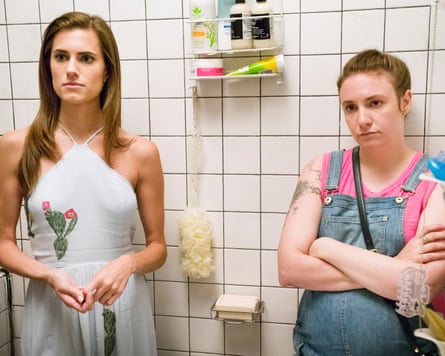
Personally, I wouldn't be against a Che Diaz cameo in Girls 2.0, but there's a few factors that make it easier for Dunham to take her revival in a very different direction. Since Girls wrapped, she seems to have been in constant conversation with the characters. In 2023, when I interviewed Allison Williams, the real-life Marnie Michaels told me that she and Dunham had spoken on the phone during Covid, where they discussed how they would have handled the pandemic. "Marnie would have 100% wrapped herself in cellophane, Hannah would have pretended to do the same, but would have been living very riskily in secret," she said. "One of the powers of the specificity of those characters is that it's quite easy to imagine."
Then there's timing. While it's expected that the "girls" of Girls will have evolved into adult women, 10 years is a smaller gap than the wave of 2000s reboots we've seen, which have often been tasked with filling in the blanks of two decades. The 2010s was certainly a different time – pre-Trump and pre-pandemic – but Hannah Horvath had an iPhone and posted attention-seeking tweets. Her world wasn't totally unrecognisable, which should make it easier for Dunham to stay true to the parts of the characters that made fans love them.
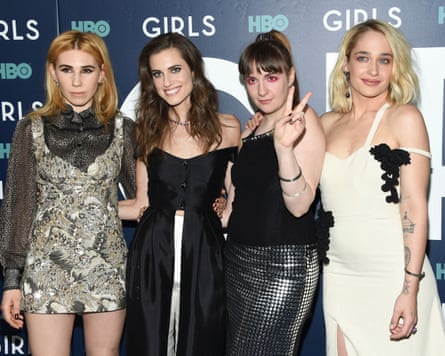
Timing might also ask the deeper questions at the heart of the revival. Girls became a hit because of its relatable combination of warmth and bleakness. The show was aspirational in some ways, by nature of following four attractive, privileged women in the big city, but it also saw them sharing small apartments with friends whose big dreams were colliding with the reality of the post-recession economy. And if this was a story about any other generation, you'd expect for the characters to have graduated beyond the economic precarity and self-doubt of their 20s. But for millennials, it's not so simple. The revival would do well to tap into how much changed for the generation who are the first to be worse off than their parents. So many millennials are still navigating housing and job insecurity, and have that creeping feeling that they're not progressing in life. This frustration could be very fruitful for Dunham, who has a particular talent for zoning in on wider generational anxieties as they're happening.
At the heart of Girls is, of course, its polarising creator. Unlike SATC, which was mostly reappraised as too white and privileged after the original series concluded, Girls faced intense criticism at the time for its lack of diversity. Ten years on, without the noise of unforgiving social media discourse and think-pieces, the satirical genius of the show – and how it skewered the ridiculousness of its characters – is easier to see. Dunham was far from perfect, but it now seems clear that she was derided in a way that was plainly disproportionate, which often had more to do with her body and gender than the show, or even her own propensity to put her foot in it (then apologise). Now, following the success of her memoir, Famesick, we're in a period of Dunham-aissance, which might be why she's choosing this moment to return to her most beloved work.
Ten years on, the revival's key challenge is unlikely to be the confessional subject matter, which feels more commonplace today because of the wave of female-fronted shows that came next, like Fleabag, Catastrophe and I May Destroy You. Instead, Dunham is tasked with meeting the expectations of diehard fans who have very strong views about the characters and have spent years creating their own theories on what they're doing now. Reboots often struggle because they fail to grasp what fans loved about the original. But if there's one person who is perceptive and daring enough to understand what the audience wants from her, Dunham may well be that girl.