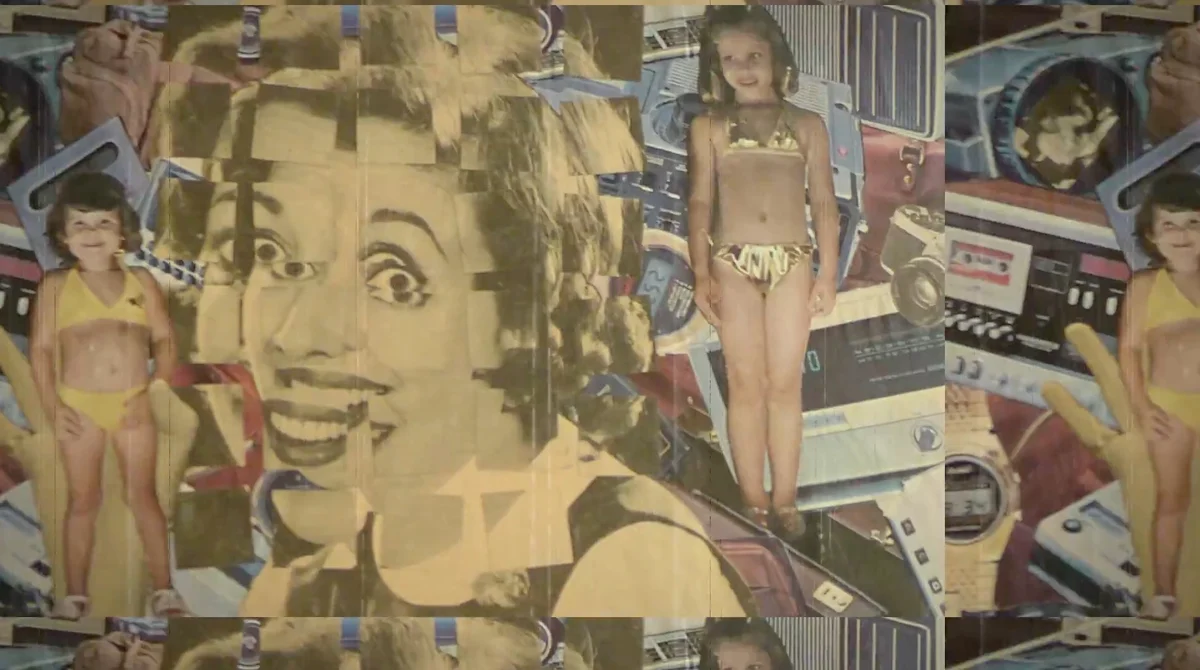
Over more than five decades, Vaucher has worked across painting, collage, photomontage, sculpture, and film, addressing subjects including war, inequality, gender, consumerism, and environmental destruction. Now in her eighties, she has retained much of her original work – which the newly established foundation said is a reflection of her resistance to the commercialisation of art and her belief that it should remain available to be seen and questioned rather than disappear into private collections.
The immediate task is to archive more than 2,000 original works. That process will involve professional conservation, museum-grade storage, cataloguing, and digitisation, with the longer-term aim of making the collection accessible online to audiences around the world. The foundation is seeking £100,000 to begin this work, and says every purchase of the fundraising merchandise will contribute directly to protecting the works. More information on the merchandise and how to support the foundation can be found on its website.
Beyond the archive, the foundation wants to establish a permanent home in London. The plan is for a space that would serve as an archive and public gallery, and as a centre for research, education, experimentation, and creativity.
Central to that vision is Dial House, the Essex home and creative community established by Vaucher and activist/poet Penny Rimbaud in 1967. Ever since then, Dial House has operated as a living experiment in artistic freedom, collective endeavour, and radical thinking, it says. Vaucher and Rimbaud will continue to run it, but the house will eventually pass into the care of the foundation, which aims to safeguard both Vaucher’s artistic legacy and the ethos of Dial House.