There are places in Britain that become so fashionable they eventually require an alternative.
The Cotswolds, once a collection of sleepy villages where people actually farmed things, has gradually evolved into an immaculate rural extension of west London. These days you can barely swing an organic sourdough without hitting a Soho Farmhouse member, a retired television presenter or someone renovating a £3 million rectory while describing themselves as having “escaped to the country”.
Fortunately, just beyond its eastern fringes, something rather more interesting is happening. Welcome to the ‘Notswolds’.
Nobody seems entirely certain where the Notswolds begin or end, which is perhaps part of the appeal. Broadly speaking, we’re talking about the countryside around Bicester and the prettier stretches of Oxfordshire and Buckinghamshire that possess many of the Cotswolds’ essential ingredients — handsome villages, rolling hills, expensive pubs, excellent farm shops — without requiring you to sell a kidney to buy a two-bedroom home.
It also contains some fabulous roads, which is why I’ve brought along a .
Actually, “brought” feels rather inadequate. The Polestar 5 arrives. At just over five metres long, low-slung and super-sleek, this is the new flagship from the Swedish electric performance brand and a car with sufficient presence to make even the most chocolate box of cottages reconsider its priorities. It is magnificent to look at.
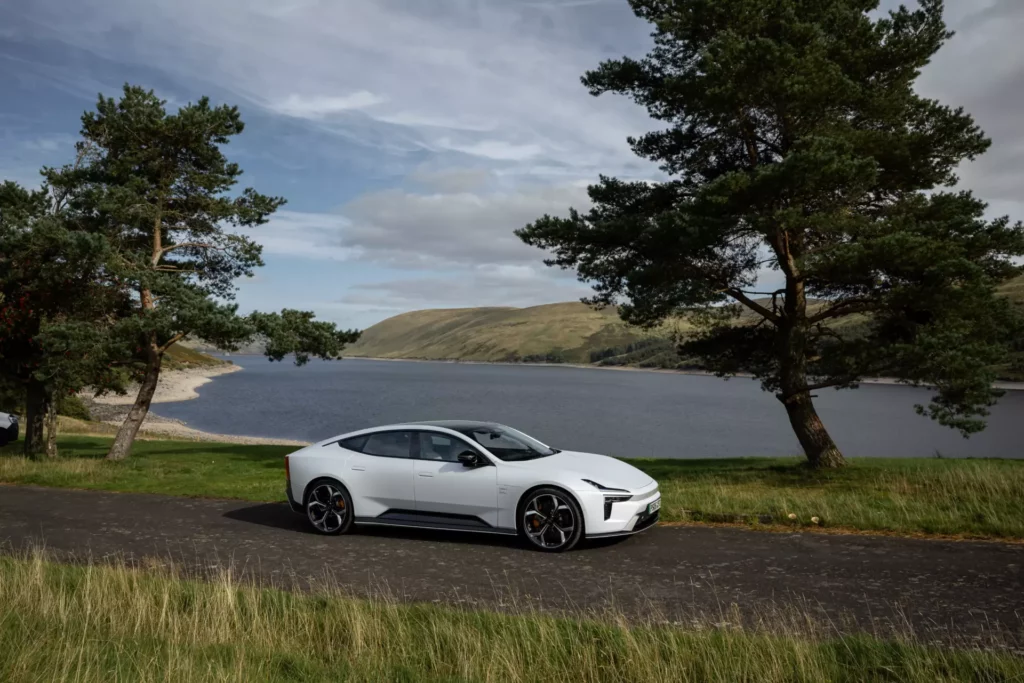
calls it a performance grand tourer, and for once the marketing department appears to have resisted inventing an entirely new category involving words such as “coupé”, “crossover” and “lifestyle”. It’s a big, elegant four-door GT in the classic tradition, except the petrol engine has disappeared and almost everything else seems to have been ported in from 15 minutes into the future.
The design began with Polestar’s Precept concept and remarkably little appears to have been lost on the journey to production. There’s a long, low, sharpended-pencil silhouette, an enormous panoramic roof and — most controversially — no rear window. None. Instead, a roof-mounted camera feeds the view behind to a digital mirror.
Initially this feels slightly disconcerting, like discovering your hotel room has no windows but a very good television. Within half an hour, you stop noticing.
What you don’t stop noticing is the way the thing goes.
Even the “ordinary” Dual Motor produces 748bhp. The Performance version I drive turns that up to 884bhp and will dispatch 0-60mph in 3.1 seconds. These are numbers that not very long ago belonged to hypercars driven by people whose names appeared on yachts. Now they’re available in something with four seats space for baggage. Progress.
Plant your right foot and the Polestar doesn’t so much accelerate as rearrange the scenery and your internal organs with it. There is that familiar electric-car warp factor, but crucially it isn’t the 5’s entire party trick. That becomes apparent once Bicester is behind me and the roads begin to tighten.
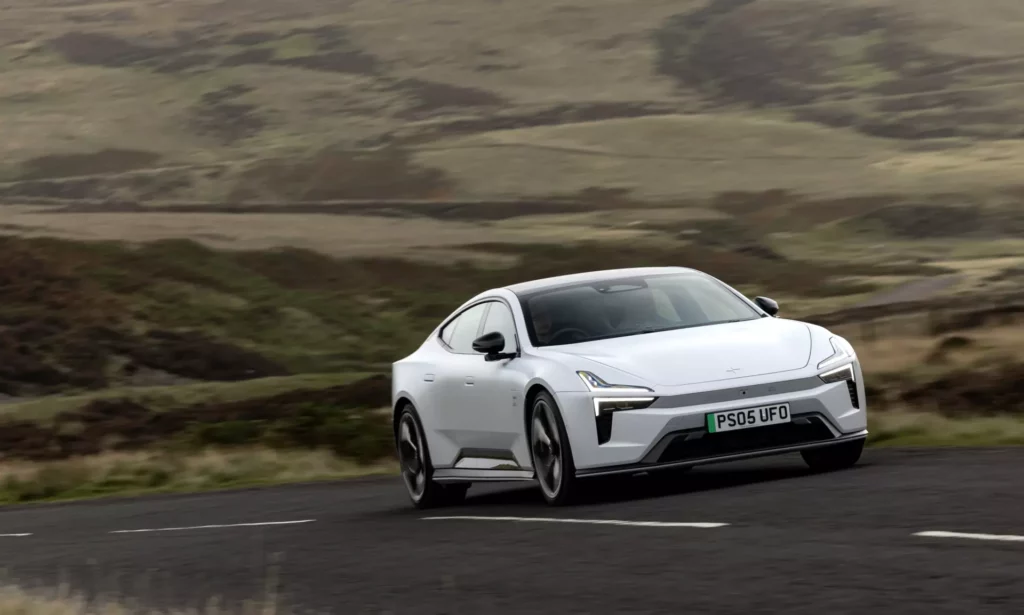
At 2.5 tonnes, the Polestar 5 is emphatically not a lightweight. What matters, though, is how cleverly that weight is managed, and here Polestar has performed something approaching witchcraft. Its bonded aluminium architecture was developed in Britain specifically for this car and there is an immediate feeling of solidity beneath you. The steering is beautifully accurate, the body remains controlled and, through a succession of fast bends, the 5 shrinks around its driver in a way something this large really shouldn’t.
There is grip everywhere. More importantly, there’s confidence.
The roads out here provide exactly the right mixture: long open sections where the Polestar can stretch its legs, then sudden sequences of corners twisting between hedgerows, before the landscape opens again to reveal another honey-coloured village that appears to have been art-directed for a Sunday supplement. This is grand touring condensed into an afternoon.
And the Polestar is very good at it.
The cabin helps. Scandinavian minimalism can occasionally feel like an excuse for forgetting to install things, but here it works. Everything is beautifully resolved, the four Recaro seats are superb and there’s a calmness to the interior that feels particularly welcome when the scenery outside is arriving at considerable speed. It’s luxurious without shouting about it.
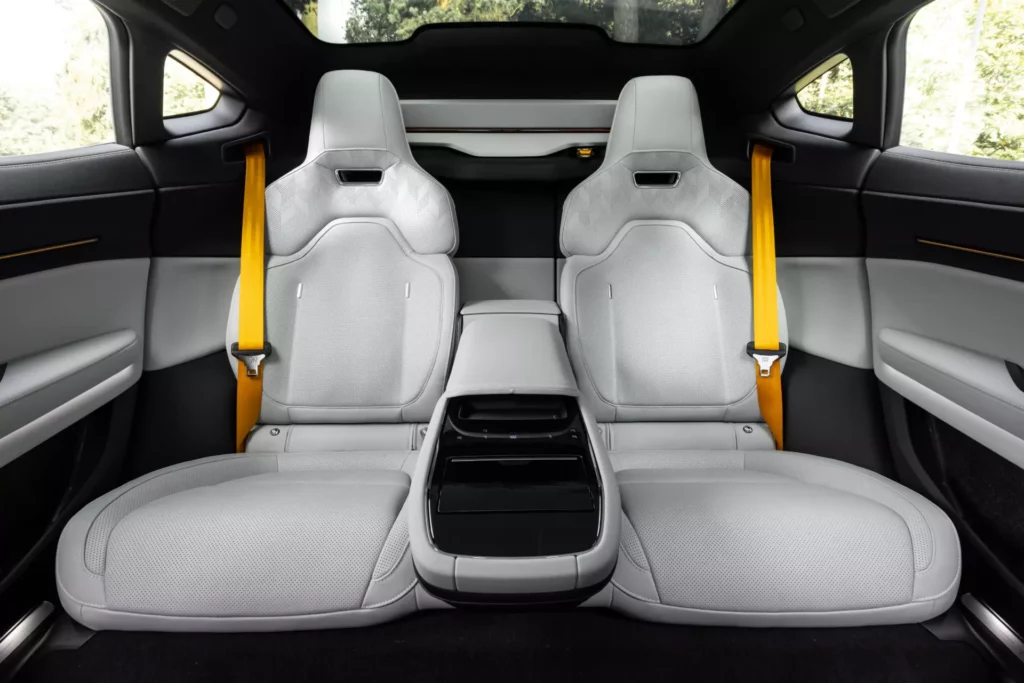
There are no acres of shiny veneer or crystal gear selectors attempting to recreate a Mayfair hotel bar. Instead, the 5 feels expensive in that deeply Swedish way where somebody has spent six months perfecting the texture of something you hadn’t previously realised possessed a texture. And then there’s the Bowers & Wilkins sound system, which is sufficiently good that even Apple Music begins to feel like you’ve invited the artist into the passenger seat.
This dual personality is perhaps the Polestar’s greatest achievement.
One minute you’re carving across the countryside at a pace that makes 884bhp seem an entirely reasonable thing to possess; the next you’re gliding silently through a village, looking for somewhere attractive to eat. And the Notswolds is very good at lunch.
There are gastropubs, converted barns and farm shops everywhere, but without quite the same sense that every table was reserved six months ago by someone called India who works in brand strategy. There is space here still. Space on the roads, space in the landscape and, importantly, space to enjoy a car designed specifically to cover ground.
The Polestar 5 can manage up to 421 miles on the official cycle in Dual Motor form, while its 800-volt electrical architecture allows charging at up to 350kW. Useful figures, certainly, but after several hours behind the wheel they become strangely secondary. Because this is one of those rare electric cars that makes you forget to discuss electricity.
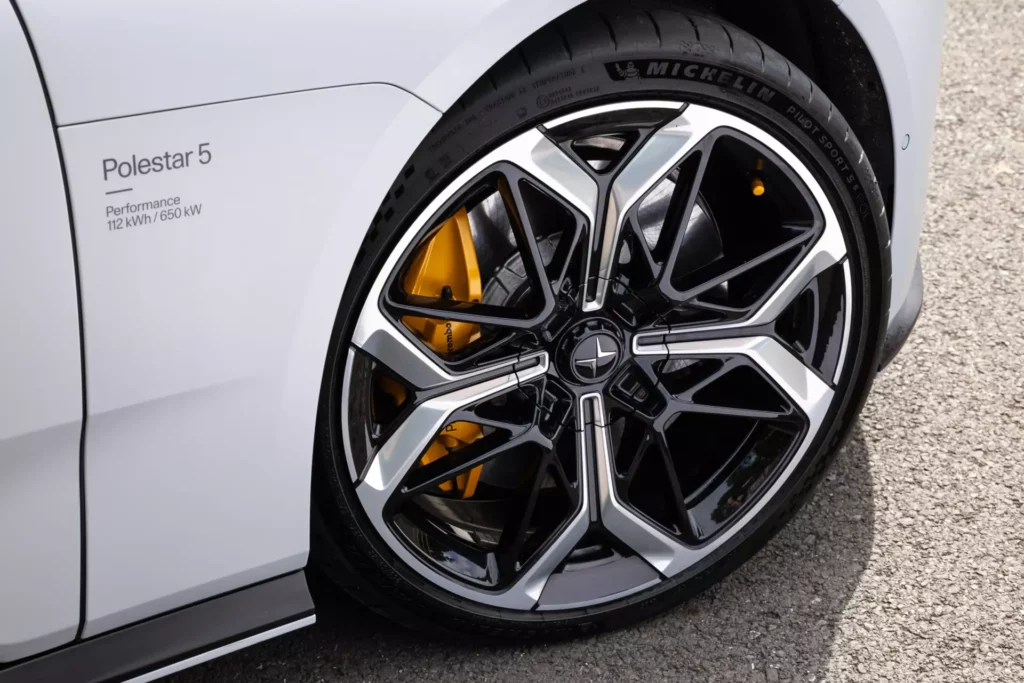
You’re thinking instead about the steering. The way it settles into a long bend. The extraordinary reserves of acceleration. The silence. The view across the bonnet as another stretch of empty road disappears towards the horizon. By late afternoon I’m heading back towards Bicester, the countryside softening in the falling light and the Polestar having performed that cleverest of grand-touring tricks: making a cross-country drive feel far too short.
The 5 matters because it suggests the electric future doesn’t have to consist entirely of anonymous SUVs designed by wind tunnels and focus groups. It can still contain cars built simply because somebody wanted to create something beautiful, fast and indulgent. Something unnecessary, even.
And thank goodness for that. Even if we draw the line at a £9 sausage roll.
884 bhp / 748lb/ft / 0-62mph in 3.1 secs / 155mph (limited) / 347 miles of range / circa £120,000