As a gay kid in suburban middle-America in the 2000s, all I wanted was to find out what was waiting for me on the other side.
It was a really nice place to grow up in so many ways. But there was also darkness lurking behind what felt like a simple surface: fear, death and secrets. I think that’s one of the reasons David Lynch always made perfect sense to me, from the time I was in my early teens watching and .
I yearned to understand what was out there and I wanted to get close to darkness. It’s only now, as a grown-up, that I understand how perilous that approach can be for a young person.
I knew I was queer basically from the very beginning, because I looked around and the things that seemed to make sense to everybody else made zero sense to me. A man and a woman who don’t particularly seem to like each other still shack up and live forever that way? That seemed like a really miserable arrangement to me.
Premature understanding of love
So I spent a lot of time searching for some hazy version of love. My parents loved each other. There was a ton of love around me. But gay love, what it means, how it’s expressed, how it’s carried in your body, wasn’t modelled to me at all. For a long time the most empowering representation I was aware of was Tom Hanks and Denzel Washington in (spoiler alert: Tom Hanks dies of ).
In high school, the place that felt safest was the speech and debate team. I was on the speech side, which is where the gay kids were. We did competitive humorous and dramatic monologues. In the humorous ones you weren’t allowed to swear or include sexual content, so you’d pop in and out of a lot of characters, doing the physicalities and voices, telling funny, sketch-like vignettes for eight minutes.
The dramatic ones couldn’t be profane either, but you could talk about really dark subject matter. So it would always be a white, middle-class kid from the suburbs doing a Tennessee Williams Southern drawl, talking about giving themselves an abortion, then popping out of it to do a quick little introduction that began with a Maya Angelou quotation. It was really grotesque and also camp, and the competitive aspect was so satisfying for a queer perfectionist teen who needed constant external validation.
Queer rolemodels
My coaches, Missy and Bill, were the first role models who represented queer safety and a hopeful gay future. They were fun and funny and unfiltered in a way that felt so warm and affirming. They played a huge role in me having a career as a performer, and they were the first adults I wasn’t related to who made me feel seen as the gay person I knew I was.
But there were very few gay adults in my midst, and the ones I was aware of had struggled. They lived through the – we have PrEP now. I grew up in a very homophobic society, in a closet that felt imposed on me by culture, but deep down I still believed I could be okay. I think a lot of them didn’t.
So I went looking for love on the internet. This was pre-Grindr, so it was chat rooms and forums and Craigslist, and I would meet up with closeted old men. The attention they gave me made me feel validated, but I don’t think those encounters served my developing understanding of romantic love, and they certainly didn’t fulfil my yearning for it. Those men had baggage and those experiences live in this show in a huge way.
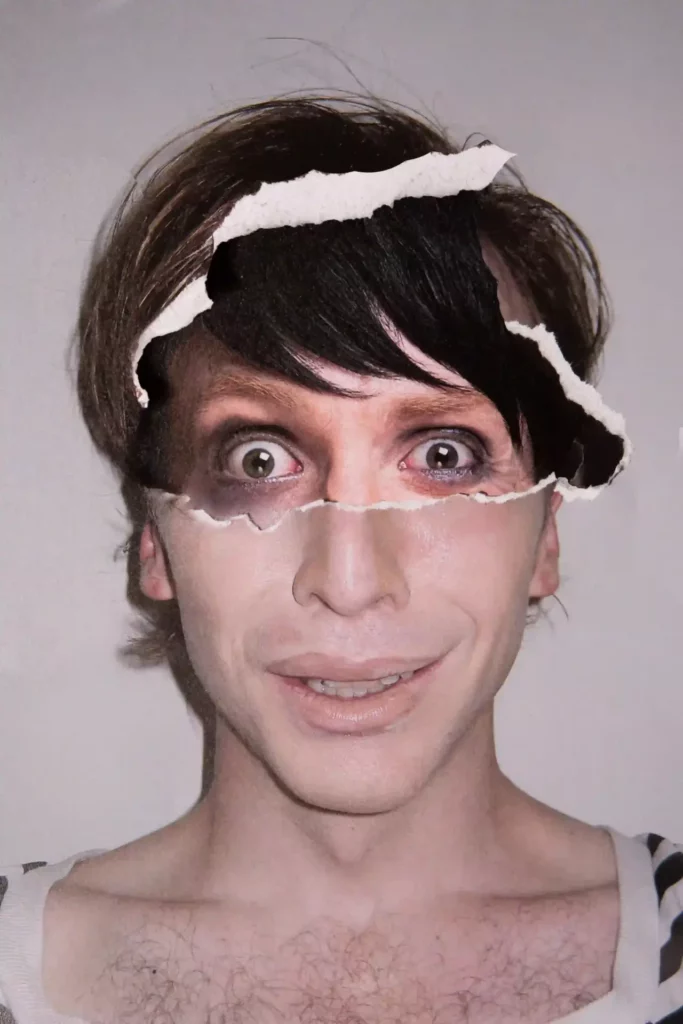
The monologues I did on speech team have hugely influenced ’s form: character-dense, physically embodied monologue with rapid popping between characters. Shifting between humorous and dramatic material taught me the power of having both in your wheelhouse. sort of blends those styles into one.
My teenage self was very much interested in pursuing the things the protagonist in pursues. But the protagonist falls victim to those circumstances in a way that I was fortunately able to avoid.
If teenage me could watch , I’d probably think: this is the kind of thing I want to make someday.
And I’d probably also watch it and think: that could never happen to me.
Goblin runs at Park Theatre (Park90) in Finsbury Park, London, from 17 November to 5 December 2026. For more information and to book tickets, visit the .