Founded by Big Joanie guitarist and writer Stephanie Phillips and the DIY Diaspora Punx Collective, Decolonise Fest responds to a pervasive gap, driven by a team of activists, militant community organisers, musicians, and artists – all of whom seek space and recognition within alternative spaces.
“We are reasserting our place in punk and want to showcase the amazing, creative, and talented contributions punx of colour have made to the punk scene since its inception,” they write in their manifesto.
“We will talk about racism but not in a way that centres whiteness or prioritises the feelings of white people. No white tears.”
“We are truly putting the threat back into punk again.”
“Decolonise our past to decolonise our future.”
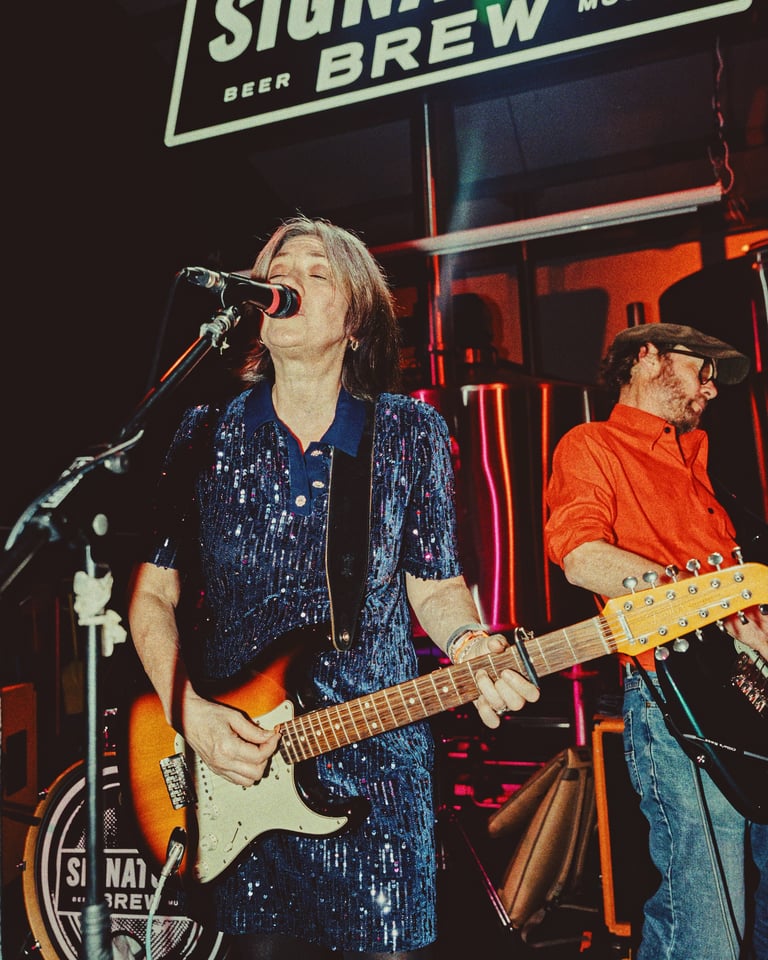
What this looks like, in practice, is establishing a platform for the voices of POC artists – as the festival defines it, those descended from Africa, the Caribbean, Asia, the Middle East, Latin America, Australasia, North America, and the islands of the Atlantic, Pacific and Indian Ocean, and of Romany Traveller heritage – who are otherwise overlooked or under-represented within alternative subcultures.
In previous years, Decolonise Fest has seen performances from the likes of Bob Vylan, Nova Twins, Big Joanie, Whitelands, and more. The festival has gone on tour to Glasgow, Birmingham, and Leeds, and persisted online with a virtual edition during the pandemic. Not only is the ethos of the collective enforced through music, but also through workshops and informative, social justice-oriented panels addressing topics ranging from anti-racism and diversity within alternative music to solidarity and cultural resistance.
This year, for its ninth edition, Decolonise Fest was held as a two-day weekender at Signature Brew Blackhorse Road, in North London. The bill was inclusive of a diverse range of artists who demonstrate various facets of punk and alternative, with Saturday seeing performances from Frozemode, eatboys., Uninvited, Dygora, Mashaal, and Third Kulture, while Sunday featured Silver Tabby, Baby Said, TM Distant, Hang Linton, and the Miki Berenyi Trio.
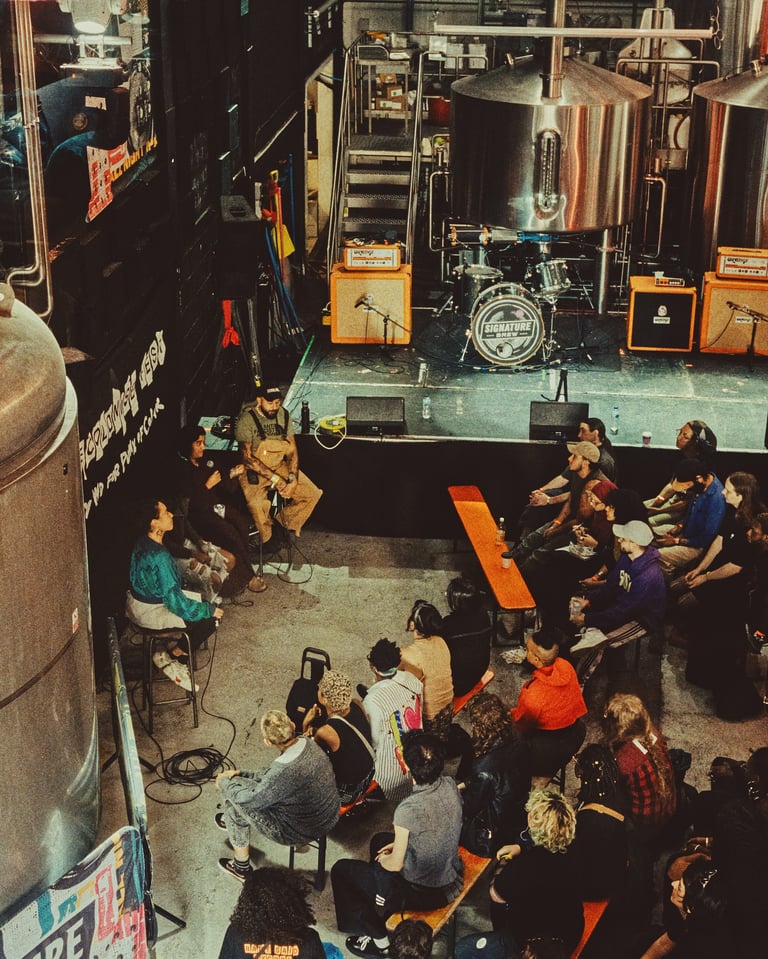
Alongside the music, the workshops would place the festival’s politics more boldly at the forefront, with zine and bell assembly workshops, as well as talks on pushing back against the far right, abolitionist approaches to education, and land justice.
At a glance, it’s a packed schedule with an inherent desire to incite forward change. But to refer to Decolonise Fest as a corrective tactic would understate the history it draws on. Throughout history, rock and roll, punk, and derivatives of alternative-facing genres have been traced back to people of colour as the architects, with sounds and musical approaches often repackaged to be accessible to white audiences.
The point, as Decolonise Fest frames it, is not to ask for entry into a story that is already written, but to say that people of colour were in the room all along and were written out of the telling. That is what “we have always been here” asserts: looking through history, there is not a gap to be filled, and instead a record to be restored.
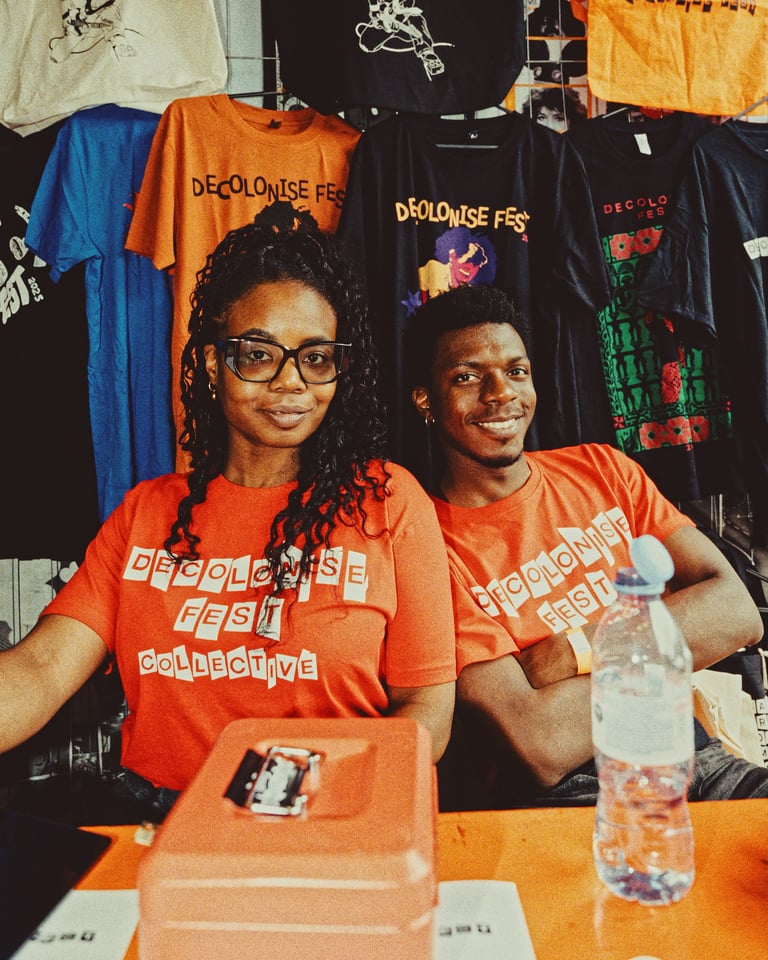
Between the Sunday sets, in the flurry of ecstatic buzz that surrounded the venue, I had the opportunity to sit down with Decolonise Fest co-organiser and Sunday Best vocalist Alex Ekong, who would walk me through the history of the festival and point out why now, more than ever, it is crucial to maintain such a space for the sake of that restoration.
In 2017, Ekong tells me, people of colour in punk and alternative music were not getting the play or respect on festival line-ups that they deserved. The festival was “made up to address that balance” and it has outlasted a lot: the closure of the collective’s original DIY space during the pandemic, attacks from sections of the right-wing press, lost venues, and near-bankruptcy a few years ago.
What keeps them going, Ekong says, is “the pure love of providing that space for kids that were like us,” young people who loved alternative music and had resigned themselves to white-dominated rooms. And his advice to anyone starting out in those rooms is blunt: never apologise for being who you are. “We’re not begging for a seat at the table, because it was ours to begin with,” he says. “We are creating the table, creating the space.” The second piece of advice is practical: “When you see another person of colour at a show, say hello, talk, network, and keep those friendships going.” At the heart of it, it’s a lesson in understanding how to foster and build community.
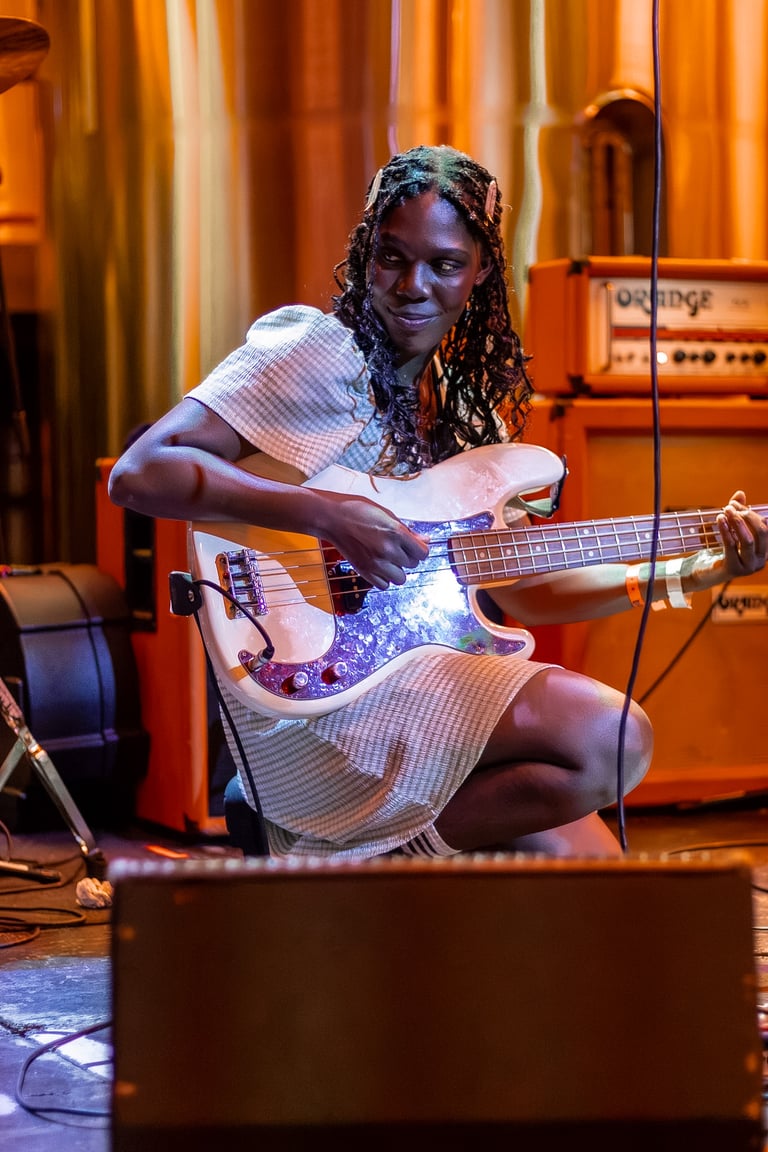
When Walthamstow locals Silver Tabby took the stage to open Sunday, they sparked that sense of community and deep familiarity between attendees in the room. I observed a member of the crowd moving freely, expressing to their friends that the music immersed them in feelings they hadn’t touched since they were young, as the band’s self-described sound of “chaotic indie rock” filled the space. With lighthearted expressions of their love for cats paired with calls to abolish the patriarchy, it felt like they struck the balance between jubilance and necessary awareness.
Alt-rock outfit Baby Said and experimental rock band TM Distant would follow with a tight, searing energy that at points veered into heavier territory, expelling catharsis from the stage. The Miki Berenyi Trio were poised with dreamy, trancelike sensibilities while Sacred Paws offered up an indie-pop swing. At the start of their set, guitarist and vocalist Ray Aggs would reveal that they had spent the whole day working out how to get a guitar repaired, speaking to their commitment to contributing to the community through music, and honing their presence – reflective of what all of the artists involved delivered that evening.
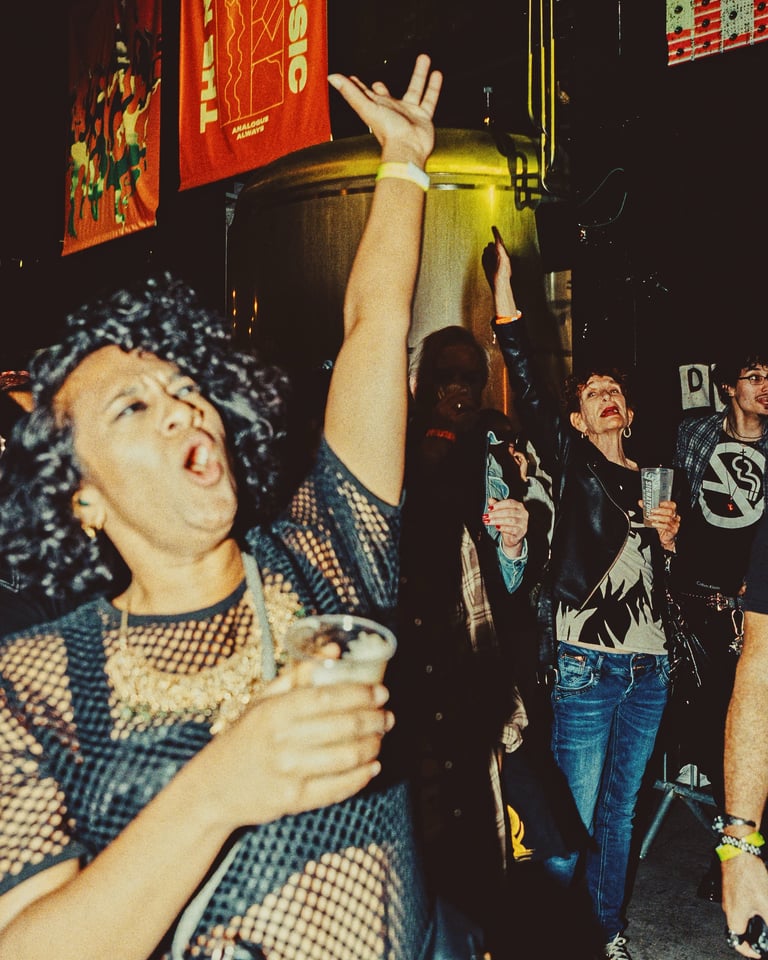
What makes the festival feel so alive rather than commemorative is Ekong’s own account of how, when you really step back to look at it, not much has changed. Decolonise Fest no longer has the novelty of a line-up full of acts of colour. After 2020, many festivals changed their booking policies and agencies diversified their rosters. But Ekong calls the progress partial, even circular. “It’s a lot harder to have a conversation around decolonisation, and it’s a lot harder to have a conversation around things like defund the police, now than it was in 2020 or 2021.” There is still, he continues, “so much great talent at DIY level that’s being completely underserved and completely under-booked.”
Next year is the festival’s tenth anniversary. Ekong reads that staying power two ways: as a testament to how necessary the work remains, and as something that can feel disheartening, because it still has to be done at all.
“Our festival exists for them, and finding people like them,” Ekong asserts, speaking on the artists that have yet to get their flowers within the alternative space. “Some people might feel that, because we need to continue doing something like this, the inclusion isn’t there. We still have to serve it. And while it’s disheartening to a certain extent, the fact that this festival has endured and continues to grow shows us that we need to be doing this. That this mission is important.”