From the archive
Revisit Emma Brockes' interview with Carson for the Guardian almost 20 years ago:
Among Carson's famous fans is singer and actor Olly Alexander. On her verse novel Autobiography of Red, he said:
I read it when I was a teenager and it totally changed my life. I was struggling with my sexuality. I didn't come out to my friends and family until I was 19. The years preceding that I was trying to find ways to understand my sexuality and identity so I would look for gay writers and storylines. This really helped me understand myself.
Carlberg said Carson was "very taken by surprise" when she told her the news over the phone just before the announcement.
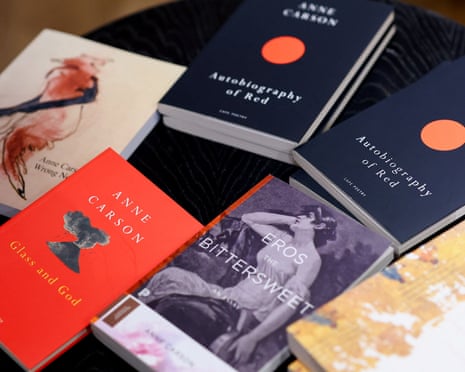
Nobel Committee chair Anders Olsson told a press conference that Carson has "broken away from lyrical poetry bound to the narrative self and inspired new forms of contemporary literature. This method of writing leads to playful and ironic works that move not only between classical and modern poetry but also between different genres and artforms."
The British poet Ruth Padel wrote about her admiration for Anne Carson in 2011 for the Guardian:
I first admired the Canadian poet Anne Carson as a Greek scholar, when I, too, was earning my living in that trade. I found in her poetry the same inspiring passion for words and ideas. In 52 Ways of Looking at a Poem, I wrote about a poem of hers in which a daughter breakfasts with an irritating mother before visiting her father, an Alzheimer's patient. You wouldn't think anyone could make a poignant lyric out of that: she does.
Her Autobiography of Red blew my mind: I realised you can do absolutely anything with poetry if you follow your imagination truthfully enough. She turns the myth of Heracles conquering Geryon, a winged red monster, into a love story. Like Emily Dickinson, Carson doesn't use fancy language: her matter-of-fact tone, and her quest to use words which communicate human experience as intensely as possible, aches with understanding. Part of her originality is that she doesn't try to be original; she just wouldn't find it interesting to make anything that wasn't totally new.
The Swedish Academy selected Carson "for her bold and inventive oeuvre that, in playful dialogue with the classical tradition, has created new forms for contemporary literature".
The Canadian poet, classicist and translator is best known for genre-crossing works such as Autobiography of Red, a queer coming-of-age story which reimagines a poem by the ancient Greek poet Stesichorus.
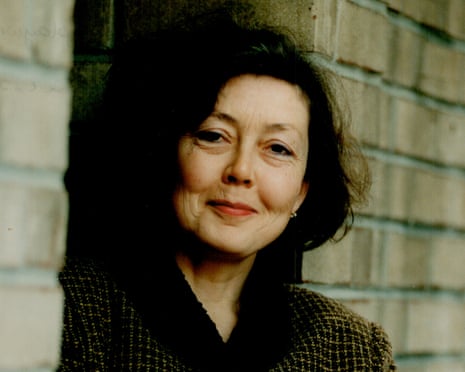
Born in 1950 in Toronto, Carson earned a PhD in classics and has taught at a number of universities throughout her decades-long career.
Her works include Plainwater, Wrong Norma and The Beauty of the Husband. She became the first woman to ever win the TS Eliot prize with the latter in 2001.
And we have a winner! It's the Canadian poet Anne Carson.
Ingrid Carlberg, the new permanent secretary of the Swedish Academy, has begun her speech. In just a few moments we'll find out this year's winner …
Nobel snubs
A number of major 20th century writers never received a Nobel in their lifetimes. Here are some of the biggies who missed out:
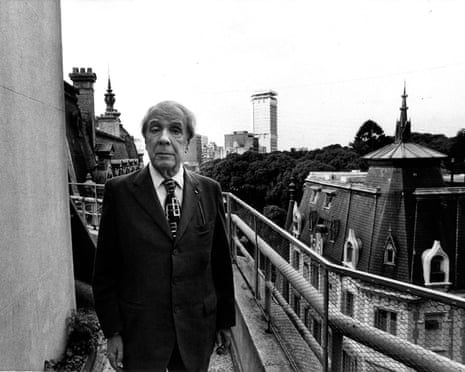
The Argentine master of the short story, , was put forward 38 times between 1965 and 1975, the latest year for which you can view the nomination archive (each year's record only becomes publicly available 50 years later).
The two great modernists, and , were never nominated.
was nominated 16 times for the prize in literature and three times for the Peace prize between when the ceremonies began in 1901 and his death in 1910.
was nominated to no avail 27 times between 1963 and 1975, including by Aleksandr Solzhenitsyn.
was put forward fruitlessly 41 times.
received 43 nominations between 1950 and 1975, and never won.
You can browse the nomination database for each year here, and search by person here.
Is becoming the new ? The Japanese literary superstar has for so long been a favourite to win a Nobel without actually winning one that people in the literature industry have started to talk of the "Murakami curse". But Chinese experimental writer Can Xue too is starting to follow that pattern. A bookies' top favourite in 2018, 2019, 2023, 2024 and 2025, she's again topping runners and riders lists this year.
Could the pre-announcement hype in itself count against her winning? The Swedish Academy is clearly a self-aware kind of oracle, unhappy to see its choices as determined by outside forces. Last year's laureate may have been Ladbrokes' favourite (alongside Can Xue), but bookies correctly predicting the winner is a once-in-a-decade occurrence. The last time it happened before that was with in 2015, Ladbrokes' clear favourite at 3/1 odds.
Yet while the Academy certainly likes being seen as unpredictable, that's not to say that it actually is. The biggest literary accolade in the world is evidently engaged in a constant process of re-adjusting the perceived imbalances in its list of laureates. Over the last two decades it has done so in terms of gender, with eight women and 12 men, alternating since 2017, and in terms of crude geography, with 10 winners from western Europe and 10 from the rest of the world.
After a Norwegian man in 2023, a South Korean woman in 2024 and a Hungarian man in 2025, we might reasonably expect a non-European woman in 2026. Hence strong odds for and , and rumours about Australian memoirist and novelist and Antiguan-American novelist and gardening writer . But non-European female is still a very broad category, which is why Nobel-watchers have been considering other patterns.
The last Nobel literature laureate known foremost for their poetry was in 2020. Before that, it was Swedish poet in 2011. High time for another writer of verse, which is why one name bandied about at the Frankfurt Book Fair this week was that of South African poet Marlene van Niek.
But what if the crucial metric is not literary form but accessibility? The last winners with a genuine populist appeal – writers who didn't a Nobel – were and , in 2016 and 2017 respectively. "In a way, it would be logical if this year they wanted someone who was a little more well-known and accessible after Krasznahorkai", wrote Swedish broadsheet Svenska Dagbladet this week.
Jens Liljestrand, a critic for Expressen who predicted Han Kang's win in 2024, has followed that line of thought and come up with an intriguing prediction: , the Nigerian author of the phenomenally successful Half of a Yellow Sun.
By that logic, of course, the Academy might have spent the last decade playing one big game of double bluff and working towards handing the prize to after all.
Possible contender: Salman Rushdie
Salman Rushdie's name is often thrown into the mix of potential Nobel winners – a familiar figure on a list that can often skew towards the esoteric. His fiction, which blends history, myth, politics and magical realism, has made him one of the most internationally influential writers of his generation.
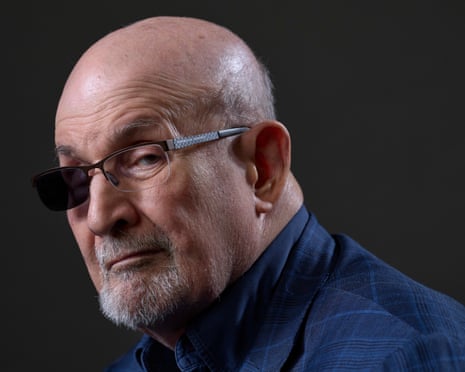
Born in Bombay (now Mumbai) in 1947, Rushdie moved to Britain as a teenager. He broke through with his second novel, Midnight's Children, published in 1981, which won the Booker prize. The publication of his 1988 novel The Satanic Verses provoked Iran's Ayatollah Ruhollah Khomeini to issue a fatwa calling for Rushdie's death over its depiction of Islam. (The Swedish Academy famously refused to issue a formal condemnation of the fatwa, prompting three members to quit in protest – it wasn't until 2016 that they explicitly condemned it).
In 2022, Rushdie was attacked on stage in New York, causing him to lose sight in one eye. He subsequently wrote Knife: Meditations After an Attempted Murder, a memoir about the attack and its aftermath. Earlier this month, a documentary about Rushdie's life up to and after the attack was released.
Rushdie has written 15 fiction books, and his work has been translated into more than 40 languages. He has received numerous international literary awards and recognition for his work, including a knighthood.
The indie press with four Nobels to its name
London-based Fitzcarraldo Editions has seriously punched above its weight since launching in 2014.
Its first Nobel coup came in 2015, with Belarusian writer Svetlana Alexievich. Fitzcarraldo had bought English-language rights for her book Second-hand Time just the year before.
Its second was Olga Tokarczuk, the 2018 laureate. Fitzcarraldo had published English translations of her novels Flights and Drive Your Plow Over the Bones of the Dead before she was announced winner.
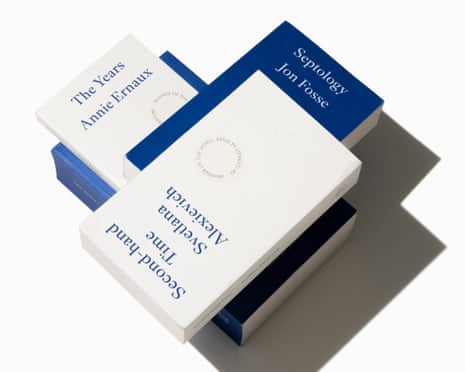
The third win was Annie Ernaux in 2022. Fitzcarraldo published six of her books before the win, and has gone on to release 14 works by the French writer in total, including her most famous memoir, The Years, spanning 1941 to 2006.
A second consecutive win arrived when Jon Fosse, best known for his seven-part novel Septology, was announced as the 2023 laureate.
It also added the 2004 laureate Elfriede Jelinek to its catalogue in 2021, publishing Rein Gold, originally written as a libretto for the Berlin State Opera.
The publisher even sells a "Nobel Prize Essentials" pack of four titles. Quite the flex.
Possible contender: Anne Carson
One of this year's frontrunners is Anne Carson. Born in 1950 in Toronto, Canada, Carson is a poet, essayist, translator and was a professor of classics. Her writing often crosses genres, combining poetry with prose.
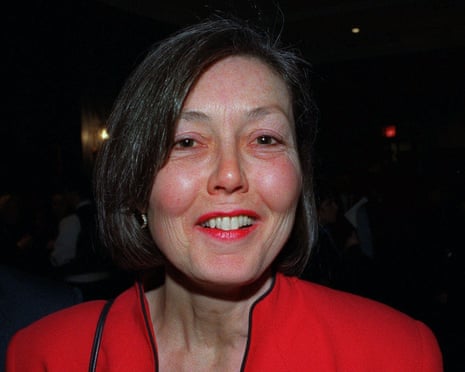
After completing her doctorate in classics, she taught at a number of universities while literary magazines started to publish her work. Her major breakthrough came in 1998 with her verse novel Autobiography of Red, a queer coming-of-age story, blending Greek myth with a contemporary plot. She has published more than 20 books of poetry, essays and translations.
In 2001, she was the first woman to ever win the TS Eliot prize for her collection The Beauty of the Husband. She has also been awarded Guggenheim and MacArthur fellowships.
Doris Lessing's reaction to winning the Nobel in 2007 never gets old …
The 18 life members of the Swedish Academy who decide the Nobel prize in literature are often referred to simply as The Eighteen, evoking an idea of some ancient council of tunic-wearing, white-bearded men gathering on the top of a hill. It makes it easy to forget that these are living, breathing people with real jobs: literary historians, lawyers, linguists and journalists. These days, almost half (seven) of them are female, and one of them (linguist David Stefan Håkansson) is even under 50.
The Academy's first permanent secretary under which the prize was awarded, Carl David af Wirsén, saw the prize's mission as crowning "the great men of continental [European] literature", but its members have been looking beyond the west since the 1980s.
Picking the winner of the Nobel prize in literature is a year-long process. In September of the previous year, hundreds of eligible individuals and organisations are invited to submit nominations. These include professors of literature and linguistics at universities and colleges, previous Nobel laureates in literature and the heads of writers' associations. Nobody can nominate themselves.
In spring, a Nobel Committee of four or five academicians then whittles down the nominations to a highly confidential shortlist of five, which it presents to the Academy. The Academy spends the summer reading and decides in early October.
The Eighteen's criteria are not made public, but changes in its line-up can have real consequences on voting tendencies. One reason why Swedish observers are tipping for a poet Nobel winner this year, for example, is that its newest member is herself one. Anna Hallberg, who was elected as a new member in May 2026, has published nine collections of verse and has been hailed by the Academy as "one of the most uncompromisingly innovative and form-conscious voices in contemporary Swedish poetry".
Possible contender: Can Xue
The bookies' joint favourite to win, along with , is , a 73-year-old Chinese author known for her experimental prose and stream of consciousness, dreamlike style. She is often listed as a favourite to win.
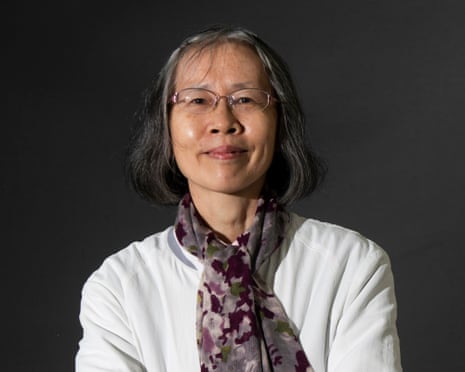
Can Xue (whose real name is Deng Xiaohua) was born in Cangsha City in 1953, meaning she grew up during China's Cultural Revolution. Her parents were sentenced to manual labour in the countryside, and Can Xue was unable to finish her education. Can Xue writes about her turbulent childhood in a foreword to her short story collection Dialogues in Paradise. Her works are inspired by Western writers such as Kafka, Tolstoy and Shakespeare.
She has been longlisted for the International Booker Prize twice, first in 2019 for Love in the New Millennium and again in 2021 for I Live in the Slums.
Might this year finally be her year?
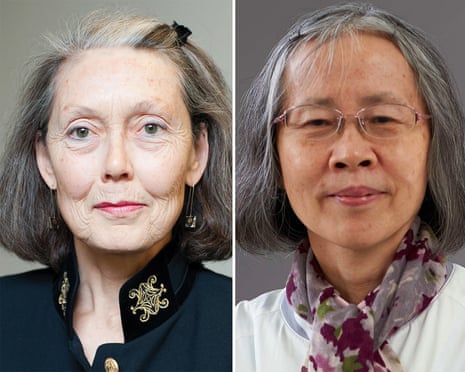
Just behind them are (14/1), (16/1) and (16/1). At longer odds are , and . But could the Swedish Academy surprise us?
Browse a full breakdown of the odds here.
Last year's Nobel prize in Literature went to László Krasznahorkai, the 72-year-old Hungarian novelist known for his dystopic, melancholy prose, praised by the Swedish academy for a "compelling and visionary oeuvre that, in the midst of apocalyptic terror, reaffirms the power of art".
Krasznahorkai was born in Gyula, Hungary, in 1954 and established his reputation with his first novel, Satantango, published in 1985. Set in a deteriorating rural community, the novel was later translated into English and, in 2015, won the Man Booker International prize. It also became the basis for Béla Tarr's celebrated seven-hour film adaptation.
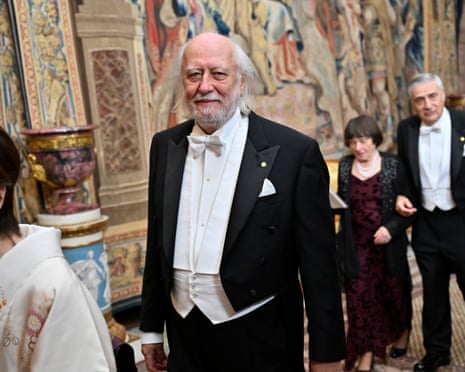
His fiction is characterised by its extraordinarily long sentences and sustained intensity (Satantango is divided into 12 chapters, each comprising a single paragraph). His work has prompted comparisons with writers including Nikolai Gogol, Herman Melville and Franz Kafka.
Travel has been a recurring influence on Krasznahorkai's writing. He left Communist Hungary for the first time in 1987, when he spent a year in West Berlin as a DAAD fellow. Later journeys through East Asia, particularly Mongolia and China, informed books including The Prisoner of Urga and Destruction and Sorrow Beneath the Heavens.
While Krasznahorkai was writing War and War, he travelled extensively around Europe and also spent a period living in Allen Ginsberg's New York apartment – the Beat poet extensively advised Krasznahorkai on the novel's construction.
Susan Sontag once described the author as "the contemporary Hungarian master of apocalypse", WG Sebald praised the universality of his vision, and the literary critic James Wood wrote that his books "get passed around like rare currency".
The most-awaited day in the literary calendar has arrived: at lunchtime, the Nobel prize in literature will be announced. We'll be sharing commentary and predictions by Europe culture editor , Guardian books writer , freelance writer and myself.
This year's recipient is set to be announced at around 1pm CEST, or midday in the UK. Could it be perennial bookies' favourite , the avant garde Chinese writer? How about the Canadian poet , or prolific Argentine novelist ? All will be revealed.