No two Black people are the same, nor are their respective experiences. We are not monolithic as a people nor as an experience. And, despite existing in a world that distils cultural identity and impact into a digestible meme of white-washed banality, our experiences are rich and varied. To discuss the Black experience within the context of classical music as a whole is to understand this expansive richness and to know that we were there in the beginning, from African polyrhythms and percussion to compositional genius; neither Blackness nor queerness are anathema to the classical tradition. And yet our collective experience could be described as one fraught with the burden of having to justify and validate, in accordance with white hegemonic power, our existence and right to be in these spaces, interrogating our proximity to whiteness, privilege, power and that proximity as a conduit for acceptance in these white, classical music spaces.
My experience as a Black queer person in classical music
A few years ago, a number of my friends from my friend group, the Chinegays – a queer, classical musician space – and I created short videos of us practising and playing scales to hip hop, neo soul, R&B, which we posted to our Instagram page. We’re known for enjoying a quick twerk to Buxtehude, a little pop locking to Mozart, a slow bump and grind to Tchaikovsky and, in that same vein, we shared our love of different styles of music, the intersection at which we live very comfortably. It’s part and parcel of our social curriculum, our own embodied knowledge that allows us to feel and integrate the verve, pulse and vibe of a bop and a French Baroque chaconne and feel compelled to bring them together effortlessly. Not long after, other such videos from musicians outside the diaspora started popping up. Then we see Baroque ensembles partnering with ballroom music and dancers, duck walking, death drops, voguing and all. We get Cats the Jellicle Ball, which pairs ballroom with ‘s , and you realise the lines that separate these forms of music are an illusion and that the amalgamation and blending that feels so true and natural to us as a community without fanfare is now a ticketed commodity. That’s the Black experience in classical music.
Experiencing the codification and commodification of your creative output, the co-opting, whitewashing and mainstreaming of your vibe and then being told either covertly or overtly that you don’t belong is a special kind of psychological violence and epistemological vandalism, the hellspawn of gaslighting, theft and erasure all rolled into one. It’s having to be entrepreneurial, self-motivated, resilient and unflappable, working spherically, in a field that resets the goal post more often than the UK swaps prime ministers and, like the UK, does so without a sense of irony, regret, self-reflection or performative preventative maintenance. It’s existing in a space that demands your compliance through minstrelsy docility and faux respectability, both of which are just white-coded politics of self-imposed oppression and regulation; it demands your allegiance through a pervasive and malignant scarcity mindset and active gate-keeping by those who would be considered, by virtue of their own Blackness or otherness, shatterers of the glass ceiling. Both of which tell you there can only be one Black person in the room; and it demands your feigned inferiority through internalised imposter syndrome, all in service of the fractured and self-important institution that is classical music. It’s being conditioned through conservatoire training to believe that your indigenous, ethnic musics are somehow unworthy of treatment within the canon, lacking the intellectual rigor or sophistication that merits scholarship while seeing Jazz – Black art music – colonised by white men. It’s having to pay homage to relics of the past while celebrating its precarious future, a weathered and threadbare exhibit in the grand museum of whiteness whose preservation depends on us not noticing and certainly not calling out the cracks, creases and inconsistencies but rather, celebrating them as part of what makes the decrepitude beautiful. And yet so many of us, like myself, love the art form. We love the music, the communities we’ve built in and around it, and often in defiance of it. We love the ability to communicate artistically in this way, through our instruments, voice and training, shaping a beautiful, tenderly written melody; we revel in the rigor of being not just good but great while living and wrestling with the reality that the standard held for us and by us is much higher and enduring arguments about the necessity of this double standard – twice as good for half as much. We know all too well that there, where white mediocrity reigns, Black excellence is ignored, neglected, mishandled, faced with scepticism, rejected.
Meritocracy in classical music
There exists within classical music a myth called meritocracy. This myth suggests that only the most excellent are deserving of rising to the top and that only the most excellent do. Yet there is little discourse around who decides what makes something or someone excellent. Excellence and how it is defined is subjective, contingent and dependent on the rubric by which it is measured and the diviners and caretakers of that rubric. It is contextual and relies on the observer to have prior knowledge, niche knowledge about a thing. It is subordinate to the observer and their biases, prejudices, preferences, moods, needs, etc. There’s no discussion around cultural competency and the role it plays in our understanding of a thing, a genre, a style, an expressive device. Excellence in any field remains defined by the people in power and their standards, which cannot exist in a vacuum unimpacted by the world in which it exists. It is encultured, indoctrinated and self-eating, a disturbing and pathological Ouroboros that validates its power by bestowing power upon others who can in turn declare it powerful owing to their granted power. And despite measures being taken to ensure equity or equality, our understanding of excellence is not infallible. There remain ways in which institutions, individuals within those institutions, and individuals as a whole specifically work around those measures, twisting and contorting the process to what is later deemed a meritocratic end. It is power consolidating and then wielding power, and being Black in classical music is recognising those power structures and choosing more often than not to work within or outside of them.
To do so, to work within them, means that a certain level of self-betrayal will be asked if not expected of you in order to maintain the access, privilege and prestige you are provided within that structure. To work outside of them is to arduously forge what could be an incredible but potentially unsubstantiated path, a route that might not garner the accolades, bona fides, prestige, privilege or recognition as the other, much less the funding and security, financial or otherwise. Being Black in classical music can be bleak, cynically waiting for the next extra-judicial killing of a Black man at the hands of the police, a neighbour, or whomever to see institutions begin to give a shit again about your Black creativity, much less your Black life – a black square on a timeline.
Navigating a hierarchy
Being Black in classical music is understanding that there is a hierarchy within the framework and that being at the top of the hierarchy is a losing battle owing to the fact that you’re never truly at the top when your peers see you as a diversity hire unworthy of respect or adulation and/or you have to assert your humanity in spaces that are deemed safe for every “othered” identity but Blackness. These are spaces where, as a Black artist, you may be asked to negotiate your authenticity as a Black person and navigate the microaggressions, being aware of the gross injustices happening around you and to you and still maintain the status quo. These are spaces where being good enough isn’t good enough because, in being Black, your mistakes, errors, failures or shortcomings, no matter how infrequent or human, become indicative of your Black inferiority, a virtue of your negritude, while your excellence is seen as an anomaly, fluke, or luck.
Despite all of this and more, Black voices continue to take up space in classical concert halls, stages, radio stations, awards ceremonies, demonstrating the conviction of our passion for the art form, our tenacity which compels us to persevere in spite of the hardship and our commitment to continue being great even when our greatness refuses to be seen or acknowledged. As is the theme of my upcoming debut solo album, , which centres solo clarinet works by Black male composers, racism has never kept Black folks from being great; it’s only kept that greatness from being recognised.
After two sold-out years, returns to Kings Place on Saturday 10 October 2026
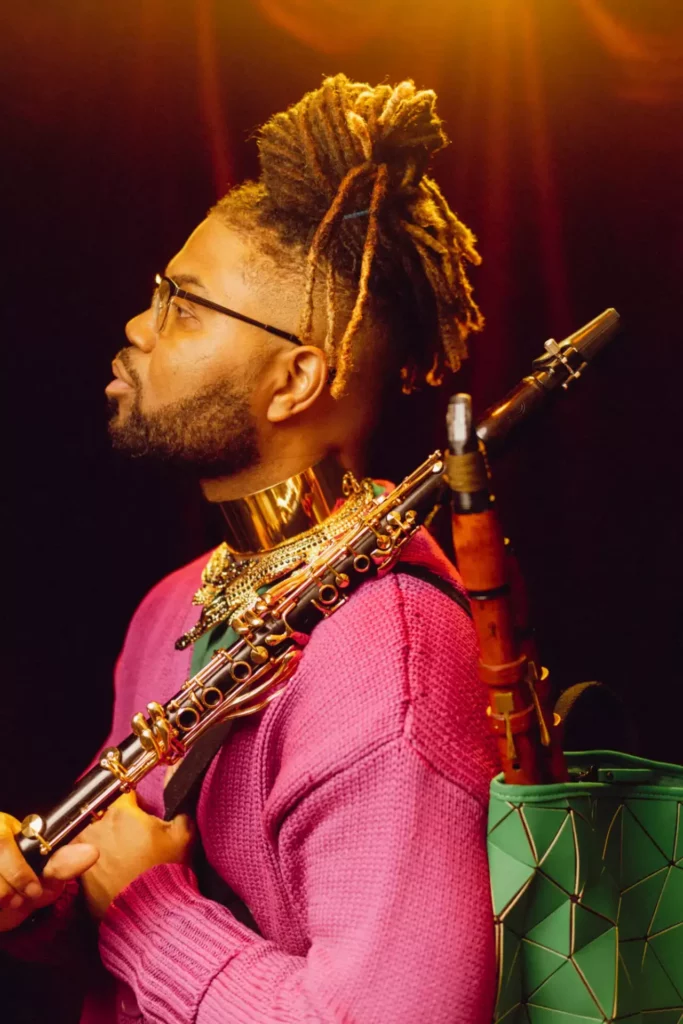
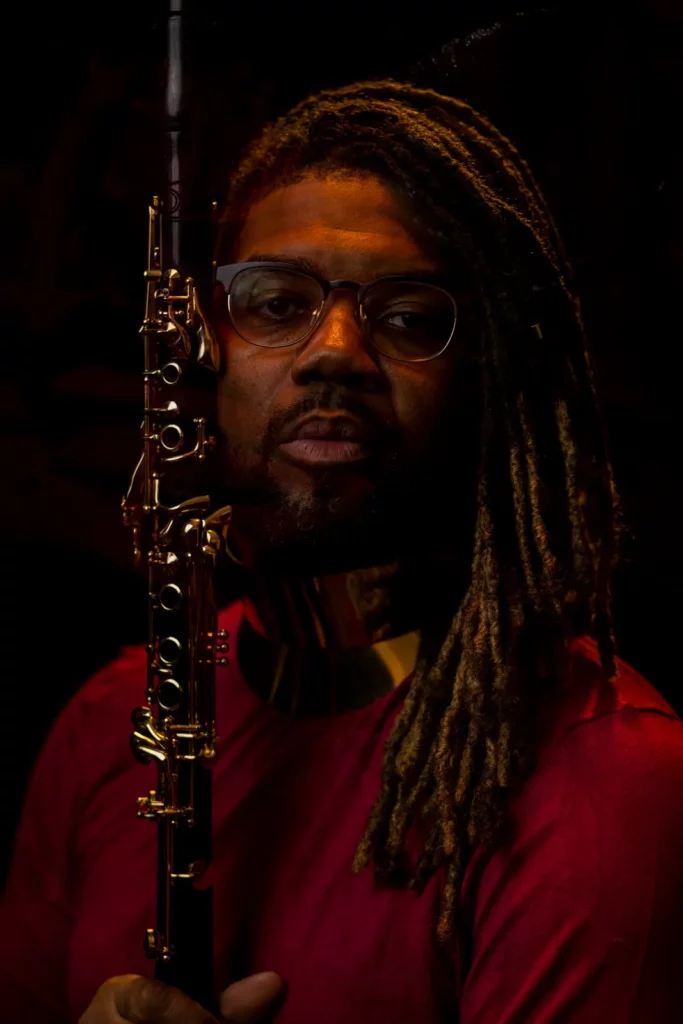
Berginald Rash is an American-Irish clarinetist, presenter, and educator who has performed across the globe, including with the Chineke! Orchestra. A former TEDx speaker and current board member for Chamber Music Scotland, he also hosts for BBC Radio – using his platform to broaden access and bring fresh perspectives to classical music.