few years ago, when Helen Garner had an idea to write a book about Australian rules football, her heart soared then immediately sank. The impetus was Ambrose, her teenage grandson, who played for a local team. Garner enjoyed watching them and wanted to put this into writing. Then the dreary thought: "I'll have to swot, read the rulebook." People to whom she mentioned the idea assumed she'd be writing a polemic, "like what it means in society and how terrible it is and what violence means. And I'm going: 'What a bore.'"
As anyone familiar with Garner's almost 50-year writing career will know, there is nothing more igniting to the 83-year-old than the invitation to outrun boredom by going off in an unauthorised direction. Garner, who is speaking to me via video call from her home in Melbourne, occupies that tiny category of writers famous enough to be recognised in public. Stopped by strangers in the street, she's often treated to their strong views about her work. As a result, perhaps, she has perfected a very Garnerian obstinacy, enabling her to resist other people's bossy opinions which, in the case of The Season, meant no tedious explainers about the rules, history or sociology of Aussie rules football. Instead, says Garner, she envisaged following a single season of Ambrose's U16s team, the Flemington Colts, as "a nanna's book". During publicity, she'd turn up to an event at a library to find "the first five rows packed with nannas; all these white-haired women with hankies in their hands. And I feel nobody writes about nannas. I mean, sentimentally, yes; but I want to say what they're like."
To say what something is really like is the ethos behind all of Garner's books and it has, on occasion, landed her in spectacular trouble. It has also won levels of devotion from readers who have turned her into an almost guru-like figure in her 80s, turbocharged by the publication last year of her wisdom-heavy diaries – which won the Baillie Gifford prize – and helped, one suspects, by her ability to combine insight and erudition of the highest literary order with a style that is at times comically down to earth. (A classic example: referring to the controversy around The First Stone, the 1995 book she wrote about feminism, Garner says: "I gave a lot of people the shits." It's not a line one can imagine, say, Marilynne Robinson delivering.)
The current mania around Garner is a long-overdue correction for a writer who, outside Australia, was ignored and condescended to for decades. In 1987, in a typically sniffy reference to Garner in the TLS, her work was referred to as "Mills& Boon for bohemians", yet she is now credibly hailed as a contender for the Nobel prize, can fill 900-seat venues in New York, and has seen practically her entire back catalogue reissued in the US. (Carrie Bradshaw was shown carrying a copy of Garner's 2014 book, This House of Grief, in a scene from And Just Like That … and Dua Lipa interviewed her on her podcast.) All of which Garner shrugs off, referring to herself as an "old kind of warhorse" who was never interested in prizes in the first place, not least, she says, because "you have to put on that look that you're pleased for the other person", even when – a typically bracing admission – "their book was not as good as mine".
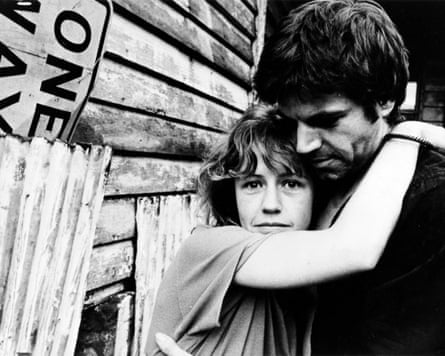
The fact is that Garner has always cut through the flab and waffle of so much literary culture in pursuit of something more honest. In her first novel, Monkey Grip, published in 1977 and based on her rackety life at the time, Garner told the story of Nora, a woman with a young child living in a bohemian shared house in Melbourne and on-off dating a heroin addict called Javo. Garner had arrived at this point in her own life partly as a result of fleeing a rigid, repressed childhood in the town of Geelong near Melbourne. As the oldest of six kids, she had frequently clashed with her father, a wool merchant and "a rather domineering person", she says, who bullied her meek stay-at-home mother and kept no books in the house. After attending an Anglican girls' school, Garner won a place at the University of Melbourne, where she spent the best part of three years in the pub. "It was a strange time. Once you get estranged from your parents, you go galumphing across the landscape seizing this and throwing out that. I look back and I see a lot of damage. We trampled through each other's lives."
This sense of damage would become more profound in Garner's late 20s after a short-lived marriage to Bill Garner, whom she'd met at college and with whom she had a daughter, Alice. The pair split up when Alice was two and Garner moved into a series of hippy shared houses. It was an unstable life that had what Garner now calls a "kind of berserk quality to it – there was a lot of smashing and breaking that went on", and only became more precarious when Garner, who had been working as a teacher, "opened my big mouth" and was fired from a school in Victoria for giving an impromptu and explicit sex education lesson. At the same time, she fell in love with a heroin addict and, a few years later, looking back over her diaries from that period, realised she wanted to write about it, embarking on Monkey Grip with the modest ambitions that enabled its fresh, uncontrived voice. "It was a private thing, writing down in a notebook what I thought about what was happening in my life," she says. "So, I didn't compare what I had written with anything great or mighty. I thought I'd just tell the story of what happened."
Looking back now, she finds the novel "rather naive and undefended". But it thrills her, 50 years on, that Monkey Grip is not only still in print, but highly popular. She was in a shop, recently, "and there was a young bloke who said: 'Aren't you Helen Garner? I'm reading Monkey Grip, and we're living the life!'" She laughs and assumes a look of mock horror. "And I thought: 'Ooh, don't do that.'" I'd always assumed Javo had died way back, but fans of the book may be interested to know the real-life Javo is alive and well and living in Hobart, Tasmania, where he has a wife and grandchildren. After offering his spare room to Garner's own 25-year-old grandchild who was visiting that part of the world recently, he wrote to Garner, "to say how marvellous it was to see our two grandchildren together".
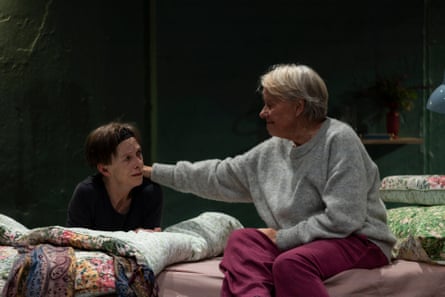
Monkey Grip, which was written with the electric, offhand energy of a young writer yet to grow self-conscious, caused a sensation in Australia and was followed by a series of short, brilliant novels, including The Children's Bach and Cosmo Cosmolino, before Garner pivoted to nonfiction in the mid-1990s. (She'd return to fiction in 2008 with The Spare Room, based on Garner's experience of nursing her close friend through cancer. The book has recently enjoyed an operatic adaptation in Melbourne.) And in the background, always, Garner maintained her diaries, recording her second marriage to Jean-Jacques Portail, a journalist whom she met in Paris, where she moved for a couple of years in the late 1970s while living on a writer's grant and trying to write her second novel. Portail moved back to Melbourne with Garner, and they split up in 1985. A few years later, Garner moved to Sydney to be nearer to the writer Murray Bail, the man who would become her third and (to date) final husband, and who dominates the last volume of her diaries.
Alongside entries about fashion, art, friendship, nature and the end of her marriage to Bail, the diaries offer readers a chance to witness the epic battle between Garner's extremely robust writer's ego and its near-constant collapse. A typical entry, from 1997, reads: "I have to admit to myself that I feel irrelevant, small, hollow, untalented, worthless – and frightened. The energy required to maintain self-command is so great that I am always tired. How repellent one is. If only I were writing something."
I'm curious about how Garner reconciles these two things – confidence and self-doubt – particularly in the wake of The First Stone, her first nonfiction book, in which she interrogated the case of two female students at the University of Melbourne who accused the master of their college of groping them. A mid-90s cause celebre in Australia, Garner foreshadowed culture wars to come by presenting the story as a possible overreaction on the part of the women, putting the boot in, she says, "to what I thought was a rather punitive form of feminism. I got into a hell of a lot of trouble. Really, it was quite astonishing, the amount of hostility I copped. I was thought to be a rotten feminist; a heretic. I heard that someone on a judging panel said: 'If this book by Helen Garner even gets on the long list, I will' … thunderous threats …'" Garner says: "I just laughed. Because I think it's a sort of compliment."
The First Stone was much more subtle and ambivalent than its detractors allowed, being a real intellectual reckoning with a complicated subject. Given the response, I've always wondered how Garner came back from it. "I had the shit kicked out of me! People savaged me. And it took me a while, but when I got over it, I thought: 'Well, I survived that, and now I'm free. I can write what I really want. And I won't have to see if it comes out pure.' Being hated is very bracing. It's not destructive. Well, it could be; if I'd published that book now … but the internet didn't exist then. I did feel miserable and sad and I thought: 'God, everyone hates me, this is terrible.' But I didn't regret it for a minute."
Because it was the book you wanted to write? "Yeah. And I made mistakes in it; but I got a lot of amazing letters. I reckon I got about 800 and I answered every one. It was quite an exercise; someone would cover me with loathsome abuse and I'd write back: 'Thank you for your kind letter …' And the good letters I got were long and thoughtful, saying: 'I read your book and I'd like to tell you something that happened to me.' And that made me think I opened up the subject for people to talk about calmly." It can't have hurt that the book was a huge bestseller. "Yeah, and that gave them the shits. And they'd go around saying: 'Oh, yes, of course Helen's motivation was purely commercial.'"
It helped that Garner had a career in freelance journalism to fall back on, particularly when she got stuck on a book, This House of Grief, which told the story of the trial and conviction of Robert Farquharson, who murdered his three children to get back at their mother, and which took eight years to finish while the various appeals played out. After the success of Monkey Grip, Garner dashed off a second novel, "and it was crap, and my publisher correctly bounced it back. That was a nasty moment, but they were right. Just because you've written one book doesn't mean you know how to write the next one." But while better novels followed, including The Children's Bach, published in 1984 and widely considered her masterpiece, she moved permanently to nonfiction after The First Stone, coming to specialise in a kind of literary true crime with a series of devastating books built around high-profile murder trials.
That shift was brought about in part by her marriage to fellow novelist Murray Bail. Garner's account of the collapse of that marriage appears in How to End a Story, her third volume of diaries, and it's quite something; at one point, in a fury at the insidious, unfaithful Bail, she throws cups, an espresso machine and a saucepan full of beetroot soup across the kitchen. Garner writes that Bail belittled and gaslit her, and dismissed her work as inferior to his. "I thought my marriage was the worst marriage in the world and I was the world's biggest wimp for going along with it," she says. Since the diaries came out, however, a lot of people have said to her "'that book is my marriage.' And that sort of shocks me – they're talking about a marriage they're still in. But it can be terribly difficult. I reckon it's the hardest thing people ever do, being married. Harder than having kids."
She regards having her only child, Alice – at the age of 26 and without any great planning – as the greatest good fortune of her life. And the happiest she has ever been, she says, has been during these past decades of living next door to Alice and her husband and three children. Bail, meanwhile, comes out of the diaries looking very bad indeed. Any feedback from him since publication? "The answer to that is no. And either he hasn't read it or he's saying he hasn't read it. I haven't had any contact with him now since long before I published the diaries. We parted badly and painfully and it's never been mended." She sighs. "He also published a memoir in which he summed up my part in his life in about three sentences. I was roundly dismissed. And I went on like it was the collapse of civilisation. But. You know. Bless him."
Given the relative literary reputations of Helen Garner and Murray Bail these days, she can afford to be generous. And, of course, one of the delights of the diaries is the schadenfreude of watching a man flex his superiority over a woman who will, in time, be regarded as one of the great writers of our age. Splitting up gave her just the impetus she needed, she says. "I felt very liberated by no longer living in close companionship with someone who had ideas about literature which were too severe and didn't suit my work. He had this hierarchy of forms, and I subscribed to them for a long time because I'd been educated to think that as well. But after I split up with him, I relaxed into being a nonfiction writer. And I stopped doing it defensively. I thought: 'Actually, this is my natural form.' And I still feel that very strongly: I'm out here, and I'm good at this, and it's really fun to do, and it gets you out of the house, rather than stewing in your own self-hatred."
So it was with The Season, in which for the space of winter training Garner showed up every week at the football ground to watch her grandson and his cohorts play. Garner went through her customary period of thinking it was all a mistake, that the book was a terrible idea and she'd never be able to drag it over the line. The toughest experience she ever had with this kind of self-doubt was during the writing of Joe Cinque's Consolation, her deeply affecting 2004 book about the killing of Joe Cinque, a young engineer from New South Wales whose girlfriend injected him with 'Get in there and do it!'heroin and was later convicted of manslaughter. "I actually told Maria Cinque, his mother, that I wasn't going to write the book. I wrote her a letter and said I'm really sorry, I'm going to have to give up, I can't do this. And she rang me up and said: 'What do you mean you can't do it? We gave you our story, you said you were going to do it, you'll do it! Do it!' God, I nearly died of shame. I look back on that and think you need someone who's going to kick you right up the arse. Don't you think? You don't want someone who's going to say: 'Oh, darling, it must be so hard, I really feel for you.' You want someone to say: "
This is Garner's circuit, from idea to execution via collapse, shame and eventual, dogged persistence. A few days before our conversation, Anne Carson was announced as the winner of the Nobel Prize in literature, a decision thoroughly approved of by her Australian peer. Taped up on the wall of her office, Garner has a poem of Carson's, which she looks at in times of dire need. "If I ever had a tattoo, I'd have that last line tattooed on me," she says. "I just think it's so marvellous." The poem describes a stormy night at sea, fraught with peril, existential and otherwise. "And the last line is: 'Nothing for it just row.'"