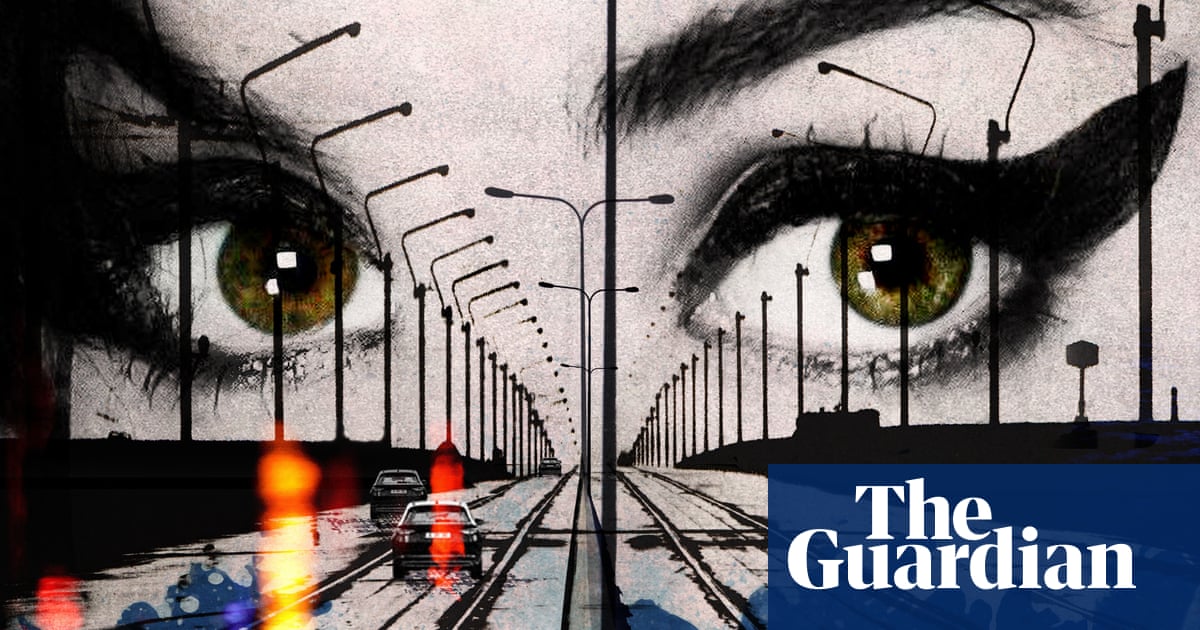
t 6am on a bleak October morning in 2006, I was driving down the North Circular in London to a job I hated. I usually kept the radio low, a background murmur to keep me focused on the road. But that morning I turned up the volume allowing the buoyant bassline from Amy Winehouse's Rehab to reverberate through my Ford Ka. As Amy's rich voice conveyed the depths of her despair, I stared blearily at the empty road ahead and wondered how I'd taken such a wrong turn.
It was a disorienting time for me. Two years out of uni, I'd accepted a job in the back end of London's Docklands area, in a freezing cold, windowless office, staring at four giant screens to check whether any of the world's stock exchanges had technical faults. My shift pattern meant I would wake at 5am, then endure a male colleague relentlessly monitoring me – the way I had to monitor those blinking screens. From two desks behind, he would send me Myspace messages with inappropriate observations about how tight my outfits looked.
But it was better money than my previous job, an admin role that had been sold to me as a graduate media position. And perhaps it would look good on my CV if I just surrendered to the grownup notion of a sensible job in finance. (Who did I think I was, expecting to be paid to pursue my passion as a writer anyway?) Maybe one day I'd be able to clear some of my debt and move out of my parents' house. But I hadn't seen my friends, who were partying every night in east London, for more than six months. In my bleakest moments, I'd will a minor car accident on my drive in, in the hope I wouldn't make it to my desk. The moment in Rehab when a man tells Amy he thinks she's depressed had never felt so close to home.
The weekend after I first heard the song, Amy's album Back to Black was released, and I rushed to HMV to buy the album on CD. Delving into her storytelling, I was astonished at her unflinching brilliance, but I should have known. Amy and I grew up on parallel tracks. As a teenager, she'd play pool with my brother at our local pub in Whetstone, north London. We were both suburban girls who wanted something different, and found it in little retro dresses, tattooed men and raucous nights in Camden. I may not have been suffering a searing breakup, as she was when she wrote Back to Black, but I was lonely and despondent.
Amy's visceral take on life, told through frank lyrics, arresting melodies and powerful vocals, shook me out of my stupor. If she could wade through all of this pain, all of this addiction, then I could surely stop writing myself off and get back out there.
So I signed myself up to night school to study journalism, letting the money from a bad job pay for what I hoped would be a better future in magazines. I rang my friends and told them how low and cut off I had been feeling, and they gathered me up and placed me right back in the mix for those nights in Camden that fuelled me on. And I finally worked up the courage to tell my manager, a woman, about the office creep. It warned him off and, while it was many years before #MeToo would roll around, he thankfully didn't so much as look my way again.
Before long I was still doing the 6am drives to Docklands, but when I finished there I'd drive straight on to night shifts at newspapers, where I'd write headlines and upload copy on to websites as the printing press whirred in the building's underbelly. I began to feel a burning in me again to do something I loved, and a new confidence that I might actually have a chance. Eventually, I was able to drop out of my dead-end role and get paid for doing the job of my dreams.
Nearly 20 years into my journalism career, I've written a book about how Amy and so many other immense female singer-songwriters have pulled us through our most heartbreaking moments. It's a testament to women's ability to restore each other in tough times. Love might be a losing game but, against the odds, loving myself was something I needed to bet on.
I Hate You So Much Right Now by Emily Phillips is published by Blink (£16.99).