Billy Connolly recalled being in a room with you, Sandy Denny, Nick Drake and John Martyn. Did you feel you were collectively doing something special?
That might have been at the Royal Festival Hall [in 1969], where Fairport Convention had Nick and John as openers and Billy must have been backstage. He'd have been in the Humblebums with Gerry Rafferty, before he evolved from a banjo player who told jokes into a comedian who played a bit of banjo. He was always a fantastic bloke and we've been friends for a long time.
There was a great camaraderie between the stable of acts Joe Boyd produced: Fairport, the Incredible String Band, John Martyn, Chris McGregor. We felt different, not special, and didn't feel successful because we weren't. None of these people really sold many records in their lifetimes, but people are still discovering them now. This album is my latest attempt to sell some units.
Have you ever been on a 1952 Vincent Black Lightning and did that inspire the song? I've never ridden a Vincent Black Lightning. There's only about 15 left, but when I was a kid one of the neighbours had a Vincent Black Shadow – a very similar motorcycle – and us kids thought it was one of the most beautiful things we'd ever seen. I was casting around for a British equivalent to American romantic imagery, so thought it would be a good object to build a drama around. Boy, girl, motorcycle, armed robbery …
The narrator in your song is one of the most chilling characters I've ever met in a song. How much of that rogue is you? If it's none, where did you summon him up from? He wants to compare himself with her old boyfriends. Some of us have been there – not necessarily going through someone's drawers, but looking at someone's diary or emails, trying to find out more about a new partner. It's a sneaky thing to do, obviously, but in the guise of entertainment songwriting can dig below the surface of what's considered civilised and into an area that's slightly uncomfortable. I love that.
On the new album, the song Cocaine Walking, Booze Talking is based on people I met in the psychedelic era who were a bit edgy or violent. Then acid came along and they suddenly went all peace and love, but it wouldn't last. So the last verse asks: "Who'll win the battle before the nurse pulls the plug? The Kings Road hippy or the Sauchiehall thug?" Conflicted human beings. I thought John Lennon was a bit like that.
Could you tell a nice – not sad – story that I haven't heard about Sandy Denny or Nick Drake?
Nick was so taciturn and hard to know that I couldn't say a lot of uplifting stuff about him. Sandy was a terrible passenger, hypersensitive. In a car, she'd be going: "What was that noise?" "Why did you put the brakes on?" Eventually, our tour manager [in Fairport Convention] had to teach her about the internal combustion engine: "I'm now changing gear." On an airplane, she was impossible. Flying to Los Angeles, she spilled a gin and tonic in my lap in the first hour, although on a boat she was totally at ease, in her element, hence so many of her songs about the sea. From what I've heard, when she finally got a licence, she was driving into ditches and all sorts. Bless her.
Who is the inspiration behind Beeswing? People say: "Oh, what a beautiful song about [the folk singer] Anne Briggs," but it's more complicated. When I lived in Suffolk in the 1970s, a tramp used to come looking for odd jobs. He'd do a bit of gardening, we'd wash his clothes and feed him and he'd tell extraordinary stories about his life. So his stories were part of the song, but also Sandy and Anne were great friends and it was really Sandy's sense of Anne being this free spirit. But I need credit as a writer of fiction, too, because it's not about anybody.
Do you have a favourite cover of any of your songs? Mine is Wall of Death by REM. Wall of Death was a memo to myself: take risks, go to the edge, don't be complacent. But my favourite cover is The Great Valerio by Swan Arcade, a vocal trio around the folk scene in the 60s and 70s. They did a fantastic job of getting all the dissonant, unusual harmony that exists in the guitar arrangement and ended up with a wonderful piece of music. [Swan Arcade's] Dave Brady had one arm. The story was that he'd been on his motorcycle and was hurtling towards a brick wall, so stuck his arm out to grab a lamp-post. But he managed to shape a chord with his left hand and strum with his little finger. A great character.
Would you have liked to have worked more closely with John Martyn – at least before he became "difficult" and his music moved in a different direction? "Difficult" is a bit cheeky. John was one of those guitar players, like Martin Carthy, who cover all bases. I'm a bit like that myself, so if you put us together there's a lot of treading on each other's toes, but we were neighbours for a while in the late 60s and early 70s and used to jam together. Once, we were in Olympic Studios for one of John's sessions and he played acoustic and I played electric. We jammed for about 20 minutes and it was just wonderful and joyous, but they didn't have the machine running. We should have done more of that.
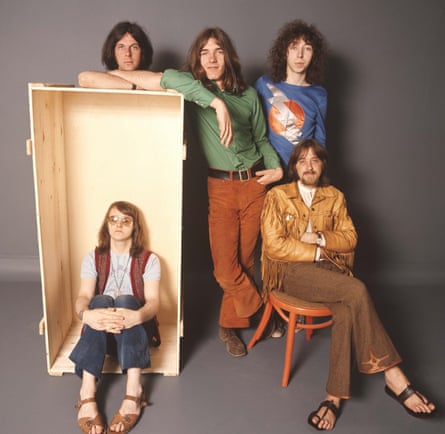
How did the offer to join Eagles come about? Offers would come through lawyers or management. I don't think it was ever someone from a band phoning up saying: "We'd love to have you." When I was on tour with Sandy in '71, I did get a firm approach to join Linda Ronstadt's band because four of them had left to form Eagles. I thought: I can't jump ship. Sandy would kill me … and do I wanna live and work with a bunch of Californians? I wanted to do my Anglo-Celtic thing and sing in my own accent. I was asked to join a later incarnation of the Animals when they wanted to dump [the guitarist] Hilton Valentine. Shocking stuff. I was asked to join the Band twice, but I thought they were gonna drink themselves to death.
You were originally a fervent enthusiast for all things British and yet now you live in the US, which seems at odds with everything the UK stands for. Why? For the last 40 years, I've had a place in London and a place in America. I lived in Santa Monica for a long time, but you're surrounded by Brits in the music and film business. You can't go 10 or 20 yards without a pub screening Premier League games or a fish and chip shop. Plus, when I open up my computer, the Guardian is my homepage. You can be connected anywhere in the world, but I've never felt connected with American culture. I'm not going to sing Jan and Dean songs about surfing. My inner landscape is London, Scotland or some dark moor in Brontë country.
What was it like being on stage with Bob Dylan at the Guitar Legends festival in Seville in 1991? You looked on high alert, or anxious. Was there any rehearsal beforehand? I was on the road with [the American singer-songwriter] Bonnie Raitt when I got a call from [the guitarist] Phil Manzanera. Word was Bob wanted to do some acoustic numbers together, which was great. We did rehearse in the dressing room, and rehearsed All Along the Watchtower with his band. When we went on stage, the acoustic guitars had gone out of tune, so I spent the first song trying to tune up – that was probably high alert – but once things settled down it was great fun; a great honour to work with Bob.
Your first band was Emil and the DetectivesHugh Cornwell, later of the Stranglers. Did you cross paths again? We had the band in school, but by 16 I was playing with Fairport Convention, so I didn't see Hugh for 40 years. Then, in the 2000s, we were both playing a festival in Spain and picked up the conversation where we left it. Since then, we've done some musical things and gigs together and a splendid version of Tobacco Road for charity.
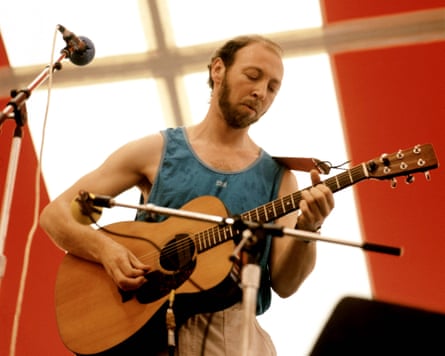
What has been your most improbable backing role as a guitarist? In the band with Hugh, we backed Helen Shapiro, but I've played unlikely places like care homes, funerals, weddings and schools. Singing at my own mum's funeral was the toughest gig. I played a girls' school in Connecticut because we knew the teacher. The kids knew a bit of Chaucer, so I could do something like Sumer Is Icumen In plus a Britney Spears song or something. The kids went nuts. Best audience ever.
spent a small fortune having his favourite hat flown in first class for a gig in Italy. How far would you go to ensure your trademark beret [a Balmoral] was in place come showtime? That must have cost Bono £20,000. For the price of a stapler, I have someone staple it to my head before I go to the airport. I sometimes forget to pack any shoes, but people don't notice 'cause I wear black socks.
The last time I saw you, a fire alarm cleared the theatre. What's your best, worst or most memorable moment playing live? In the 70s, I did a solo tour of Sweden and played somewhere in the Arctic Circle where I was singing my precious little folk-rock numbers between the disco. A guy held a knife to my throat and said: "Why don't you play something normal?" I wasn't afraid; I was wondering: what's normal? I might have done a Buddy Holly cover. At school, when I deputised for some local poppy covers band, there was a real fight in the audience, kids throwing chairs; hang on to your equipment and get off stage.
At one point, you became an antiques dealer. Why was this and how the expertise? A friend of mine took over an antique shop in Marylebone. I knew a bit, but I was too nice to the old ladies, too honest: I'd tell them we'd offer £1,000, but they'd get double that at auction. I sold a couple of porcelain Ming dynasty lions for £60, thinking they were fakes. They were worth thousands. I soon went back to music, but I still annoy my family by watching Antiques Roadshow and correctly guessing what something's worth, so they look at me like I'm some sort of genius.